

Introduction
Choosing the best keyword research tool for SEO can significantly impact your website's visibility and ranking on search engines like Google. With a robust keyword strategy, you can attract more targeted traffic, optimize your content, and ultimately boost conversions. This guide explores the top keyword research tools, helping you determine which is ideal for your needs.
Why Keyword Research is Crucial for SEO Success
Effective keyword research is the backbone of SEO. It involves discovering and analyzing the terms your target audience uses when searching for products, services, or information. These keywords serve as a bridge connecting users to your website.
Benefits of Keyword Research
Improved Rankings : By targeting relevant keywords, you increase your chances of ranking higher in search results.
Understanding User Intent : Keyword analysis helps you understand what users want and tailor your content accordingly.
Better ROI : Focusing on high-value keywords ensures you get the most out of your SEO efforts.
In practice, ranking for a well-chosen keyword can bring a steady stream of organic traffic for months or years, making the initial research time highly worthwhile. After identifying keywords, you can leverage AI-powered content generation to create articles that target those terms efficiently.
Top Features to Look for in a Keyword Research Tool
Before diving into specific tools, it's essential to know what to look for:
Search Volume Data : Helps you estimate how many people search for a particular term.
Keyword Difficulty : Indicates how challenging it is to rank for a keyword.
Competitor Analysis : Reveals which keywords your competitors are targeting.
Content Suggestions : Provides topic ideas based on relevant keywords.
Integration Options : Ability to sync with other SEO tools or platforms.
Keyword difficulty is especially important for new websites, as targeting highly competitive terms from the start can lead to frustration. Tools that integrate with content curation platforms can streamline your workflow by automatically pulling topic ideas into your editorial calendar.
 A typical keyword research tool interface displaying search volume, keyword difficulty, and related suggestions.
The 7 Best Keyword Research Tools for SEO
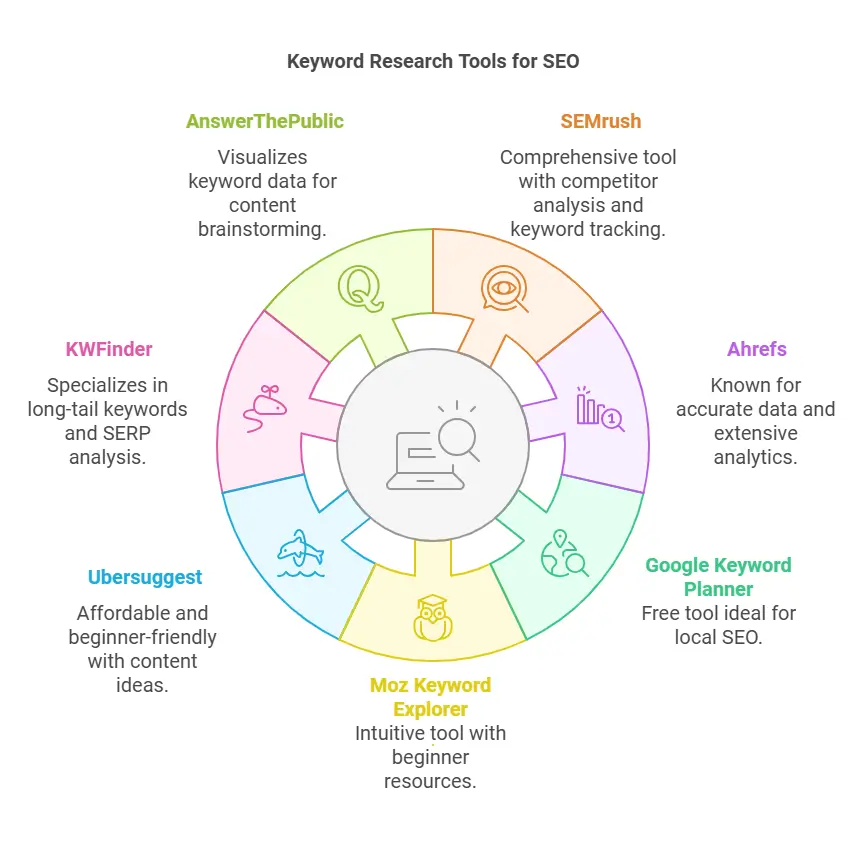
Here are the top keyword research tools that every SEO enthusiast or digital marketer should consider:
1. SEMrush
SEMrush’s Keyword Magic Tool is a favourite among digital marketers for its user-friendly interface and rich dataset. It provides detailed keyword suggestions and competitive insights, making it ideal for planning both organic and paid campaigns.
Key Features:
Over 20 billion keyword suggestions
Grouping keywords by topic or intent
SERP analysis and competitor insights
Integration with other SEMrush tools for a holistic approach
Best For: Content marketers and SEO professionals managing large campaigns.
A common mistake is relying solely on SEMrush’s suggested keywords without cross-referencing with actual search intent. For large campaigns, it’s wise to export the keyword list and filter by intent tags before creating content.
2. Ahrefs Keywords Explorer
Ahrefs is a powerful SEO suite, and its Keywords Explorer is a standout feature. This tool provides extensive data on keyword difficulty, search volume, and potential traffic. What sets it apart is its ability to display click-through rates (CTR) and offer keyword suggestions based on various match types.
Key Features:
Keyword difficulty score
SERP overview and analysis
Global search data for multiple languages and countries
Advanced filtering options
Best For: Advanced SEOs looking for comprehensive data.
Ahrefs’ parent domain metric is also valuable for assessing how easy it might be to rank against a competitor’s site. In practice, many SEOs use Ahrefs to find “low-hanging fruit” keywords where the top results have weak backlink profiles.
3. Google Keyword Planner
Google Keyword Planner is a free tool designed by Google, primarily for advertisers. However, it’s a goldmine for SEOs as well. This tool provides insights into keyword search volumes, competition levels, and cost-per-click (CPC) for Google Ads.
Key Features:
Search volume data for keywords
Keyword suggestions based on your niche
Insights into seasonal trends
Integration with Google Ads for PPC campaigns
Best For: Beginners and businesses already running Google Ads.
Because the data comes directly from Google, search volumes are generally reliable. However, the tool often groups similar terms, so you may need to expand the list manually to capture long-tail variations. According to Google’s official Search Central documentation, understanding user intent is fundamental to ranking well.
4. Moz Keyword Explorer
Moz Keyword Explorer is an intuitive tool that simplifies keyword research without compromising on features. It offers a clear understanding of keyword potential, including metrics like organic click-through rates and keyword difficulty.
Key Features:
Priority score for assessing keyword opportunities
Suggestions for related keywords
Accurate search volume estimates
Organic CTR analysis
Best For: Beginners and those seeking an easy-to-navigate platform.
Moz’s “Priority” score combines search volume, difficulty, and organic CTR into one number, which helps you quickly decide which keywords to target first. For new sites, prioritizing keywords with a medium priority score often yields faster wins.
5. Ubersuggest
Developed by Neil Patel, Ubersuggest is a free and versatile tool. It’s particularly great for small businesses or individuals looking for a budget-friendly yet effective solution for keyword research.
Key Features:
Keyword ideas based on seed keywords
Domain-level keyword research
Competitor analysis
Content ideas and backlink data
Best For: Small businesses and solopreneurs new to SEO.
Ubersuggest’s free tier limits daily searches, but the paid version is affordable. A practical tip: use Ubersuggest to generate a broad list of potential keywords, then validate them with Google Keyword Planner’s volume data.
6. KeywordTool.io
KeywordTool.io is excellent for generating long-tail keyword ideas. This tool pulls data from search engines, including Google, YouTube, Bing, and even Amazon, making it perfect for e-commerce and multimedia campaigns.
Key Features:
Long-tail keyword generation
Support for multiple platforms
Filtering by country and language
User-friendly interface
Best For: E-commerce sites and content creators.
For Amazon sellers, KeywordTool.io’s Amazon-specific data can reveal product search terms that standard SEO tools miss. Just be aware that the free version shows only a limited number of suggestions per query.
7. AnswerThePublic
AnswerThePublic takes a unique approach to keyword research by focusing on user questions and search intent. It visualises search queries in an intuitive format, making it easy to identify popular topics and pain points.
Key Features:
Visualisation of keyword data
Focus on questions, prepositions, and comparisons
Downloadable keyword reports
Inspiration for content creation
Best For: Bloggers and marketers focusing on content-driven SEO.
AnswerThePublic is ideal for creating FAQ sections or blog posts that directly answer what people are asking. A common strategy is to export the question list and use it as a content outline for a pillar page.
How to Choose the Right Keyword Research Tool
When selecting a keyword research tool , consider the following:
Budget : Free tools like Google Keyword Planner are ideal for startups, while SEMrush or Ahrefs suit larger businesses.
SEO Goals : Identify whether you need local SEO insights, global data, or niche-specific keywords.
Ease of Use : Some tools have steeper learning curves, so choose one that aligns with your expertise.
Additional Features : Tools offering backlink analysis, rank tracking, and content optimization provide better value.
For those on a tight budget, exploring lifetime deal alternatives can provide access to premium features without recurring fees. Take advantage of free trials to test which tool fits your workflow before committing.
Advanced Keyword Research Techniques for 2026
As search engines evolve, keyword research must adapt. In 2026, AI-driven keyword clustering and semantic search are becoming standard. Here are two advanced techniques:
Using AI for Keyword Clustering
Instead of treating keywords in isolation, group them into topic clusters. Tools like Sherlock Ai can help generate content ideas that naturally cover a cluster of related terms. This approach signals topical authority to search engines.
Leveraging Predictive Search Data
Google’s autocomplete and “People also ask” features are excellent sources for long-tail, conversational keywords. Combine these with your tool’s data to uncover emerging trends before they become highly competitive.
Common Keyword Research Mistakes to Avoid in 2026
Even with the best tools, mistakes can undermine your SEO efforts. Watch out for these:
Ignoring search intent: A high-volume keyword with commercial intent may not suit an informational blog post. Always match intent to your content format.
Overlooking zero-click searches: Many queries now show featured snippets or direct answers, meaning fewer clicks. Target keywords where the SERP still rewards organic visits.
Neglecting conversion rate optimization: Driving traffic is only half the battle. After driving traffic, optimizing landing pages for conversions is essential — tools like Wowoptin can help address that.
Relying on a single tool: Cross-reference data from at least two sources to avoid skewed volume estimates.
Keyword Research Tips for Better SEO Results
To get the most out of your chosen tool, follow these tips:
1. Focus on Long-Tail Keywords
Long-tail keywords are less competitive and cater to specific user intents. For example, instead of "keyword research tool," target "best keyword research tool for small businesses."
2. Analyze Competitors
Study which keywords your competitors rank for and identify gaps in your strategy. Effective competitor analysis often involves examining their link building strategies to identify opportunities.
3. Regularly Update Keywords
SEO trends and user behavior change frequently, so revisit your keyword strategy every few months.
4. Incorporate Keywords Naturally
Avoid keyword stuffing. Instead, seamlessly integrate keywords into headings, subheadings, and content.
https://www.youtube.com/watch?v=nhRW1PXjR8Q
This video walks through a real-world keyword research workflow using SEMrush and Google Keyword Planner.
FAQs About Keyword Research Tools
1. What is the most accurate keyword research tool?
Ahrefs and SEMrush are highly accurate, offering comprehensive data and metrics.
2. Can I do keyword research for free?
Yes, tools like Google Keyword Planner and AnswerThePublic provide free keyword research options.
3. What is the best keyword research tool for beginners?
Ubersuggest and KWFinder are beginner-friendly, offering simple interfaces and affordable pricing.
4. Do keyword research tools guarantee SEO success?
While they are vital for strategy, consistent effort and quality content are essential for success.
5. How often should I refresh my keyword list?
Most experts recommend revisiting your keyword strategy every 3–4 months, as search trends and competitor moves can shift rapidly.
6. Are there any keyword research tools specifically for local SEO?
Yes, tools like BrightLocal and Moz Local offer localized keyword data, but you can also use Google Keyword Planner with a location filter to get similar insights.
Conclusion
The best keyword research tool for SEO depends on your goals, expertise, and budget. Tools like SEMrush and Ahrefs are perfect for advanced users, while Ubersuggest and Google Keyword Planner cater to beginners and small businesses. By leveraging these tools and following the tips outlined, you can create an effective SEO strategy that drives results.
Ready to transform your organic traffic? Start your keyword research journey today with a free trial of one of these tools and unlock your website’s full potential.


2 thoughts on “Best Keyword Research Tool for SEO: Unlocking Your Website’s Potential”