
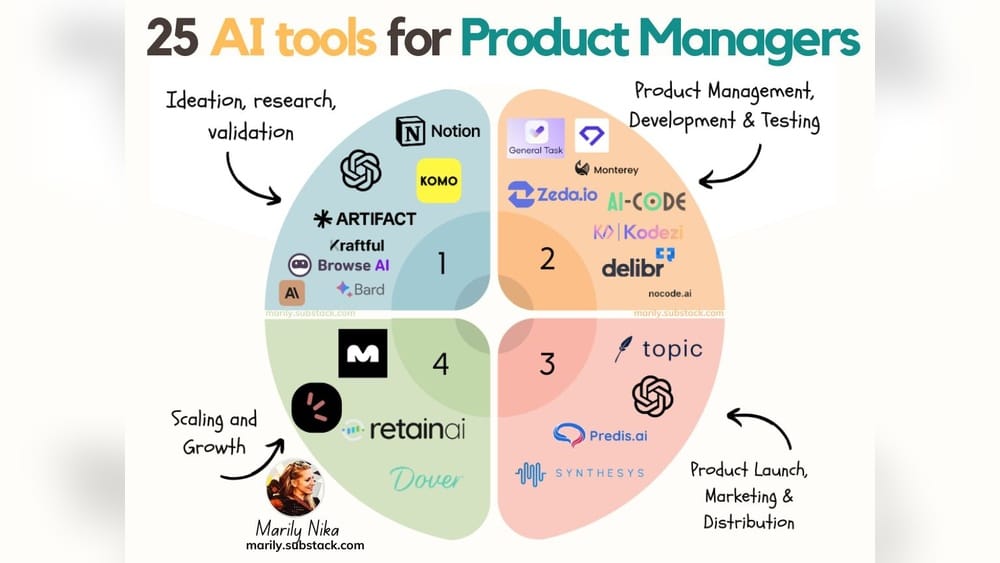
Are you a product manager looking to work smarter, not harder? Imagine having a powerful assistant that can help you analyze mountains of customer feedback, prioritize features with confidence, and draft key documents in minutes.
That’s exactly what AI tools can do for you. These tools don’t just save time—they help you make better decisions, uncover hidden insights, and keep your projects moving forward smoothly. If you want to unlock these benefits and stay ahead in your role, keep reading to discover the top AI tools designed specifically for product managers like you.
.webp)
Credit: zeda.io
Ai In Product Discovery
AI plays a vital role in product discovery by helping product managers explore ideas and gather insights quickly. It supports decision-making and uncovers opportunities that might be missed manually. AI tools analyze data from many sources, giving a clearer picture of customer needs and market trends.
Using AI during product discovery helps teams focus on what matters most. It speeds up research and helps synthesize complex information. This allows product managers to create better products aligned with user expectations and business goals.
Using Ai As A Thought Partner
AI can act as a thought partner by offering fresh perspectives on product ideas. It challenges assumptions and highlights possible biases in thinking. This helps product managers test different problem angles and refine hypotheses before moving forward.
By discussing ideas with AI, product managers gain new insights and improve their strategies. AI tools suggest alternative approaches and reveal hidden risks, making the discovery process smarter and more thorough.
Streamlining Competitive Analysis
AI simplifies competitive analysis by quickly processing competitor data. It summarizes key information from reports, websites, and social media. This saves time and helps product managers understand market positioning clearly.
With AI, identifying gaps and opportunities in the market becomes easier. Product managers can focus on strategic decisions instead of spending hours on data gathering. AI highlights trends and competitor strengths to inform product planning.
Synthesizing Customer Insights
AI gathers and combines customer feedback from many sources like reviews, surveys, and support tickets. It identifies common themes and pain points without manual effort. This helps product managers understand what users really want.
AI summarizes large volumes of data into clear insights. It finds patterns that guide feature prioritization and product improvements. Synthesizing customer insights with AI makes discovery faster and more accurate.
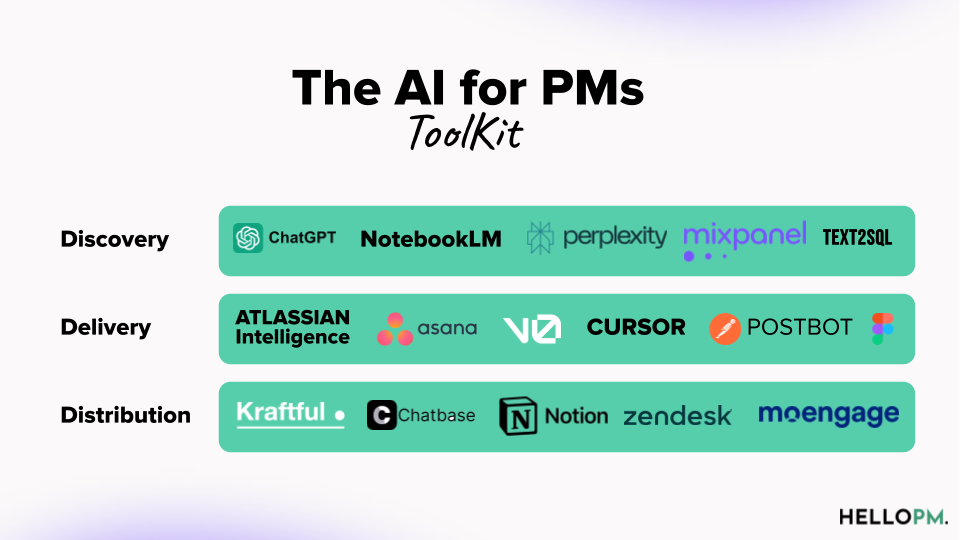
Credit: hellopm.co
Ai For Development And Execution
AI tools have become essential for product managers during development and execution phases. They simplify complex tasks and speed up workflows. These tools help create documents, decide priorities, test features, and track results quickly. Integrating AI enhances decision-making and efficiency.
Drafting Documents With Ai
AI assists in writing product requirement documents, user stories, and presentations. It generates clear and concise drafts based on simple inputs. This saves time and reduces errors. Product managers can focus more on strategy instead of formatting or rewriting.
Prioritizing Features Using Ai
AI analyzes customer data and market trends to suggest which features matter most. It ranks features based on value, effort, and impact. This helps teams focus on high-priority tasks. AI-driven prioritization improves product outcomes and resource use.
Automating A/b Testing
AI tools automate the setup and analysis of A/B tests. They can run multiple tests simultaneously and identify winning variations faster. Automation reduces manual work and human bias. Results become more reliable, helping teams optimize features smoothly.
Monitoring Performance In Real Time
AI monitors product performance across platforms in real time. It tracks user behavior, engagement, and technical issues instantly. Alerts notify managers of problems before they grow. Real-time insights enable quick fixes and better user experiences.
Ai In Operations And Collaboration
AI is transforming operations and collaboration for product managers. It streamlines workflows and improves decision-making. Teams work smarter and faster using AI-powered tools. These tools help analyze data and enhance communication. AI reduces manual tasks and frees time for strategic focus.
Conversational Data Analysis
Conversational data analysis uses AI to understand team discussions and customer feedback. It extracts key insights from chats, emails, and meetings. Product managers get clear summaries without reading all messages. AI highlights trends, issues, and opportunities found in conversations. This helps prioritize features and resolve problems quickly.
Enhancing Team Communication
AI improves team communication by offering smart suggestions and automating routine messages. It can translate languages, making global teamwork easier. AI tools also schedule meetings and manage notifications to reduce distractions. They help keep conversations organized and focused. This leads to better collaboration and faster project progress.
Best Practices For Ai Integration
Integrating AI tools in product management requires careful planning and clear strategies. Following best practices ensures AI supports your team effectively. Proper integration enhances decision-making and improves user satisfaction. Focus on practical steps that align AI capabilities with product goals.
Focusing On User Needs
Prioritize understanding your users before applying AI solutions. Use AI to gather and analyze user feedback. Ensure the AI helps solve real problems users face. Avoid adding AI features that do not add value to the user experience. Keep user needs at the center of all AI-driven changes.
Making Data-driven Decisions
Leverage AI to process large amounts of data quickly and accurately. Use insights from AI to guide product features and improvements. Trust data over assumptions to reduce bias and error. Monitor AI outputs regularly to ensure data quality and relevance. Base your strategies on clear, measurable results provided by AI tools.
Adopting An Experimental Approach
Test AI features in small, controlled environments before full deployment. Use experiments to learn what works and what does not. Collect feedback from users and team members during tests. Adjust AI settings and strategies based on experiment outcomes. Continuous testing helps refine AI use and minimizes risks.
Future Trends In Ai For Product Management
Artificial intelligence continues to change product management. New AI tools help product managers work smarter and faster. These tools improve decision-making and customer understanding. The future holds exciting trends that will shape product management.
AI will become more interactive, learning from product managers’ choices. It will provide deeper insights from customer data. This will help create better products that meet real needs. Automation will handle routine tasks, freeing time for strategy and creativity.
Enhanced Predictive Analytics
AI will predict market trends and user behavior more accurately. Product managers will use these forecasts to prioritize features. This helps avoid costly mistakes and align products with customer needs. Predictive analytics will become a core part of product planning.
Ai-powered Collaboration Tools
Future AI tools will improve team collaboration. They will suggest ideas and highlight potential risks during meetings. AI can summarize discussions and track action items automatically. This helps teams stay aligned and focused on goals.
Personalized User Experiences
AI will enable product managers to create highly personalized products. It will analyze individual user data to tailor features and content. This improves customer satisfaction and engagement. Personalization will be essential for competitive advantage.
Automated Product Testing And Feedback
AI will automate testing, catching bugs and usability issues faster. It will gather and analyze user feedback continuously. This speeds up the improvement cycle and raises product quality. Product managers will rely on AI for real-time performance insights.
Natural Language Processing For Documentation
AI will assist in writing clear, concise product documents. It will help draft requirements, reports, and presentations quickly. This reduces workload and improves communication across teams. AI tools will become essential aids in product documentation.
Credit: www.visily.ai
Frequently Asked Questions
How Can I Use Ai As A Product Manager?
Product managers use AI to automate research, analyze user data, prioritize features, draft documents, and monitor performance. AI enhances decision-making, uncovers customer insights, and boosts collaboration, enabling strategic focus and innovation throughout the product lifecycle.
What Is The Best Ai Tool For Managers?
The best AI tool for managers combines automation, data analysis, and collaboration features. Tools like Notion AI and Google AI assist with research, document drafting, and performance monitoring. They help managers prioritize tasks, gain customer insights, and streamline decision-making effectively.
What Are The 5 C’s Of Product Management?
The 5 C’s of product management are Customer, Company, Competition, Collaborators, and Context. They guide strategic product decisions.
How Can Chatgpt Help Product Managers?
ChatGPT helps product managers automate research, analyze user data, draft documents, prioritize features, and gain customer insights efficiently.
Conclusion
AI tools help product managers work smarter and faster. They simplify tasks like research and data analysis. These tools also support better decision-making by offering fresh insights. Using AI can save time on routine work, letting managers focus on strategy.
Adopting AI boosts teamwork and product quality. Staying updated with AI trends keeps product managers competitive. Embrace AI thoughtfully to improve your product management journey.

