
Disclosure: This article contains affiliate links. We may earn a small commission at no extra cost to you when you sign up via our links, it's how this site stays free to run.
TL;DR Verdict
WarmySender blends prospecting, verification, warmup, and sending in one lifetime package.
- Best for consultants, agencies, and SMB sales teams that need cold outreach.
- Starts at $49 lifetime on AppSumo with a 60-day refundable window.
- Biggest pro: 200M-contact B2B database with A to Z testing and built-in warmup.
- Biggest con: No permanent free plan, only refund-backed trial via AppSumo.
- Trial status: 60-day money-back through AppSumo, so you can test with low risk.
Bottom line: if you want deliverability protection plus sequencing without a monthly bill, WarmySender is worth a close look. Get the Lifetime Deal →
What Is WarmySender?
WarmySender is a cold email platform that pairs a 200M-contact B2B database with deliverability tools and multi-step sequences. It targets the full outbound workflow from prospecting to sending and replies.
The jobs-to-be-done are clear. You can search for ICP-matched prospects, verify addresses before every send, warm your domain to avoid spam folders, and run controlled experiments across variants. Integrations with Gmail, HubSpot, LinkedIn, Salesforce, and Zapier tie outreach to your CRM and automations.
In our research, vendor materials highlight Bounce Shield for ongoing verification and A.H.D.E. warmup to improve placement before campaigns ramp. This focus on sender reputation addresses the core reason cold email fails: spam filtering and bounces.
Key Features That Matter
WarmySender’s headline strength is coverage of the three bottlenecks in outbound: finding accurate contacts, protecting deliverability, and scaling messages that actually get replies.
200M-contact B2B database with filtering
Build prospect lists inside the tool instead of juggling scrapers and spreadsheets. According to the AppSumo listing, WarmySender offers a 200M-contact database to filter by industry, company size, role, and other firmographics. That reduces time lost hunting for decision makers so you can focus on messaging.
Multi-step email sequences with A to Z testing
Create multi-step campaigns and test up to 26 variants end to end. That “A to Z” approach helps you compare subject lines, intros, value props, and CTAs across a full sequence, not just a single send. You can import CSVs, add dynamic tags, branch steps, and schedule follow-ups aligned to working hours.
A.H.D.E. warmup to improve sender reputation
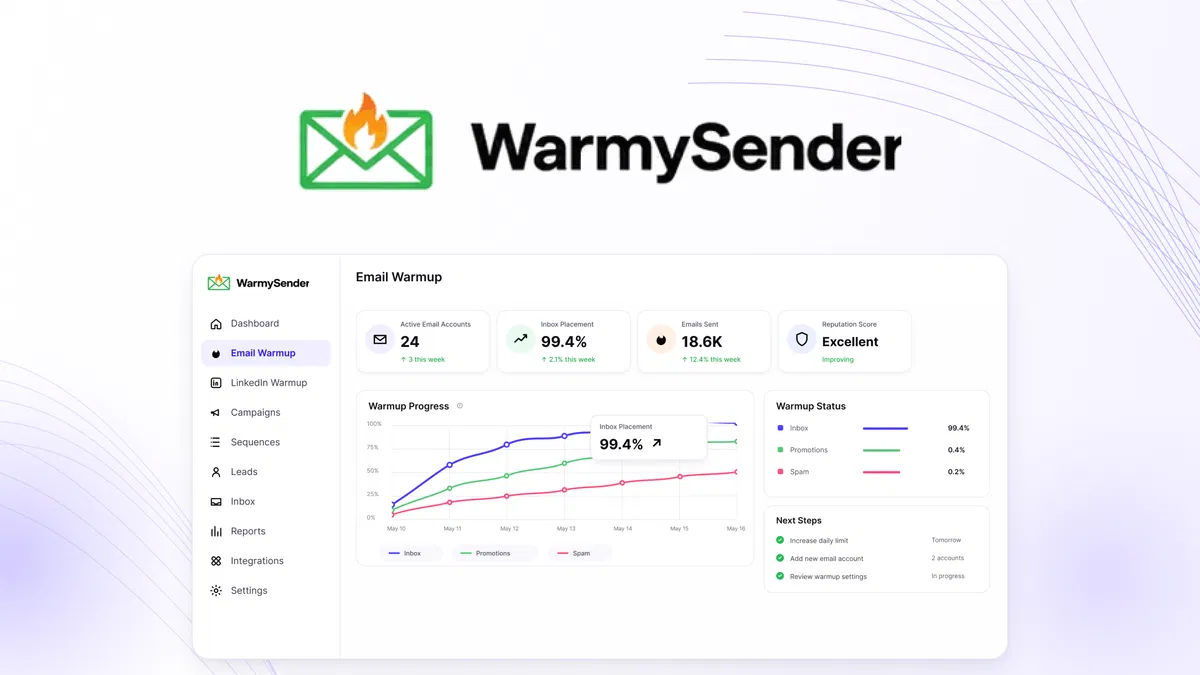
WarmySender includes vendor-named A.H.D.E. warmup designed to build healthy sending behavior before you scale. Warming a domain is essential because inbox providers watch engagement, complaint rates, and consistency. Using warmup while authenticating with SPF, DKIM, and DMARC follows deliverability best practice.
Tools like Gmail Postmaster Tools and the DMARC technical group document how authentication and engagement influence placement.
Bounce Shield address verification before every send
Bad data kills campaigns through bounces and blocklists. Bounce Shield runs verification checks before messages go out, not only at import. That reduces hard bounces and protects your sender reputation while saving credits on dead addresses.
For agencies, it is also a safeguard when clients provide old lists.
Deliverability-focused sending and reputation insights
WarmySender’s pitch centers on reputation protection, so the platform encourages thoughtful daily volumes and progressive scale. You can monitor key metrics like bounces, replies, and spam flags to adjust throttles and content. This matters because inbox providers constantly refine requirements, and staying under those thresholds improves inboxing.
CRM and workflow integrations
Connect Gmail for sending and bring outcomes back into HubSpot or Salesforce. Zapier support lets you sync prospects, trigger tasks, and update deals from outreach events. LinkedIn can assist with research and light touchpoints while email carries the heavier follow-up.
If you are already building a marketing stack on lifetime deals, WarmySender fits alongside other one-time purchases. For example, teams who grabbed an agency site builder on a one-off license like a visual site platform or those using a lightweight survey assistant such as an AI form helper often prefer to avoid monthly tools for outbound as well.
Pricing Tiers (starts $49)
WarmySender is sold as a lifetime license on AppSumo, starting at $49, with a 60-day refund window to try it risk free.
| Tier | Price | Best For | Free trial? |
|---|---|---|---|
| Lifetime deal | $49+ one-time | Solo sellers and small teams | 60-day refund via AppSumo |
In plain terms, you buy once and avoid recurring SaaS fees. The listing starts at $49 for the entry tier, and AppSumo provides a 60-day guarantee. Check the deal page for any differences across higher stacks such as seats, send limits, or database credits.
If you build your stack around one-time licenses, this pairs well with tools like a compact product launch kit such as a startup toolkit or content utilities like an AI writer offer.
Pros and Cons
No cold email platform is perfect. Here is the straight rundown based on public materials and deliverability norms.
Pros
- Lifetime pricing eliminates ongoing subscription overhead for outbound.
- 200M-contact database speeds list building for new ICPs.
- Bounce Shield verifies addresses before every send to reduce bounces.
- A to Z testing enables controlled experiments across full sequences.
- Warmup focuses on reputation so domains avoid initial spam flags.
- Integrations connect sending to Gmail, CRMs, and automations.
- 60-day refund window gives a practical way to validate fit.
Cons
- Prospect data quality varies by niche, region, and job change rates.
- No permanent free plan, only a refund-backed trial period.
- Warmup still takes time before you can raise daily volumes.
- Results depend on message quality and permission-friendly practices.
- Proper SPF, DKIM, and DMARC setup requires basic DNS know-how.
Who Should Use WarmySender?
WarmySender suits teams that value deliverability as much as copy experimentation. If you need a combined database, verification, warmup, and sequencer for a one-time fee, it fits.
Consultants and boutique agencies
Client work lives or dies by deliverability. Using warmup and Bounce Shield reduces blowups from stale lists while A to Z testing strengthens positioning. If you already manage web and funnel builds on one-off licenses, like a compact builder stack, a lifetime outreach tool keeps margins healthy.
SMB sales managers with 1–5 reps
Small teams need reliable lists and simple workflows connected to Gmail and a CRM. The 200M-contact database jumpstarts prospecting, and verification protects domains tied to your primary brand. Use Zapier to auto-create tasks or deals from replies.
Startup founders running first outbound
Founders wearing multiple hats need fewer tools to juggle. Build a clean list, warm the domain, and run structured experiments without paying monthly. Pair this with a clear positioning framework and basic infrastructure, from DNS to domain and hosting basics, so you look credible to buyers.
Who should skip it? If you require complex multichannel cadences with voice, SMS, and social automation under one roof, or if you must satisfy strict enterprise controls out of the box, you will likely want a broader sales engagement platform. Heavily regulated verticals should also align outreach with sector guidance, adding channels like healthcare marketing tactics that respect privacy commitments.
Alternatives to Consider
You are not short on cold outreach choices. Here is how the closest names compare.
- Lemlist. Strong on personalization and multichannel cadences. It runs on monthly pricing and does not bundle a 200M-contact database or a lifetime license like WarmySender.
- Hunter.io. Well known for email discovery and verification with simple campaigns. It focuses more on finding emails than deep sequence testing across 26 variants.
- Lusha. Popular for B2B contact enrichment and phone numbers. It is not built around warmup and verification-first sequencing inside one lifetime package.
For product teams comparing growth tools holistically, our roundup of practical PM-focused AI tools can help you decide where outreach fits your stack.
Final Verdict
WarmySender aims at the right bottlenecks: clean data, healthy reputation, and disciplined testing. The 200M-contact database reduces list-building friction, Bounce Shield cuts bounces, and A to Z testing encourages better experiments. Add a lifetime price and you have a cost-controlled way to run outbound.
If you want to stop bleeding for monthly outreach and still protect your domain, this is a credible pick to test within the 60-day refund window. Build a small pilot, set tight ICP filters, and watch placement metrics before scaling. Get the Lifetime Deal →
Frequently Asked Questions
Does WarmySender have a free plan?
There is no ongoing free plan. WarmySender is sold as a lifetime license on AppSumo, and the listing includes a 60-day money-back window. That functions like a try-before-you-keep period with low risk.
How does WarmySender compare to Lemlist?
Lemlist offers polished personalization and multichannel steps on subscription pricing. WarmySender counters with a 200M-contact database, Bounce Shield verification, warmup, and A to Z sequence testing under a one-time license. If you want lifetime pricing and built-in prospecting, WarmySender has the edge.
Can I cancel anytime?
There is no subscription to cancel because it is a one-time purchase. If the tool is not a fit during your evaluation, AppSumo’s 60-day refund policy applies. After that window, the license is yours to keep.
Is WarmySender worth the price?
For $49 starting, the math is straightforward. If Bounce Shield prevents a domain hit or the database saves a few hours per week in prospecting, the license pays for itself quickly. Agencies and founders who prefer one-time tools will value the lack of recurring charges, similar to how buyers view other lifetime utilities like an affordable VPN pick or a compact launch toolkit.
How does Bounce Shield reduce bounces and protect deliverability?
Bounce Shield runs verification before emails are sent to catch invalid or risky addresses, which lowers hard bounces and complaint exposure. Fewer bounces help protect your domain reputation, especially when combined with consistent warmup behavior and proper authentication using SPF, DKIM, and DMARC. Monitoring with tools like Gmail Postmaster Tools and aligning with guidance from the DMARC technical group strengthens this foundation.
Looking to complement outreach with content or product-led assets you own? Consider pairing lifetime outreach with an AI content helper or upgrading daily hardware for road warriors using a lightweight business laptop to keep prospecting fast and reliable.

