
If you want your healthcare practice or service to stand out, you need more than just excellent care—you need to connect with your audience where they spend most of their time: social media. Healthcare social media marketing isn’t just about posting updates; it’s about building trust, sharing valuable information, and engaging directly with current and future patients.
Imagine turning casual scrollers into loyal patients by sharing health tips, success stories, and community news that truly matter to them. You’ll discover simple, effective strategies to boost your presence online, foster real connections, and grow your healthcare brand like never before.
Ready to transform your approach and see real results? Let’s dive in.

Credit: www.unotech.io
Social Media’s Role In Healthcare
Social media plays a vital role in modern healthcare. It connects providers with patients in real time. Platforms like Facebook, Instagram, and Twitter allow health organizations to share important updates and build trust. Social media helps spread health information quickly and clearly. It also encourages patients to take an active role in their care. The use of social media in healthcare marketing boosts communication and awareness effectively.
Driving Patient Engagement
Social media invites patients to join conversations about their health. Patients can ask questions and share experiences easily. This interaction helps providers understand patient needs better. Engaged patients tend to follow treatment plans more closely. Posting polls, Q&A sessions, and live chats creates a two-way communication. This approach builds stronger patient relationships and loyalty.
Building Brand Awareness
Healthcare organizations use social media to increase visibility. Consistent posting of helpful content makes the brand recognizable. Sharing patient success stories and community events creates a positive image. A clear and friendly online presence attracts more followers. This visibility helps potential patients trust the provider. Branding on social media supports growth and reputation.
Sharing Health Education
Social media is an excellent tool to share health tips and advice. Short videos and infographics explain complex topics simply. Educational posts raise awareness about diseases and prevention methods. Providers can correct misinformation quickly on these platforms. Sharing reliable information empowers patients to make better health choices. Education through social media improves overall community health.
Credit: www.innoservdigital.com
Key Marketing Elements
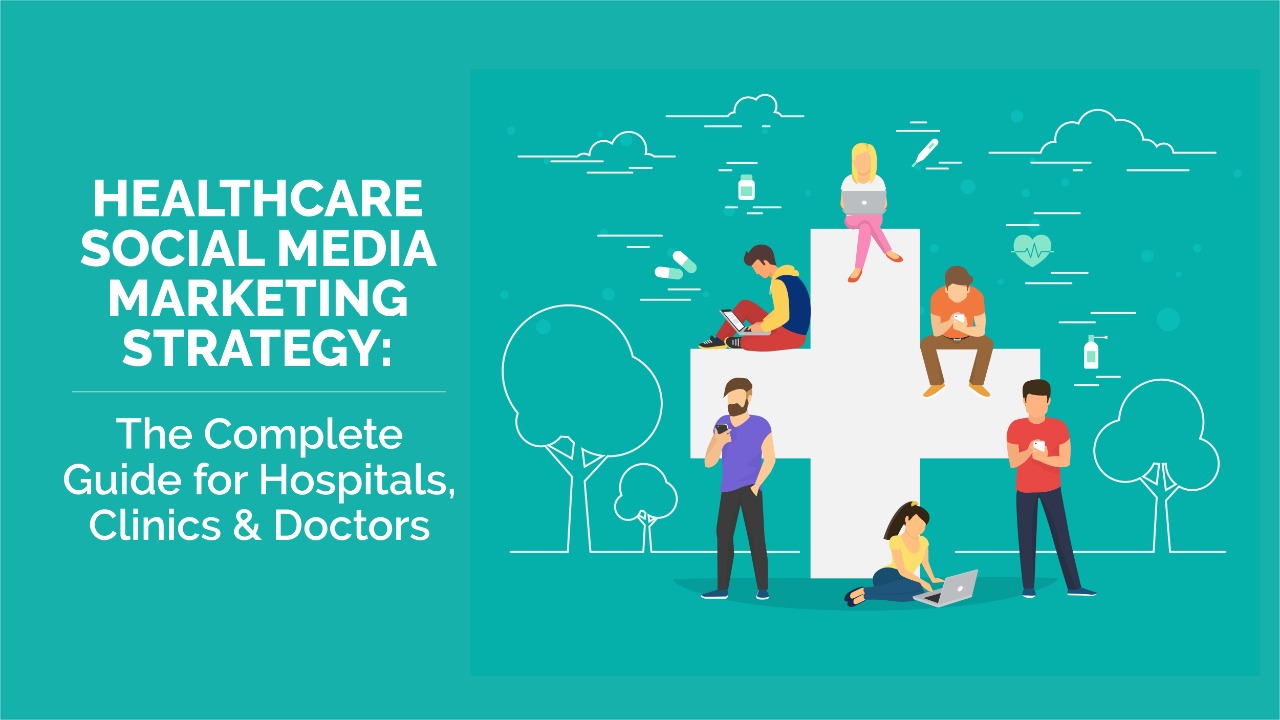
Key marketing elements shape how healthcare providers connect with patients. These elements build trust and encourage patients to choose the right services. Understanding each element helps create a clear, effective marketing plan.
Services Offered
Healthcare marketing starts with defining the services available. Providers must clearly list treatments, tests, and care options. Patients need simple information about what they can access. Highlighting specialties and unique services attracts the right audience.
Pricing Strategies
Price affects patient decisions strongly. Transparent and fair pricing builds trust. Offering packages or discounts can make services more affordable. Clear communication about costs and insurance helps avoid confusion and improves patient satisfaction.
Service Accessibility
Easy access to healthcare services is vital. This includes location, hours, and online booking options. Telehealth and mobile apps increase convenience. Accessibility ensures patients can get care when and where they need it.
Promotion Techniques
Effective promotion shares valuable health tips and service updates. Using social media, blogs, and emails keeps patients informed. Visual content like videos and infographics grabs attention. Regular engagement with the audience builds lasting relationships.
Healthcare Professionals’ Impact
Doctors and staff shape the patient experience. Their expertise and communication skills matter. Sharing their stories and qualifications on social media builds credibility. Personal connections encourage patients to trust and choose a provider.
Content Creation Tactics
Creating effective content is essential for healthcare social media marketing success. Content must inform, engage, and build trust with your audience. Using smart tactics can help your message reach more people and keep them interested. Focus on clear, consistent, and relatable content to connect well.
Posting Consistently
Regular posting keeps your audience engaged and aware of your services. Consistency builds trust and shows reliability. Plan a content calendar to post at steady intervals. Avoid long gaps between posts to maintain visibility. Even short updates help keep your brand top of mind.
Using Videos And Reels
Videos and reels capture attention quickly and explain complex topics simply. Short clips make health information easy to understand. Use visuals to show procedures, tips, or staff introductions. These formats increase engagement and encourage shares. Adding captions helps reach viewers who watch without sound.
Sharing Patient Stories
Patient stories add a personal touch to your social media. Real experiences build credibility and emotional connection. Share testimonials, recovery journeys, and positive feedback. Always get permission before posting patient details. Stories help potential patients relate and feel reassured.
Leveraging Community Events
Community events show your commitment beyond healthcare services. Share photos and updates from health fairs, workshops, or charity runs. Highlight your involvement and support for local causes. This approach strengthens your reputation and fosters community trust. It also encourages more people to follow your social channels.
Audience Interaction Strategies
Effective audience interaction strategies build trust and loyalty in healthcare social media marketing. Engaging patients and followers helps create a supportive online community. Interaction also improves visibility and encourages positive word-of-mouth. Healthcare providers should focus on clear, friendly communication to make patients feel heard and valued.
Responding To Comments And Messages
Replying to comments and messages quickly shows care and professionalism. Use simple language and be polite in every response. Answer questions clearly and provide helpful information. Acknowledge compliments and address concerns respectfully. This practice encourages more followers to engage and builds a positive reputation.
Encouraging Patient Feedback
Ask patients to share their experiences openly on your social media pages. Patient feedback offers valuable insights to improve services. Thank patients for their comments and show appreciation for their trust. Share positive feedback to highlight your care quality. This transparency helps attract new patients and strengthens relationships.
Creating Polls And Surveys
Polls and surveys invite followers to participate actively. Keep questions short and easy to understand. Use polls to learn about patient preferences and needs. Share survey results to show you value their opinions. This interactive approach boosts engagement and guides better healthcare marketing decisions.
Measuring Marketing Success
Measuring marketing success is essential for healthcare social media efforts. It shows what works and what needs improvement. Clear data helps make smart choices and improves future campaigns.
Tracking the right metrics reveals patient interest and engagement. This helps healthcare providers connect better with their audience. It also builds trust and grows the online community.
Tracking Engagement Rates
Engagement rates show how users interact with posts. Likes, comments, shares, and saves all count. High engagement means content is relevant and interesting.
Tracking this helps spot popular topics or formats. It guides content creation to keep audiences active and involved. Engagement shows if messages resonate with patients.
Monitoring Follower Growth
Follower growth measures how many new users join over time. Steady growth means the brand is gaining trust and visibility. It reflects how well the marketing attracts new patients.
Tracking followers helps compare performance across platforms. It also signals if campaigns draw attention or need adjustment. More followers widen the reach of healthcare messages.
Analyzing Reach And Impressions
Reach counts unique users who see posts. Impressions count total views, including repeats. Both reveal how far content spreads on social media.
High reach means more people learn about healthcare services. Impressions show if posts get repeated exposure. These numbers help optimize posting times and content type.
Evaluating Conversion Rates
Conversion rates track actions taken after seeing posts. This includes booking appointments, signing up for newsletters, or downloading resources. It measures marketing’s real impact on healthcare goals.
Good conversion rates indicate clear and effective calls to action. They show if social media drives patient decisions. Tracking conversions helps improve campaign design and patient engagement.
Adapting To Trends And Features
Healthcare social media marketing thrives on constant evolution. Adapting to new trends and features keeps your strategy fresh and effective. It helps healthcare providers connect better with patients and communities. Staying updated means using the latest tools and formats that audiences prefer. This approach boosts engagement and builds trust in a competitive market.
Exploring New Social Media Tools
New social media tools appear regularly. Each tool offers unique ways to share healthcare content. Tools like live streaming and story features increase real-time interaction. Chatbots on social platforms help answer patient questions quickly. Using these tools can improve how healthcare messages reach audiences. Trying out new tools helps find what works best for your goals.
Following Healthcare Marketing Trends
Healthcare marketing trends shift with patient needs and technology. Trends like personalized content and video education grow in popularity. Social listening reveals what health topics interest your audience. Staying aware of trends means adjusting content style and timing. This keeps your marketing relevant and patient-focused. It also helps in building stronger community connections.
Experimenting With Formats
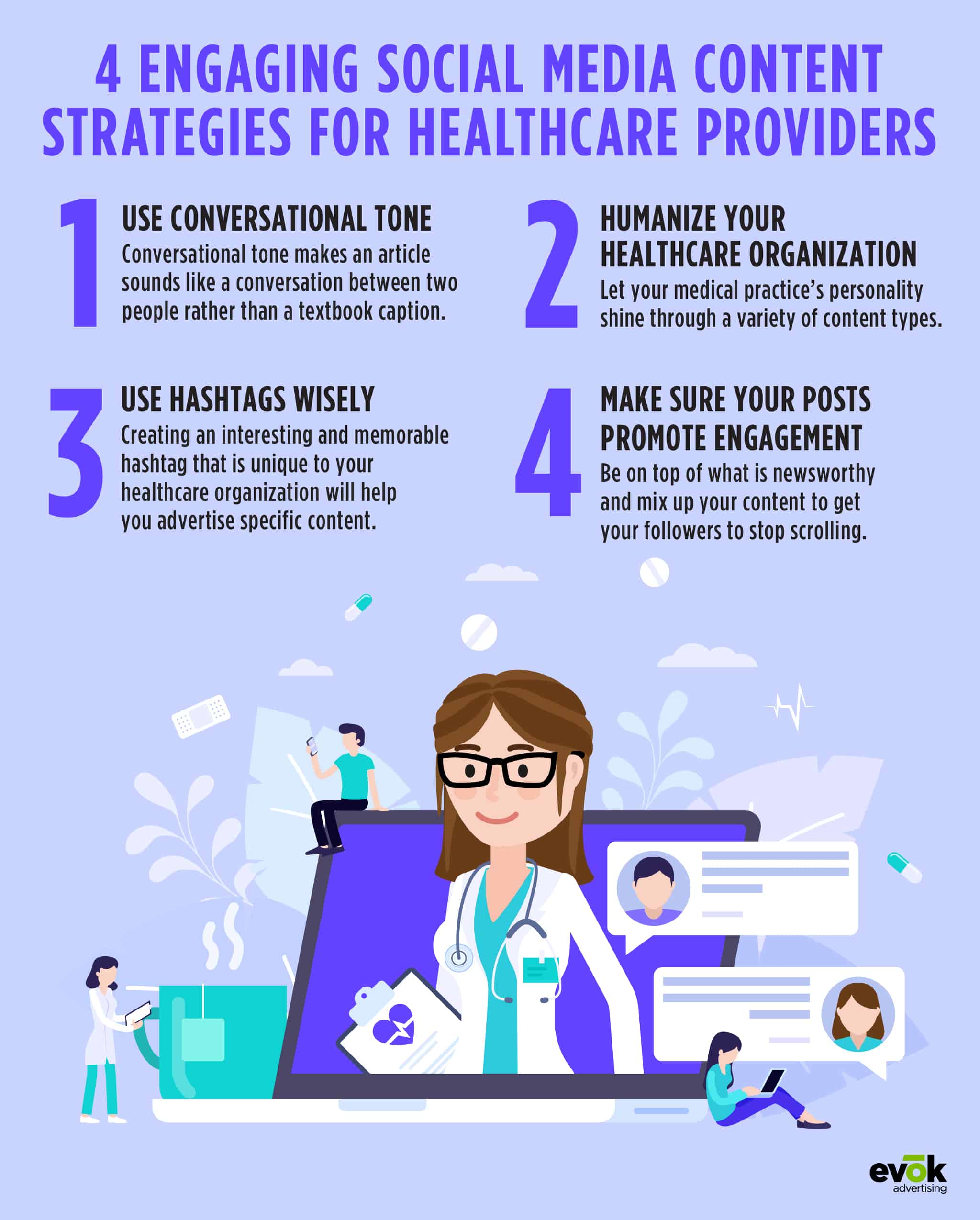
Different content formats catch different audience attention. Videos explain complex health topics clearly and simply. Infographics make health data easy to understand at a glance. Carousel posts tell a story step-by-step, keeping viewers engaged. Trying various formats shows which style your audience prefers. This experimentation improves content performance and patient engagement.
Credit: evokad.com
Frequently Asked Questions
How Social Media Is Used In Healthcare Marketing?
Social media in healthcare marketing promotes patient engagement, shares health tips, success stories, and events. It builds trust, raises brand awareness, and educates the audience, helping providers connect with current and potential patients effectively across digital platforms.
What Is The 5 5 5 Rule On Social Media?
The 5 5 5 rule on social media means posting 5 original posts, sharing 5 relevant posts, and engaging with 5 followers daily. This approach boosts engagement, builds community, and maintains consistent content flow. It helps grow your audience and strengthens brand presence efficiently.
What Are The 4 P’s Of Healthcare Marketing?
The 4 P’s of healthcare marketing are Product, Price, Place, and Promotion. They guide service offerings, pricing, accessibility, and communication strategies to reach patients effectively.
What Are The 5 P’s Of Healthcare Marketing?
The 5 P’s of healthcare marketing are Product, Price, Place, Promotion, and People. They guide service offerings, pricing, delivery, communication, and patient relationships.
Conclusion
Healthcare social media marketing helps connect providers with patients. It builds trust through sharing useful health information. Engaging content encourages patients to ask questions and learn more. Consistent posting keeps your audience interested and informed. Monitoring trends allows adapting to what works best.
Strong relationships grow when you respond to comments quickly. Clear, simple messages make health topics easier to understand. Using social media thoughtfully supports better care and awareness. This approach benefits both healthcare providers and the communities they serve.

