Best High Paying Affiliate Programs to Maximize Earnings
Lead SaaS Analyst & Software Developer at PCSaaS · Software Developer (GitHub @Ratankarmakar) · Google Ads & Analytics Certified · 500+ SaaS Tools Tested · 8+ years in software engineering, B2B SaaS evaluation, AppSumo deal auditing, and performance marketing
Searching for the best high paying affiliate programs usually turns up the same list: 50% commissions, $500 bounties, lifetime payouts. Then you sign up, send traffic, and earn almost nothing. The problem isn't the program.
It's how you're ranking them.
Commission percentage is only one variable. Earnings per click (EPC), the average revenue you earn per click sent, predicts real payout far better. Amazon Associates pays roughly 1% to 4% on most categories as of 2026, yet it converts cold traffic better than almost any merchant.
Per FTC guidance, you also need a clear affiliate disclosure on every page.
Quick Answer
High paying affiliate programs pay well per click, not just per sale. Top verticals include SaaS, web hosting, finance, insurance, and solar. Recurring commissions often beat one-time payouts.
Check EPC, cookie length, and payout terms first. A 30% recurring deal usually beats a 50% one-time deal.
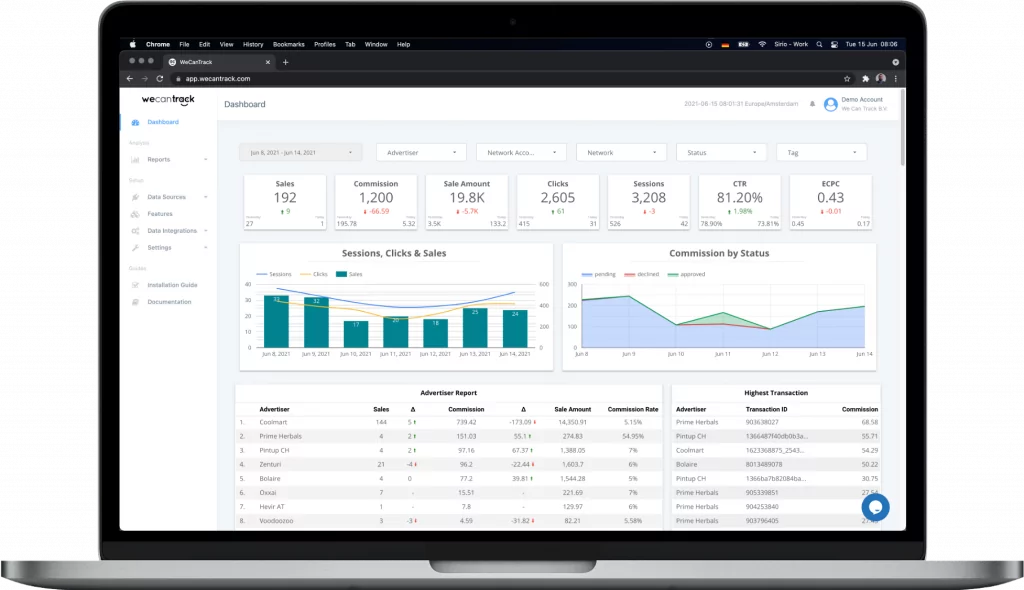
Image source: Bing (Web (fair-use with source credit))
Why the Highest Commission Rate Rarely Wins
A 60% commission sounds unbeatable, right up until you learn the product converts at 0.3% and refunds half its buyers. Now stack that against a 4% commission on a $1,200 item that converts at 3%. The second offer wins by a mile.
That's the whole game with affiliate income. Percentage is a multiplier, not the result. What matters is what lands in your account after clicks, conversions, refunds, and reversals.
The headline-number trap
Digital info-products on ClickBank, Digistore24, and JVZoo often advertise 50% to 75% commissions. That's real money on a $97 ebook. But the buyer pool is narrow, refund rates run high, and everyone targets the same keywords.
Retail sits at the other end. Amazon pays a few percent at best, yet it converts cold traffic better than almost any merchant alive. High conversion plus low commission can beat low conversion plus high commission.
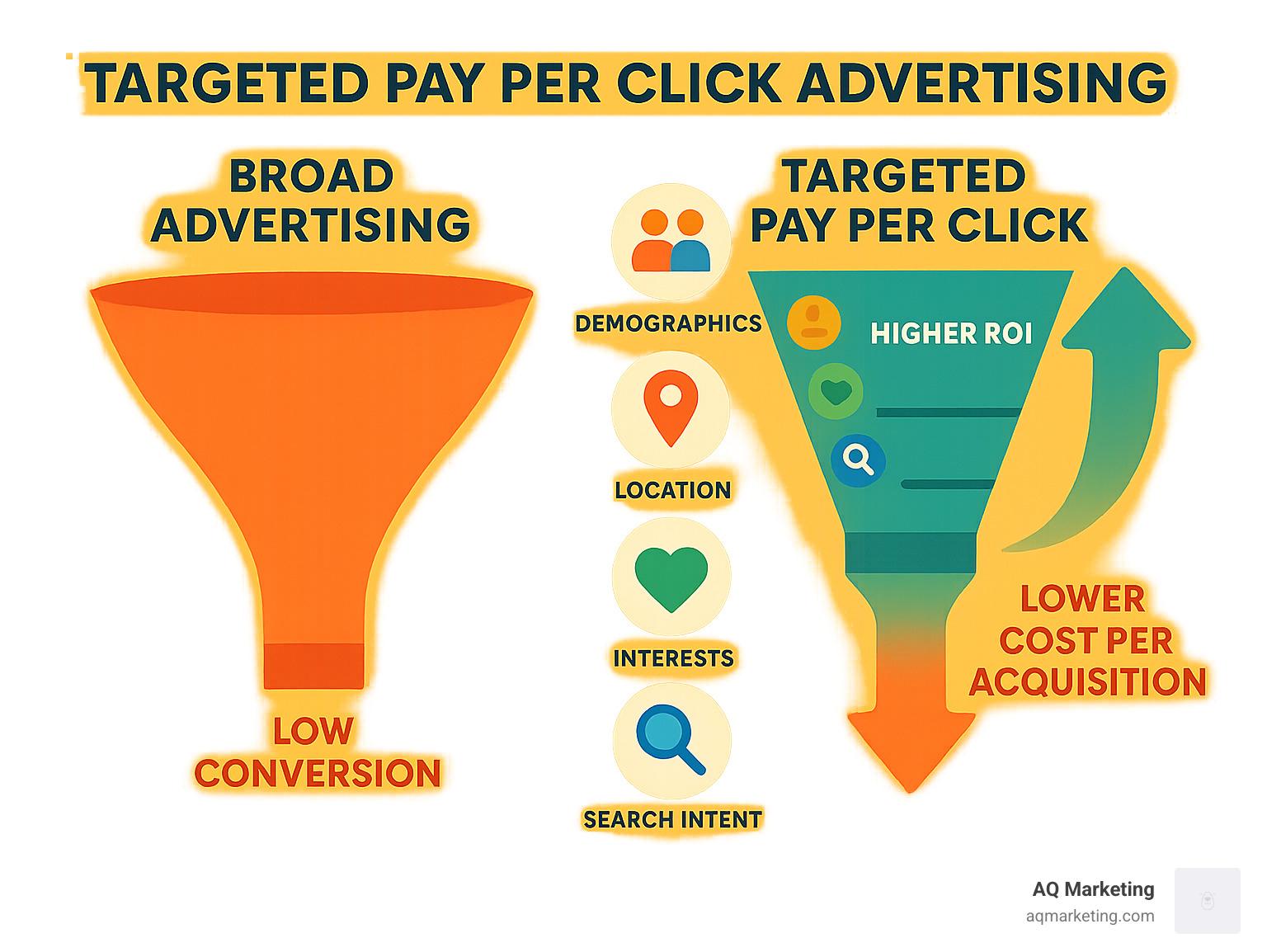
Image source: Web (Bing) / aqmarketing.com (Web image (fair-use with source credit))
What high paying actually means: EPC
Earnings per click settles most arguments. It's total commission divided by total clicks sent. Send 2,000 clicks, earn $400, and your EPC is $0.20.
| Offer | Commission | Conversion | EPC |
|---|---|---|---|
| Info-product | 60% of $97 | 0.5% | $0.29 |
| SaaS recurring | 25% of $99/mo | 2% | $0.50 |
| Web hosting | $100 flat | 1.5% | $1.50 |
Same click volume, wildly different outcomes. Hosting wins on EPC despite a flat $100 payout. That's the point.
How Affiliate Payouts Really Work
Understanding the mechanics stops you from signing deals that look great on paper and pay nothing in practice.
Commission models: one-time, revenue share, recurring, hybrid
Most programs pay in one of four ways. Flat CPA pays a set amount per sale or lead. Revenue share pays a percentage of order value.
Recurring pays a percentage every month the customer stays. Hybrid mixes a bounty with ongoing rev share, and two-tier adds a cut of what sub-affiliates earn.
Cookie windows and attribution
Your cookie window is how long you keep credit for a click. Amazon Associates uses 24 hours. Many networks run 30 to 90 days, and some SaaS programs stretch to 120.
Attribution matters just as much. Last-click gives the final touchpoint everything, so coupon sites often steal credit from review pages.
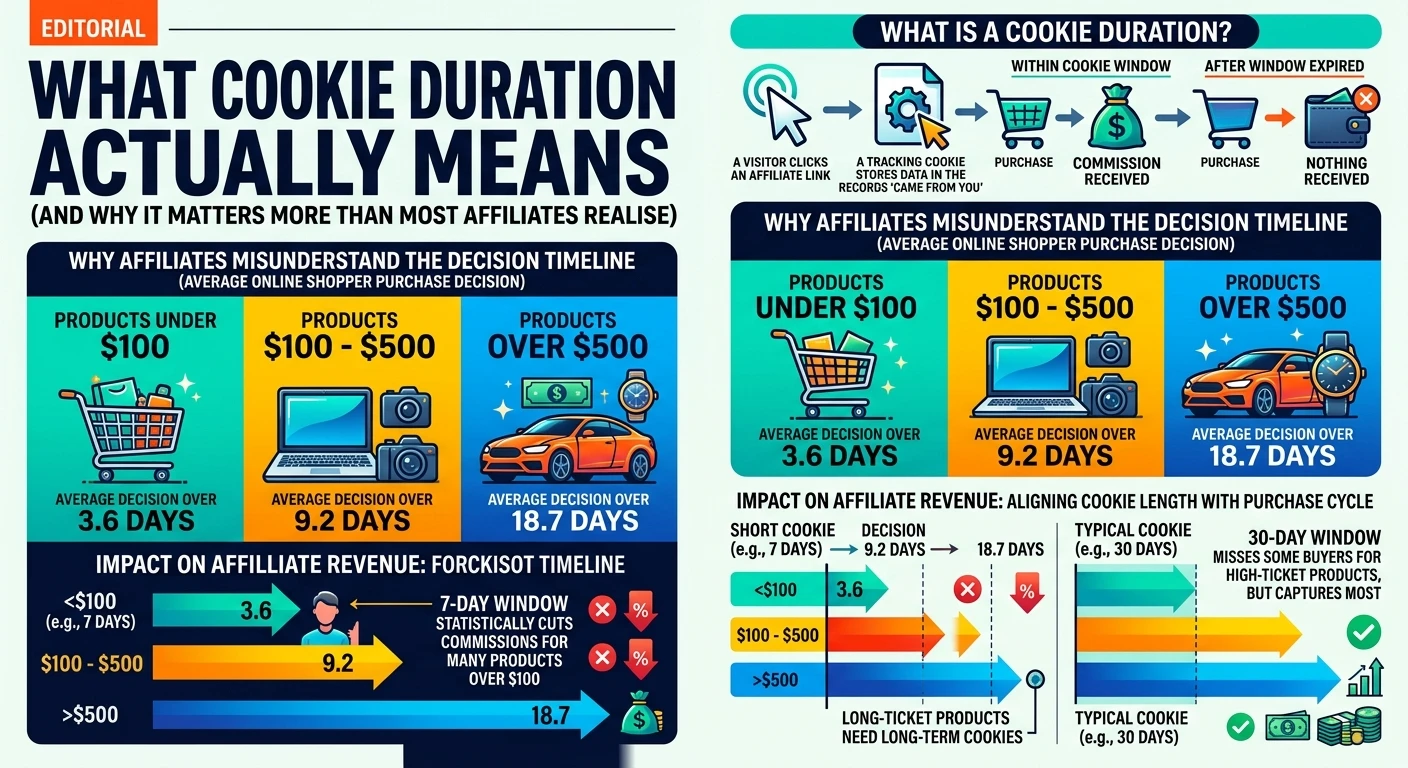
Image source: Bing (Web (fair-use with source credit))
The numbers that decide your income
- EPC: total commission divided by clicks sent
- CVR: percentage of clicks that convert
- AOV: average order value
- LTV: total revenue one customer generates
- Reversal rate: share of commissions clawed back after refunds
Payout mechanics: thresholds and terms
Payout thresholds set the minimum before you get paid. Networks often use $10 to $50. Payment terms run Net 15, Net 30, or Net 60.
PayPal and ACH are fastest, while wire and check cost more and take longer. Affiliate income is taxable, so track payouts from day one per IRS guidance.
Running your own redirects on a cheap server keeps tracking clean, and setting up a low-cost server takes about twenty minutes.
The Verticals That Pay Big and the Programs Leading Them
Not every niche pays the same. These are the ones where commissions are genuinely high.
Software, hosting, and cloud tools
SaaS and B2B tools pay 20% to 30% recurring or $50 to $500 per sale. Semrush, HubSpot, and ActiveCampaign all run partner programs through PartnerStack. Even smaller tools, like an AI writing assistant, pay 30% or more monthly.
Web hosting sits in the same bracket. WP Engine, Kinsta, and Cloudways pay $50 to $200 per signup.
Finance, insurance, and legal lead generation
Finance pays the biggest single bounties. Forex and CFD brokers run $200 to $800 CPAs where regulated. Insurance leads go for $10 to $100 each.
Legal lead gen in personal injury or lemon law can clear $500 per qualified case. These verticals demand clean traffic and strict compliance.
Solar, home services, and high-ticket retail
Solar installers pay $500 to $1,000 per installed system. Home warranty, roofing, and windows sit lower but convert steadily. High-ticket retail works too.
A $2,000 mattress at 5% beats a $30 gadget at 40%.
Digital products and creator platforms
ClickBank, Digistore24, and JVZoo host info-products at 30% to 75%. Kajabi, Teachable, and Thinkific pay 30% recurring on course subscriptions. If you're building a storefront to promote, getting a shop live quickly matters more than the commission rate at first.
Everyday retail
Amazon Associates, Walmart Creator, and Etsy pay single-digit percentages. These programs win on volume, not rate. They're also the easiest to join.
Side-by-Side: Payouts, Terms, and How Hard They Are to Join
| Program or vertical | Typical payout | Cookie window | Approval difficulty |
|---|---|---|---|
| SaaS and B2B tools | 20% to 30% recurring | 60 to 120 days | Moderate |
| Web hosting | $50 to $200 per signup | 30 to 90 days | Easy to moderate |
| Finance and CFD | $200 to $800 per sale | 30 days | Hard |
| Insurance leads | $10 to $100 per lead | 30 days | Moderate |
| Solar | $500 to $1,000 per install | 30 to 60 days | Moderate |
| Digital info-products | 30% to 75% per sale | 30 to 60 days | Easy |
| Amazon Associates | 1% to 4% per sale | 24 hours | Easy |
| iGaming rev share | 25% to 45% of net revenue | 30 to 90 days | Hard |
Image source: Bing (Web (fair-use with source credit))
Reading the table the right way
Don't read that table top to bottom. Convert each row to earnings per 1,000 visitors. Solar looks unbeatable at $1,000 a pop, but installations are rare and approvals take weeks.
Hosting pays less per sale and closes far more often.
Networks vs direct programs
Networks like Impact, CJ Affiliate, Awin, and ShareASale handle tracking, payment, and disputes for you. Direct programs pay more, but you manage the relationship. Start on a network, then negotiate direct once you're sending real volume.
The same applies to the tools you promote, where a head-to-head tool comparison often flips the obvious pick.
Which Program Fits Your Traffic and Niche
The best program for you depends on where your traffic comes from. Match the offer to the source.
SEO and review sites
If your traffic comes from search, you want long cookie windows and strong brand recognition. Review and comparison pages convert best on SaaS, hosting, and high-ticket physical products. Build a hub around commercial keywords like "best X for Y" and link to a handful of programs per page.
Video and short-form creators
If you're on YouTube or TikTok, prioritize programs with visual products and generous bounties. Hosting and VPN offers perform well because the value is easy to show. Amazon works too, but the 24-hour cookie punishes viewers who watch and buy later.
Creators who automate uploads can test offers faster, and picking the right tool speeds that up.
Email, podcast, and community audiences
If you own an email list or podcast feed, recurring programs are the play. One subscriber who sticks for a year can be worth $200 to $400 in commission. Newsletter sponsorships and affiliate links stack well together.
Podcast hosts should use memorable vanity URLs, since listeners can't click.
Paid traffic, lead-gen, and coupon operators
If you buy traffic, only CPA and lead-gen offers with fast payouts make sense. Anything with a 60-day cookie will bleed money before it pays. Coupon and cashback sites need high-volume merchants and tolerance for last-click rules.
Lead-gen affiliates in insurance, legal, or solar should expect compliance reviews before approval. Building an audience first helps, and finding the right creators to partner with can shortcut that.
Mistakes and Compliance Traps That Cost You Commissions
Most affiliates don't lose money to bad offers. They lose it to avoidable errors that show up months later.
Chasing commission rate instead of conversion rate
A 70% payout on a product that converts at 0.2% earns less than a 20% payout that converts at 3%. Check the network's reported EPC before you build a page around any offer. If a network won't show EPC data, treat that as a red flag.
Ignoring clawbacks, reversals, and validation periods
Many programs hold commissions for 30 to 60 days before confirming them. Refunds, chargebacks, and fraud reviews all trigger clawbacks. A $500 sale can shrink to $200 after reversals.
Budget your cash flow around confirmed commissions, not pending ones.
Breaking TOS on traffic sources
Brand bidding, coupon attribution, and unapproved email traffic get affiliates terminated without warning. Read the terms before you run any PPC. Amazon Associates bans paid search on its brand terms and closes accounts fast.
FTC disclosure and financial promotion rules
Per FTC endorsement guidance, every affiliate link needs a clear, conspicuous disclosure. Earnings claims require proof. Finance and health offers stack SEC, FINRA, FCA, and ASA rules on top.
A missing disclosure can void a month's payout.
Single-program dependency
One algorithm update or merchant policy change can zero out your income overnight. Spread across at least three programs in different verticals. Keep a backup offer ready for every page that earns.
Frequently Asked Questions
What is the highest-paying affiliate program right now?
Highest payouts per sale usually come from finance, solar, and legal lead gen. Forex CPAs run $200 to $800. Solar installs pay $500 to $1,000.
But EPC matters more than the headline number.
How much can a beginner realistically earn?
Most beginners earn under $500 in their first six months. Reaching $1,000 to $3,000 a month typically takes 12 to 24 months of consistent content. Traffic quality drives that number more than program choice.
Are recurring commissions better than one-time payouts?
Usually yes, if the product has low churn. A 25% recurring commission on a $99 monthly plan pays $297 over a year. One-time payouts pay more upfront but stop after the first sale.
Do I need a website to join high-paying programs?
No, but it helps. Networks like Impact and CJ Affiliate approve publishers with social, email, or video audiences too. Premium programs in finance and legal usually want a site and a clean traffic history.
How do I know if a program is shaving my commissions?
Compare your reported clicks and sales against your own analytics. Run a test purchase through your link. If the sale never appears, escalate to the network with your tracking IDs.
Do I pay tax on affiliate income?
Yes. Affiliate commissions are taxable income in the US, UK, and most other countries. US networks issue Form 1099-NEC once you pass $600 in a year.
Track expenses and set aside 25% to 30%.
Final Verdict: How to Pick and Stack Your Programs
The best high paying affiliate programs aren't the ones with the biggest numbers. They're the ones that match your traffic, pay reliably, and stack together.
The 5-program portfolio approach
Pick one primary offer that pays recurring. Add two mid-tier programs for volume. Keep one high-ticket offer for occasional big wins.
Hold a low-commission, high-conversion program like Amazon as a fallback. That mix smooths out seasonal dips and merchant policy changes.
When to negotiate a direct deal
Once you're sending consistent volume, ask the merchant directly. Networks typically take 20% to 30% of your commission. Going direct can lift your rate 10 to 20 points and unlock custom landing pages.
Most merchants want to see at least $2,000 a month in tracked sales first.
Your first three moves this week
- Apply to three programs in one vertical, not ten across five
- Build one comparison page around a commercial keyword
- Set up tracking so you can measure EPC per page
Then track EPC weekly. Cut anything below $0.10 after 500 clicks. Double down on whatever clears $0.50.
If you're building the content side too, tools like an AI content checker help keep pages clean. And testing a free trial on a research tool can sharpen your keyword picks before you write.

Similar Posts