
Learn how machine learning and trading technology help forecast trends, reduce risk, and make smarter investment decisions.
That's exactly what machine learning brings to the world of trading. If you want to gain an edge and transform how you approach the markets, understanding machine learning and trading is your first step. You'll discover how these cutting-edge techniques work, why they matter, and how they can change your trading game for good. For more on this, see our guide on smart clerk lifetime deal.
Ready to unlock smarter trading? Let's dive in.
An illustration of machine learning concepts applied to financial market analysis and trend prediction.
Credit: www.youtube.com
Machine Learning Basics
Machine learning is changing how traders make decisions. It uses computer programs to learn from data and improve over time. This helps traders spot patterns and predict market movements. Understanding the basics of machine learning is key for anyone interested in trading.
Machine learning starts with algorithms. These are step-by-step instructions that help machines learn from data. In trading, algorithms analyze past prices and other information to find trends. The better the algorithm, the smarter the trading strategy. For more on this, see our guide on youbooks lifetime deal.
Key Algorithms In Trading
Several algorithms play a big role in machine learning for trading. One popular type is the decision tree. It splits data into branches to reach a decision. Another is the support vector machine, which finds the best line to separate data points.
Neural networks mimic how the human brain works. They handle complex data and find hidden patterns. Random forests combine many decision trees to improve accuracy. Each algorithm has strengths for different trading goals.
Data Sources And Preparation
Data is the fuel for machine learning models. Traders use price data, volume, and economic indicators. News and social media also provide useful information. The quality of data affects how well the model performs.
Preparing data means cleaning and organizing it. Missing values are filled or removed. Data is often normalized to keep numbers on the same scale. Good preparation helps the algorithm learn the right lessons.
Practical Workflow For Beginners
In practice, many newcomers to machine learning and trading start with a simple workflow. First, choose a single asset like an ETF or a major stock pair. Collect at least two years of daily price and volume data from a reliable source. Next, split that data into a training set (roughly 80%) and a testing set (the remaining 20%). Train a basic model — such as a decision tree — on the training data, then evaluate its predictions against the actual prices in the test set. A common mistake is to skip the test set entirely and trade based on training results, which almost always leads to overconfidence and losses. Starting small with one asset helps build intuition before scaling to a full portfolio.
Algorithmic Trading Strategies
Algorithmic trading strategies use computer programs to make trading decisions. These strategies rely on data and mathematical models to buy or sell assets automatically. Machine learning enhances these models by allowing them to learn from past data and improve over time. This makes trading faster, more precise, and less influenced by human emotions.
Traders use different types of algorithmic strategies to fit various market conditions. Some focus on following market trends, others on price corrections, and some analyze market sentiment. Each strategy has unique strengths and uses machine learning to gain an edge in the markets.
Trend Following Models
Trend following models aim to capture profits by identifying and riding market trends. These models use past price data to detect upward or downward momentum. Machine learning helps by recognizing complex patterns that simple rules may miss. These models enter trades when a trend is strong and exit when it weakens.
Mean Reversion Techniques
Mean reversion techniques assume prices will return to their average over time. These strategies look for price deviations that are likely to reverse. Machine learning improves mean reversion by better estimating the average price and timing entries. Traders use this to buy when prices are low and sell when prices are high.
Sentiment Analysis Integration
Sentiment analysis uses data from news, social media, and reports to gauge market mood. Machine learning processes this text data to measure positive or negative sentiment. Integrating sentiment analysis helps algorithms predict market moves caused by human emotions. This adds a new layer of insight beyond price and volume data.
Feature Engineering
Feature engineering plays a key role in machine learning for trading. It transforms raw data into useful inputs that improve model accuracy. Well-designed features help models understand market patterns and predict price movements better.
This process involves creating, selecting, and modifying variables from financial data. The goal is to capture important signals that influence trading decisions. Feature engineering requires domain knowledge and creativity to extract meaningful insights.
Technical Indicators
Technical indicators are popular features in trading models. They summarize price and volume data into simple metrics. Examples include moving averages, relative strength index (RSI), and Bollinger Bands. These indicators highlight trends, momentum, and volatility.
Traders use them to identify entry and exit points. Machine learning models benefit from these indicators as they provide clear signals. Combining multiple indicators can reveal complex market behavior.
Alternative Data Usage
Alternative data refers to non-traditional sources beyond price and volume. Social media sentiment, news headlines, and economic reports are common examples. This data offers fresh perspectives on market sentiment and events.
Incorporating alternative data enriches feature sets. It helps models react faster to news and social trends. Using diverse data sources can improve prediction accuracy and reduce risk.
Dimensionality Reduction
Dimensionality reduction simplifies large sets of features. It removes redundant or irrelevant variables. This process reduces noise and speeds up model training. Techniques like Principal Component Analysis (PCA) and t-SNE are widely used.
Reducing dimensions helps avoid overfitting and improves generalization. It allows the model to focus on the most important information. Effective dimensionality reduction enhances both performance and interpretability.
Common Feature Engineering Mistakes
One frequent error traders make is creating too many highly correlated features. For example, including both the 10-day and 11-day moving averages adds little new information while increasing model complexity. Another mistake is using future data accidentally — such as incorporating next week's volatility into today's features. Always ensure features are calculated only from data available at the prediction time. A practical tip is to start with fewer than a dozen carefully chosen features and add new ones only after validating they improve out-of-sample performance.
Model Training And Validation
Model training and validation form the foundation of machine learning in trading. These processes help create models that predict market movements reliably. Training involves teaching a model using historical data. Validation checks if the model performs well on new, unseen data. Both steps are crucial to avoid errors and improve accuracy.
Backtesting Approhces
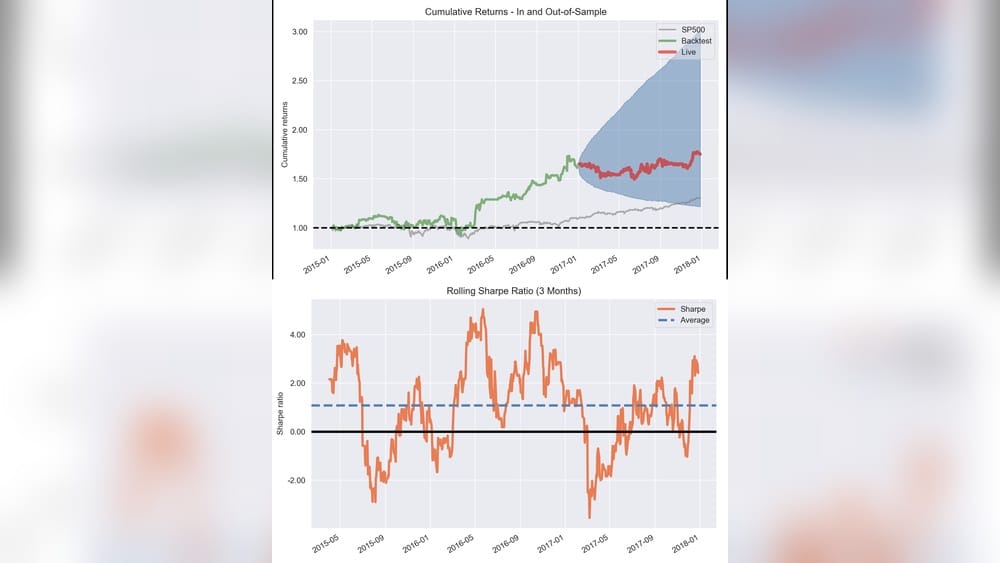
Backtesting simulates a trading strategy using past market data. It shows how the model would have performed historically. Traders test different models to find the best one. This method reveals strengths and weaknesses before real money is used. A good backtest uses a long and varied time period to reduce bias.
Cross-validation Techniques
Cross-validation divides data into parts to test model stability. The model trains on some parts and validates on others. This repeats several times with different splits. It prevents the model from just memorizing data. Cross-validation ensures the model works well on different data sets, not just one.
Overfitting Prevention
Overfitting happens when a model learns noise instead of patterns. It performs well on training data but poorly on new data. To prevent this, simplify the model and limit features. Use regularization methods and stop training early if needed. Proper validation also helps detect and avoid overfitting.
Honest Backtesting Practices
A realistic backtest accounts for transaction costs, slippage, and market impact. Many traders see impressive backtest results but lose money in live markets because they ignored these frictions. In 2026, with tighter spreads on most major instruments, commissions and slippage still eat 0.1% to 0.5% per round-trip trade on average. A model that appears profitable may turn unprofitable when these costs are included. Always subtract realistic trading costs from your backtest returns before trusting the strategy.
Deep Learning In Trading
Deep learning plays a growing role in modern trading strategies. It helps analyze vast amounts of market data quickly and accurately. Traders use deep learning to detect patterns that traditional methods often miss. This technology improves decision-making and risk management. It opens new possibilities for automated trading systems.
Neural Networks Applications
Neural networks mimic the human brain's way of processing information. They can learn complex patterns from historical price data. Traders use them to predict stock prices and market trends. Neural networks identify hidden relationships between different financial indicators. These models adapt over time to changing market conditions. This flexibility makes them valuable in volatile markets.
Reinforcement Learning Methods
Reinforcement learning teaches machines to make decisions by trial and error. Trading algorithms learn which actions lead to higher profits. They receive rewards or penalties based on their performance. This method helps develop strategies that improve with experience. It can optimize trade timing and portfolio management. Reinforcement learning supports continuous learning in dynamic markets.
Risk Management
Risk management is a vital part of trading that protects investors from large losses. Machine learning helps traders manage risk by analyzing data and predicting market moves. It supports making smarter decisions to keep portfolios safe and balanced.
Using machine learning, traders can improve how they control risk. Algorithms process vast amounts of information quickly. This allows identifying potential risks before they become serious problems.
Portfolio Optimization
Machine learning helps create the best mix of assets in a portfolio. It finds combinations that balance risk and return. This reduces exposure to any single market event. Algorithms adjust portfolios dynamically as market conditions change.
Drawdown Control
Drawdown means the loss from a peak to a trough in a portfolio. Machine learning models detect early signs of a drawdown. They trigger actions to limit losses before they grow larger. This keeps overall portfolio health stable during volatile times.
Position Sizing Models
Position sizing defines how much to invest in each trade. Machine learning calculates the optimal size based on risk tolerance and market data. It prevents overexposure to risky trades. This maintains steady growth and protects capital from big swings.
Correlation And Hedging
Machine learning models can also monitor correlations between assets in real time. When correlations shift — as they often do during market stress — the model can suggest hedges such as options or inverse ETFs. This adds a layer of protection beyond simple position sizing. Traders who use these tools alongside other automated tools like those for deal flow management software or portfolio tracking often find they can respond to regime changes more quickly than manual methods allow.
Deployment And Execution
Deployment and execution are critical steps in using machine learning for trading. This phase puts models into real market action. The process must be fast, reliable, and precise to gain profits. Proper deployment ensures the trading system reacts to market changes instantly. Execution needs to minimize delays and errors to maintain strategy effectiveness. Let's explore key elements that make deployment and execution successful in trading.
Real-time Data Handling
Real-time data fuels machine learning models in trading. The system captures live market prices, volumes, and news. Data must be cleaned and organized quickly to avoid mistakes. Fast processing helps models make timely predictions. Delays or missing data can cause wrong trades. Efficient data handling supports continuous learning and adaptation to new market trends.
Execution Algorithms
Execution algorithms convert model signals into actual trades. They decide the timing, size, and price of orders. Smart algorithms reduce market impact and trading costs. They split large orders into smaller parts to avoid price swings. Speed and accuracy are vital to follow model recommendations closely. The right execution method improves overall strategy performance and risk control.
Monitoring And Alerts
Monitoring tracks the system's health and trading results in real time. It checks if models behave as expected and if trades execute correctly. Alerts warn traders about unusual events or system failures. Quick responses to alerts prevent losses and fix issues fast. Continuous monitoring ensures smooth operation and builds trust in automated trading systems.

A visual representation of a trading dashboard with live market data feeds and algorithmic signals.
Credit: www.my-mooc.com
Challenges And Limitations
Machine learning has become a popular tool in trading, offering new ways to analyze data and make decisions. Despite its potential, several challenges limit its effectiveness. Understanding these issues is key to applying machine learning successfully in trading.
Market Regime Changes
Markets often change their behavior suddenly. These shifts, called regime changes, can confuse machine learning models. A model trained on past data may fail when the market acts differently. This leads to poor predictions and losses. Models need to adapt quickly to new market conditions, but this remains a difficult task.
Data Quality Issues
Machine learning depends on clean, accurate data. Trading data can be noisy, incomplete, or biased. Errors in data cause models to learn wrong patterns. Low-quality data reduces the model's reliability and performance. Ensuring good data quality requires constant cleaning and validation.
Model Interpretability
Many machine learning models act like "black boxes." Traders find it hard to understand how decisions are made. Lack of transparency reduces trust in the model's suggestions. Clear explanations are important for risk management and regulatory compliance. Improving interpretability helps traders make better use of machine learning tools.
Computational Costs
Training and running complex models — especially deep neural networks — demands significant computing power. Cloud GPU instances or dedicated hardware can add hundreds of dollars per month to operating costs. For retail traders, these expenses can quickly eat into profits. A practical approach is to start with simpler models like gradient-boosted trees, which offer strong performance on moderate hardware, and only upgrade to deep learning if the added complexity clearly improves results after accounting for costs.
Future Trends
The future of machine learning in trading holds exciting possibilities. Technology is evolving fast, shaping how markets operate. New tools and methods will change trading strategies and market analysis. Traders and firms must stay aware of these trends to remain competitive.
Ai Advancements
Artificial intelligence continues to improve. New models learn faster and understand data better. This allows machines to spot patterns humans might miss. AI will handle more complex tasks, like predicting market shifts. Improved AI will support smarter, quicker trading decisions.
Quantum Computing Impact
Quantum computing promises powerful processing capabilities. It can analyze vast data sets much faster than current computers. This speed may enhance machine learning models in trading. Quantum algorithms could solve problems beyond classical computing reach. Traders may use quantum tech to optimize portfolios and manage risks more effectively.
Integration With Traditional Finance
Machine learning is blending with traditional finance methods. Banks and firms adopt AI tools alongside existing strategies. This fusion improves accuracy in risk assessment and fraud detection. It also enhances customer service and market predictions. The integration helps create balanced, data-driven financial systems.
Retail Access To Institutional Tools
By 2026, brokerage platforms increasingly offer built-in machine learning features that were once reserved for hedge funds. Retail traders can now access pre-built models for sentiment scoring, volatility forecasting, and portfolio rebalancing. This democratization means that understanding the fundamentals of machine learning and trading is more valuable than ever — even without a computer science background, traders can leverage these tools to compete more effectively. Pairing these features with a reliable execution environment can dramatically improve a trader's workflow.

An artistic representation of emerging technologies like AI and quantum computing influencing financial market predictions.
Credit: medium.com
Read More : Learn Machine Learning: Step-by-Step Guide to Master AI Skills
Frequently Asked Questions
What Is Machine Learning In Trading?
Machine learning in trading uses algorithms to analyze data and predict market trends. It helps automate decision-making and improve trading accuracy.
How Does Machine Learning Improve Trading Strategies?
Machine learning identifies patterns in data that humans might miss. This leads to more informed and adaptive trading strategies with better risk management.
What Are Common Machine Learning Techniques In Trading?
Common techniques include supervised learning, reinforcement learning, and deep learning. These help forecast prices, classify market conditions, and optimize trading actions.
Can Machine Learning Reduce Trading Risks?
Yes, machine learning models can detect anomalies and predict downturns. This allows traders to minimize losses and manage risks effectively.
How Much Data Do I Need To Start?
There is no universal minimum, but most practitioners recommend at least 500 to 1,000 data points per feature. For daily trading data, that often translates to two to four years of history. Using shorter periods increases the risk of overfitting to a single market regime.
Do I Need A Programming Background?
Basic familiarity with Python and libraries like pandas, scikit-learn, and TensorFlow is helpful but not mandatory. Several retail platforms now offer drag-and-drop model builders. That said, understanding the underlying concepts — as covered in this article — remains essential for interpreting results and avoiding common pitfalls.
Conclusion
Machine learning is changing how traders analyze markets and make decisions. It helps find patterns that humans might miss. Traders can use data to predict price movements more accurately. This technology keeps improving and becoming more accessible. Beginners and experts both benefit from machine learning tools.
Understanding these methods can improve trading strategies over time. Staying updated with machine learning trends is important for success. The future of trading will likely involve more AI and automation. Exploring machine learning can open new paths in trading careers.
Start building your edge today — apply one of the workflows from this guide to a small dataset and see what patterns emerge. Every expert trader started with that first experiment.