
When it comes to building an eCommerce store, the two most popular platforms that frequently come up are Shopify vs WooCommerce. Both platforms have their strengths and weaknesses, and choosing the best one for your business can be a challenge. In this guide, we’ll compare Shopify vs WooCommerce in terms of ease of use, pricing, features, customization, SEO capabilities, and more. By the end, you’ll have a clearer understanding of which platform is the best fit for your online store.
Introduction
With the rise of online shopping, businesses are looking for ways to create efficient, user-friendly eCommerce stores that can drive sales. Shopify and WooCommerce are two of the most powerful tools available to entrepreneurs, but which one is the right choice for your needs? Whether you are just starting or are already an experienced eCommerce seller, making the right decision is crucial for your business’s success.
In this article, we will break down all the essential factors that differentiate Shopify from WooCommerce so that you can make an informed decision and maximize your eCommerce potential.
What is Shopify?
Shopify is a fully hosted, cloud-based eCommerce platform that provides everything you need to set up, run, and grow an online store. Whether you’re selling physical products, digital goods, or services, Shopify offers a comprehensive set of tools to help you manage your business.
Shopify is designed to be user-friendly, making it easy for beginners to create and manage their stores without requiring technical skills. It comes with a variety of themes, apps, and integrations to help you customize your store and scale it as your business grows.
What is WooCommerce?
WooCommerce is an open-source eCommerce plugin for WordPress. Unlike Shopify, WooCommerce allows you to build a store directly on your existing WordPress site. WooCommerce is highly customizable, offering a wide range of themes and extensions that let you tailor the platform to your specific needs.
Since it’s open-source, WooCommerce gives you full control over your store’s design and functionality. However, it also requires more technical knowledge and hands-on maintenance compared to Shopify.

Shopify vs WooCommerce: Ease of Use
Shopify: A Beginner-Friendly Option
When it comes to ease of use, Shopify is hard to beat. Since it’s a fully hosted platform, you don’t have to worry about web hosting, security, or updates. You simply choose a plan, pick a theme, and start adding products. The intuitive drag-and-drop interface makes it easy for anyone to set up and manage a store, even without any coding experience.
WooCommerce: Requires More Technical Skills
While WooCommerce is relatively easy to install on a WordPress website, it does require a bit more technical know-how. You’ll need to find hosting, install WordPress, configure WooCommerce, and manage regular updates. For users who are familiar with WordPress, this might not be a big deal, but beginners could find the setup process a little overwhelming.
Shopify vs WooCommerce: Pricing
Shopify Pricing
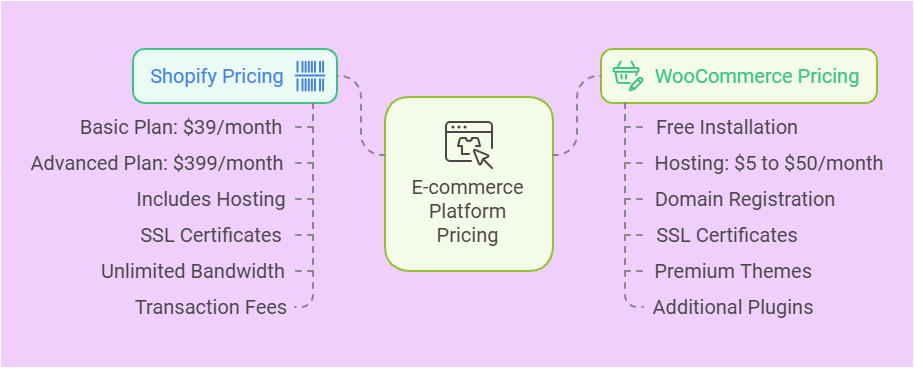
Shopify offers several pricing plans starting at $39/month for the Basic plan, up to $399/month for the Advanced plan. These prices include hosting, SSL certificates, and unlimited bandwidth. Shopify also takes a percentage of your sales, which varies depending on your plan and whether you use Shopify Payments or a third-party payment processor.
While Shopify’s pricing can get expensive as your store grows, it provides a lot of value with its all-in-one service, so you don’t have to pay for third-party hosting, apps, or security.
WooCommerce Pricing
WooCommerce itself is free to install, but you’ll still need to pay for web hosting, domain registration, SSL certificates, and other essential tools. Hosting can cost anywhere from $5 to $50 per month, depending on the provider, and you may need to purchase premium themes or plugins for additional features.
The flexibility of WooCommerce’s pricing structure makes it a good option for those on a tight budget, but you may end up spending more if you need additional features.
Shopify vs WooCommerce: Features & Customization
Shopify Features
Shopify offers a wide range of built-in features, including:
- Payment Gateway Integration: Shopify Payments, Stripe, PayPal, and many more.
- Marketing Tools: SEO optimization, email marketing, social media integrations.
- Security: SSL encryption, PCI-compliant payments.
- Mobile Optimization: Mobile-ready themes and apps.
- App Store: Thousands of apps for additional functionality (inventory management, accounting, customer service).
Shopify’s main strength lies in its simplicity and all-in-one approach, but customization can sometimes be limited compared to WooCommerce.
WooCommerce Features
WooCommerce offers more flexibility and customization options, including:
- Full Control Over Design: Custom themes and the ability to tweak the code.
- Wide Range of Extensions: Plugins for SEO, shipping, payment gateways, and marketing tools.
- Scalability: You can scale your store as needed, adding features and functionality.
- Integration with WordPress: Seamless integration with the world’s most popular content management system.
WooCommerce is ideal for users who want complete control over their store’s look and feel, as well as more customization options.
Shopify vs WooCommerce: SEO Capabilities
Shopify SEO
Shopify offers a range of built-in SEO features such as:
- Automatic Sitemap Creation: Easy indexing by search engines.
- Editable Meta Tags: Custom title tags, descriptions, and URL structure.
- Fast Load Times: Optimized for performance and speed.
Shopify’s SEO features are solid, and it provides users with an easy way to optimize their store for search engines without needing advanced SEO knowledge.
WooCommerce SEO
WooCommerce, integrated with WordPress, benefits from one of the best SEO ecosystems. WordPress offers advanced SEO plugins like Yoast SEO, which lets you manage meta tags, optimize images, and set custom redirects.
WooCommerce is a better option if you’re looking for more SEO customization and control over your website’s optimization.
Shopify vs WooCommerce: Customer Support
Shopify Support
Shopify offers 24/7 customer support via live chat, email, and phone. Their support team is known for being highly responsive and helpful, making it easy to get assistance if you run into any issues.
WooCommerce Support
Since WooCommerce is open-source, customer support is less centralized. You can find help through the WordPress forums, paid support from third-party providers, or by hiring a developer. However, this means that if you run into problems, it may take longer to find solutions.
Shopify vs WooCommerce: Which is More Secure?
Shopify Security
Shopify is a fully hosted platform, meaning they handle all the security aspects for you. It comes with SSL certificates, PCI compliance, and other security features that help protect customer data and transactions.
WooCommerce Security
With WooCommerce, security is your responsibility. You’ll need to set up SSL certificates, update WordPress and WooCommerce regularly, and take precautions against potential vulnerabilities. While WooCommerce itself is secure, it requires more effort on your part to keep everything safe.
Shopify vs WooCommerce: Which is Better for Your Business?
Ultimately, the best choice depends on your needs and expertise:
- Shopify is better if you want an all-in-one, easy-to-use platform that handles everything for you, from hosting to security. It’s ideal for beginners and businesses that prefer simplicity and convenience.
- WooCommerce is ideal if you have technical expertise or already use WordPress. It gives you full control over customization and offers a flexible, cost-effective solution for businesses that need more features.
FAQs About Shopify vs WooCommerce
Which is cheaper: Shopify or WooCommerce?
WooCommerce is generally cheaper to start with since the plugin itself is free. However, you’ll need to pay for hosting, domains, and additional plugins. Shopify includes hosting and security, but its subscription fees can add up.
Can I scale my store on WooCommerce?
Yes, WooCommerce is highly scalable and can grow with your business. You can add features and functionality through plugins as your needs evolve.
Is Shopify good for SEO?
Yes, Shopify has built-in SEO features, and you can optimize your store with ease. However, WooCommerce offers more advanced SEO customization options.
Do I need technical knowledge to use WooCommerce?
Yes, WooCommerce requires a certain level of technical expertise, especially when it comes to hosting, managing updates, and customizing your site.
Can I use both Shopify and WooCommerce for my store?
You can’t use them simultaneously for the same store, but you can consider migrating from one platform to the other as your business evolves.
Which platform is better for beginners?
Shopify is easier for beginners due to its all-in-one setup and lack of technical requirements. WooCommerce may require more learning and setup but offers greater flexibility in the long run.
Conclusion
Choosing between Shopify and WooCommerce ultimately comes down to your business needs and technical expertise. If you value ease of use, security, and all-in-one features, Shopify may be
the right choice for you. On the other hand, if you prefer full control over customization and are comfortable with WordPress, WooCommerce offers more flexibility and scalability.
Consider the size of your business, your budget, and your long-term goals before making a decision. Both platforms can help you create a successful online store, but one may be more suited to your unique needs than the other.


1 thought on “Shopify vs WooCommerce: Which is Better for Your Online Store in 2025?”