
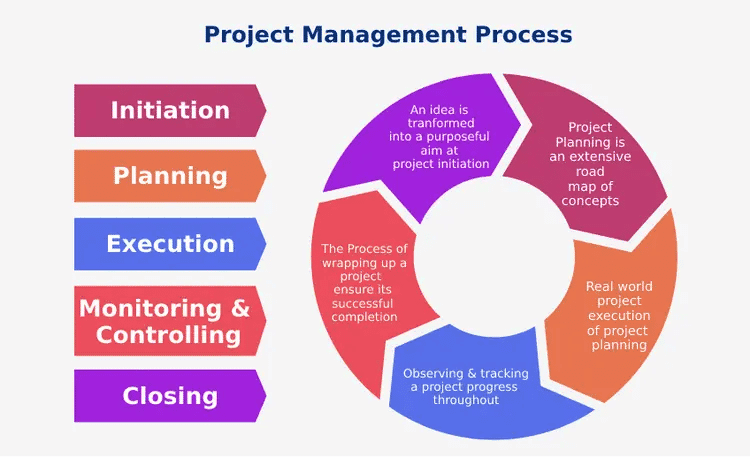
What is Project Management? It is the process of planning, organizing, and overseeing tasks to achieve specific goals within a set timeline and budget.
At its core, project management is about organizing resources—people, money, and technology—to get things done efficiently and on time. Imagine having a clear plan that guides every step of your project, from start to finish, helping you avoid costly mistakes and delays. Curious to learn how this works and which methods might suit your needs best? Keep reading to discover the essential stages, popular techniques like Agile and Waterfall, and how mastering project management can boost your success.
Introduction To Project Management
Project management is a vital skill used by many industries, including construction, engineering, healthcare, and IT. It involves organizing and coordinating resources to complete specific goals efficiently. Understanding the basics of project management helps teams deliver projects on time, within budget, and with the expected quality.
Defining Project Management: An Organized Path To Success
Project management is the process of planning, organizing, and managing resources to achieve specific goals. It ensures that a project moves smoothly from start to finish. Unlike day-to-day operations, project management handles unique tasks with clear deadlines and objectives.
Key elements include coordinating people, finances, technology, and knowledge to complete a task. It breaks large projects into smaller, manageable steps to track progress easily.
The Purpose And Scope Of Project Management
The main purpose of project management is to deliver a project successfully by meeting all defined goals. It controls every part of the project, including planning, execution, and completion.
- Defines clear objectives and deliverables
- Assigns roles and responsibilities
- Monitors progress and adjusts plans
- Ensures quality and stakeholder satisfaction
Project management applies to diverse industries, adapting to different project sizes and complexities. It helps keep projects aligned with business goals and customer needs.
Understanding The Core Constraints: Scope, Time, And Budget
Every project faces three main constraints, often called the triple constraints or project management triangle:
| Constraint | Description | Impact on Project |
|---|---|---|
| Scope | Defines what work must be done and what is excluded | Changes affect time and budget; must be controlled carefully |
| Time | The schedule for project completion, including deadlines | Delays can increase costs and reduce quality |
| Budget | The financial resources allocated to the project | Overspending may require scope reduction or deadline extension |
Balancing these constraints ensures project success. Changing one affects the others, so managers must make informed decisions.
Credit: www.arenasolutions.com
Key Features Of Project Management And Their Benefits
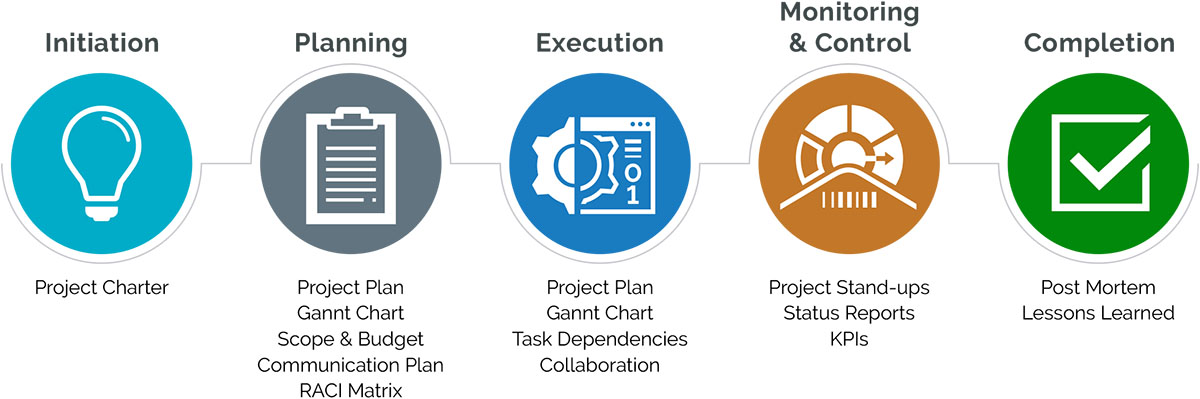
Project management involves several essential features that guide a project from start to finish. These features help teams work smoothly, reduce risks, and deliver results on time and within budget. Each step adds value by organizing efforts and resources effectively.
Comprehensive Planning: Setting Clear Goals And Roadmaps
Planning defines the project’s purpose and direction. It sets clear goals and a detailed roadmap for tasks.
- Identifies objectives and deliverables
- Estimates time and resources needed
- Creates schedules and milestones
Good planning reduces confusion and increases focus. Everyone understands what to do and when.
Effective Organizing: Aligning Tasks, Teams, And Resources
Organizing arranges tasks and assigns roles to the right people. It ensures resources are ready and available.
- Distributes responsibilities clearly
- Coordinates team efforts
- Manages materials, tools, and budget
This alignment improves teamwork and prevents delays caused by missing resources or unclear duties.
Execution Excellence: Turning Plans Into Tangible Outcomes
Execution is putting the plan into action. It transforms ideas and schedules into real work and results.
- Follows the planned steps
- Completes tasks on time
- Maintains quality standards
Strong execution leads to steady progress and high-quality deliverables.
Monitoring And Control: Staying On Track And Managing Risks
Monitoring tracks progress and compares it to the plan. Control manages issues and risks that arise.
| Activity | Benefit |
|---|---|
| Track schedule and budget | Detect delays and overspending early |
| Identify and manage risks | Reduce impact of problems |
| Adjust plans as needed | Keep project aligned with goals |
This process helps keep the project on course and prevents surprises.
Project Closure: Delivering Results And Learning For The Future
Closure finalizes the project by delivering the finished product or service.
- Confirm all work is complete
- Obtain approvals from stakeholders
- Document lessons learned
- Release resources and close contracts
Closing ensures satisfaction with results and prepares teams for better future projects.
Pricing And Affordability Of Project Management Solutions
Project management solutions vary widely in price and features. Businesses must find tools that fit their budget without losing key functions. Affordability depends on company size, project complexity, and required features. Understanding cost structures helps make smart choices.
Overview Of Project Management Tools And Their Cost Structures
Project management tools come in various forms, including cloud-based software and on-premise solutions. Pricing models usually fall into these categories:
- Subscription-based: Pay monthly or yearly per user or per team.
- One-time purchase: Pay once for lifetime access, often for desktop apps.
- Freemium: Basic features free, advanced features require payment.
Common price ranges include:
| Tool Type | Price Range (per user/month) | Typical Features |
|---|---|---|
| Basic/Freemium | $0 – $10 | Task lists, simple collaboration, limited storage |
| Mid-tier | $10 – $30 | Time tracking, reporting, integrations, automation |
| Enterprise | $30+ | Advanced analytics, security, custom workflows, dedicated support |
Balancing Budget With Features: Choosing The Right Investment
Choosing a project management tool means balancing cost and functionality. Focus on features that improve team productivity and project tracking. Avoid paying for extras you won’t use.
Consider these steps:
- Identify essential features your projects need.
- Evaluate how each tool supports those features.
- Compare prices and total cost of ownership.
- Test free trials to assess usability and fit.
Smaller teams often benefit from simple, affordable tools. Larger organizations may need advanced features despite higher costs.
Cost-benefit Analysis: Maximizing Value From Project Management
Analyze the return on investment (ROI) before purchasing a solution. Calculate how much time and money the tool can save. Consider benefits like:
- Improved task coordination
- Reduced project delays
- Better resource allocation
- Clearer communication
Use this formula for a basic cost-benefit view:
ROI = (Savings from tool - Cost of tool) / Cost of toolHigh ROI tools offer more value for their cost. Focus on solutions that help your team complete projects efficiently.
Credit: www.knowledgehut.com
Pros And Cons Of Project Management In Real-world Scenarios
Project management plays a vital role across many industries. It helps teams organize tasks, manage resources, and reach goals effectively. Despite its benefits, it also faces challenges in practical use. Understanding both the advantages and obstacles helps businesses use project management wisely.
Advantages: Achieving Goals And Enhancing Resource Efficiency
Project management focuses on clear goals and timelines. It breaks large tasks into smaller, manageable steps. This approach improves team focus and drives progress.
- Better planning: Defines objectives clearly from the start.
- Resource management: Allocates finances, personnel, and tools efficiently.
- Time management: Keeps projects on schedule through monitoring.
- Improved communication: Ensures all team members stay informed.
These advantages help businesses finish projects faster and use resources wisely. Many industries like construction, IT, and healthcare depend on this process for success.
Challenges: Common Obstacles And How To Overcome Them
Project management can face several hurdles in the real world. Some common issues include:
- Scope creep: Unplanned changes can delay progress.
- Poor communication: Misunderstandings slow down tasks.
- Resource shortages: Lack of staff or budget causes setbacks.
- Unrealistic deadlines: Pressure leads to rushed work and errors.
Overcoming these challenges requires strong leadership and clear processes. Teams should:
- Set clear, documented goals and limits.
- Hold regular meetings for updates.
- Plan resources carefully and adjust when needed.
- Be realistic about timelines and priorities.
Impact On Stakeholder Satisfaction And Risk Mitigation
Project management directly affects how satisfied stakeholders feel. It builds trust by delivering results on time and within budget.
| Aspect | Positive Impact | Risk Mitigation |
|---|---|---|
| Stakeholder Communication | Keeps all parties informed and aligned | Reduces misunderstandings and conflicts |
| Quality Control | Ensures deliverables meet expectations | Identifies and fixes issues early |
| Risk Management | Prepares teams for possible problems | Minimizes impact of delays or failures |
Effective project management lowers risks and raises confidence among clients and teams. This creates stronger relationships and smoother project delivery.
Who Should Use Project Management? Recommendations And Ideal Scenarios
Project management helps organize tasks, resources, and goals for smooth completion. Many teams, managers, and organizations find it vital to deliver projects on time and within budget. It fits various work types and industries, making it a flexible tool. Understanding who benefits most and when to apply it improves efficiency and success.
Ideal Users: Teams, Managers, And Organizations Benefiting Most
Project management suits different roles and groups. These include:
- Teams: Groups working on shared goals need clear roles, timelines, and task tracking.
- Managers: Leaders require tools to assign work, monitor progress, and control risks.
- Organizations: Companies aiming for consistent results and resource optimization across projects.
Teams in construction, engineering, healthcare, IT, and finance often use project management to handle complex tasks. Managers gain better control over deadlines and budgets. Organizations improve communication and reduce wasted effort.
Project Types Best Suited For Structured Project Management
Structured project management fits projects that have:
- Clear objectives: Goals and deliverables are well-defined.
- Multiple phases: Work divided into planning, execution, monitoring, and closing.
- Resource coordination: Requires managing people, money, and technology.
- Fixed timelines: Deadlines and milestones guide progress.
Examples include building construction, software development, product launches, and financial audits. These projects benefit from step-by-step planning and careful tracking to avoid delays and cost overruns.
Adapting Project Management Approaches To Different Industries
Different industries use project management uniquely. Below is a summary of common adaptations:
| Industry | Project Management Focus | Common Methodologies |
|---|---|---|
| Construction | Scheduling, resource allocation, safety compliance | Traditional Waterfall |
| Information Technology | Agile development, flexible timelines, iterative releases | Agile, Scrum |
| Healthcare | Regulatory adherence, risk management, cross-department coordination | Lean, Hybrid |
| Finance | Risk control, accuracy, and audit readiness | Traditional, Lean |
Adapting methods to fit industry needs improves success. Teams may combine approaches for best results.

Credit: www.youtube.com
Frequently Asked Questions
What Is Project Management In Simple Words?
Project management is planning, organizing, and leading a team to complete tasks on time and within budget. It ensures goals are met efficiently.
What Are The 5 Basics Of Project Management?
The five basics of project management are planning, organizing, executing, monitoring, and closure. These steps ensure project goals are met on time and within budget.
What Exactly Does Project Management Do?
Project management plans, organizes, and leads a team to complete projects on time and within budget. It monitors progress and manages resources to achieve specific goals effectively.
What Are The 5 Stages Of Project Management?
The five stages of project management are initiation, planning, execution, monitoring and controlling, and closure. Each stage guides the project from start to finish efficiently.
Conclusion
Project management helps teams reach goals on time and within budget. It organizes tasks, resources, and people clearly. Each project follows steps: planning, starting, doing, checking, and finishing. Different industries use project management to complete complex work successfully. Understanding its basics can improve teamwork and project results. Learn more about project management and its methods at What is project management?. For tools that assist project tracking, check out this helpful review: Xinterview AI Lifetime Deal Review.

