
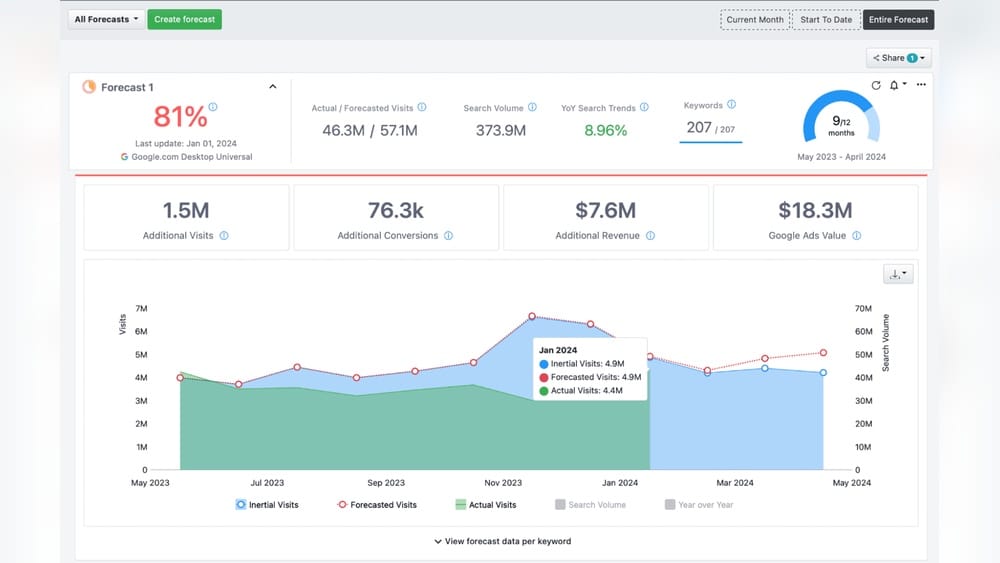
Discover the best SEO forecasting tool to predict website growth, plan smarter strategies, and boost your SEO performance with confidence.
That’s exactly what an SEO forecasting tool can do for you. By analyzing your current data and spotting trends, this tool helps you make smarter decisions and set realistic goals. If you want to stop guessing and start planning with confidence, keep reading—because mastering SEO forecasting could be the game-changer your business needs.
Seo Forecasting Basics
SEO forecasting helps predict how your website will perform in the future. It uses data from past and current SEO efforts. This prediction guides decisions to improve your site’s organic growth. Understanding SEO forecasting basics is key to making smart marketing choices.
SEO forecasting tools simplify this process by analyzing trends and metrics. These tools use mathematical models to estimate traffic, rankings, and revenue. Learning how SEO forecasting works and which metrics to track is essential for success.
How Seo Forecasting Works
SEO forecasting collects data from your website and search engines. It studies past performance like traffic, rankings, and user behavior. The tool then applies models to predict future outcomes. These predictions show potential growth or decline. Marketers use these insights to plan campaigns and set goals.
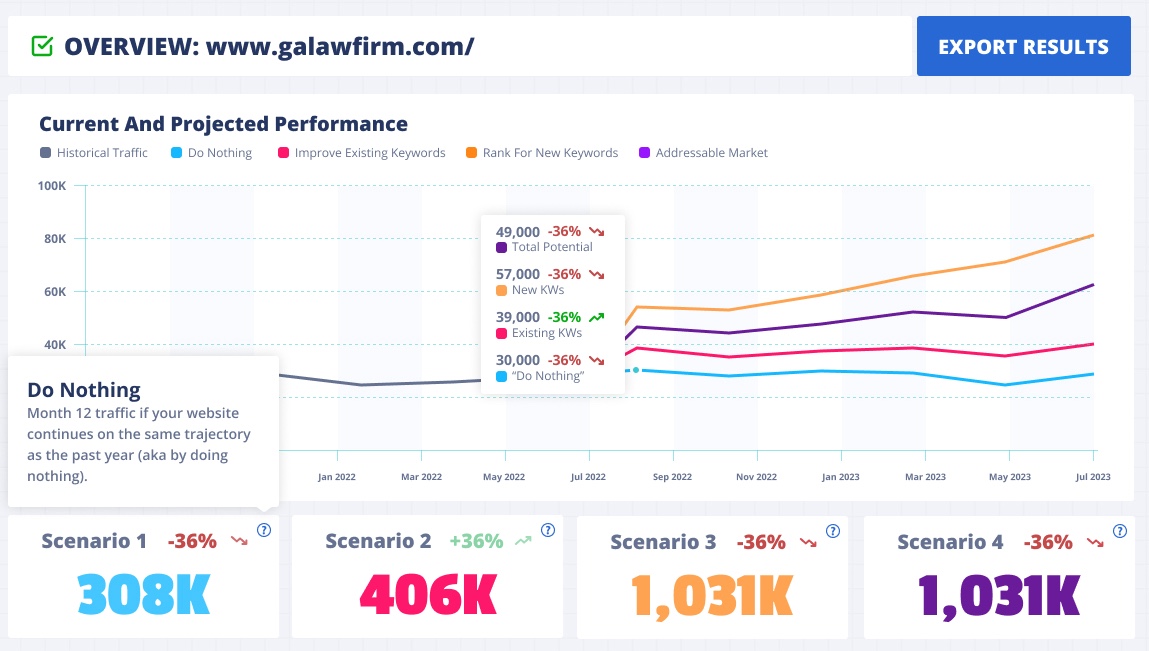
Forecasting considers factors like seasonality and market changes. It adjusts predictions based on new SEO strategies or website updates. This process helps estimate the impact of different actions before implementation.
Key Metrics To Track
Several metrics are important for accurate SEO forecasting. Organic traffic shows how many visitors come from search engines. Keyword rankings reveal your position on search results pages. Click-through rate (CTR) measures how often users click your links.
Conversion rate tracks how many visitors complete desired actions. Bounce rate shows how many leave without interacting. Tracking backlinks helps understand your site’s authority. Monitoring these metrics gives a clear view of SEO performance and future potential.
Credit: trafficprojection.com
Top Seo Forecasting Tools
Choosing the right SEO forecasting tool helps plan your website’s growth. These tools analyze data to predict future traffic and rankings. They save time and guide smart SEO decisions. Here are some top SEO forecasting tools that offer valuable insights and features.
Semrush And Ahrefs Features
Semrush and Ahrefs are popular SEO tools for detailed analysis. Semrush offers keyword research, site audits, and position tracking. It helps find competitors’ strengths and weaknesses quickly. Ahrefs is strong in backlink analysis and content gap discovery. Both provide clear reports to forecast SEO results. They support tracking website growth over time easily.
Google Search Console Insights
Google Search Console gives direct data from your website’s performance. It shows queries, clicks, and impressions on Google Search. This data helps predict which keywords may bring more traffic. It also alerts you to issues affecting rankings. Use this tool to monitor trends and adjust strategies fast. It is free and reliable for SEO forecasting.
Surfer Seo And Ai Tools
Surfer SEO uses AI to analyze top-ranking pages and suggest improvements. It guides content optimization with clear data on keywords and structure. This helps forecast how changes affect rankings. AI tools like ChatGPT assist in creating content ideas and outlines. Combining Surfer SEO with AI speeds up the SEO forecasting process. These tools make content planning smarter and easier.
Read More: Exploring the Semrush 14-Day Trial: An In-Depth Look
Setting Up Accurate Predictions
Setting up accurate predictions is key to making SEO forecasting useful. It helps you plan resources and measure success. To get precise results, focus on three main areas. Each area builds a clearer picture of your SEO future.
Start with solid data and finish with a clear cost analysis. This approach reduces guesswork. It gives you confidence in your SEO strategy and budget.
Analyzing Keyword Data
Keyword data shows what users search for. It reveals search volume, competition, and trends. Use tools to gather this data over time. Look for keywords with steady or growing demand.
Identify which keywords match your content and goals. Filter out low-value or overly competitive terms. Accurate keyword analysis predicts traffic potential and ranking chances.
Incorporating Conversion Rates
Traffic alone does not equal success. Conversion rates show how many visitors take action. Actions can be purchases, sign-ups, or inquiries. Gather past conversion data from analytics tools.
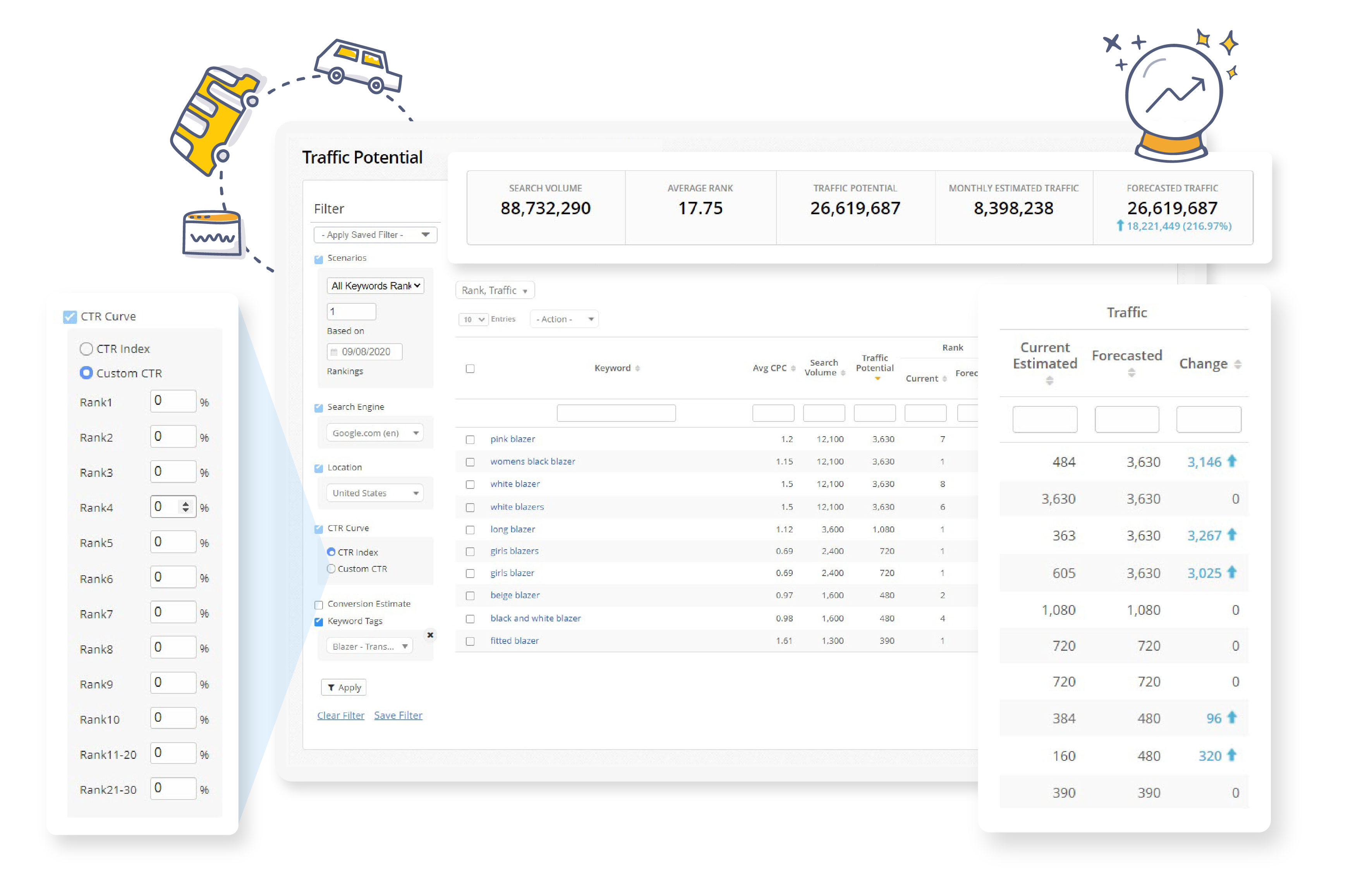
Apply these rates to forecasted traffic numbers. This step turns visitor estimates into revenue or lead predictions. Adjust conversion rates for seasonal changes or campaign updates.
Calculating Seo Campaign Costs
Costs include tools, content creation, link building, and labor. Track all expenses linked to your SEO efforts. Divide costs by the forecasted results to find ROI.
Knowing costs helps balance budget and expected benefits. It guides decision-making on where to invest or cut back. Accurate cost calculations make SEO forecasting practical and actionable.
Using Forecasts To Boost Rankings
Using SEO forecasts helps improve your website’s search rankings. These forecasts use data to predict future performance. They guide your SEO efforts to focus on what works best. Acting on these insights leads to steady growth in organic traffic.
Identifying Growth Opportunities
Forecasting tools highlight keywords and pages with high potential. They show which topics attract more visitors. This insight helps you target areas that can boost your ranking. You can find gaps where competitors perform better. Filling these gaps can increase your site’s visibility.
Adjusting Strategies Based On Data
SEO forecasts provide clear data to guide your decisions. You can see if your current tactics work well or need change. If a keyword’s ranking is low, adjust your content or links. Data helps you focus efforts on successful strategies. Regular updates keep your SEO plan aligned with trends.
Pros And Cons Of Seo Forecasting
SEO forecasting helps predict website performance using past and current data. It aids in planning strategies and setting realistic goals. Like any tool, SEO forecasting has strengths and weaknesses. Understanding these can improve how you use the tool for better results.
Benefits Of Prediction Models
Prediction models provide clear insights into future traffic trends. They help estimate the impact of SEO efforts on website growth. These models make budgeting and resource allocation easier. They offer a data-driven approach to decision-making. Forecasting can highlight potential opportunities before competitors notice. It also helps set measurable and achievable targets for SEO campaigns.
Challenges And Limitations
SEO forecasting depends heavily on data quality and accuracy. Incorrect or incomplete data can lead to poor predictions. Search engine algorithms change frequently, affecting model reliability. Some models may not capture sudden market shifts or trends. SEO forecasting tools often require technical knowledge to use effectively. Predictions are only estimates and should not replace real-time analysis. Overreliance on forecasts can cause missed opportunities or risks.

Credit: zissou.pacific.co
Advanced Tips For Seo Forecasting
Advanced SEO forecasting requires precise strategies to predict website growth accurately. Understanding data and using the right tools improves forecast quality. These tips focus on enhancing your SEO forecasts with deeper insights and technology.
Leveraging Ai For Content Optimization
AI tools analyze top-performing content and suggest improvements. They identify keywords, content gaps, and user intent quickly. This helps create content that ranks better and matches search trends. Use AI to refine titles, meta descriptions, and content structure.
AI also predicts future keyword trends based on search behavior. It enables proactive content planning. This keeps your site relevant and competitive over time.
Tracking Backlink Impact
Backlinks influence SEO forecasts by driving authority and traffic. Monitor which backlinks bring the most value to your site. Track their quality, relevance, and source authority regularly.
Use tools to assess backlink growth and its correlation with ranking changes. Adjust your strategy based on backlink performance data. This ensures a realistic forecast of SEO impact from link building.
Integrating Technical Seo Data
Technical SEO affects site health and user experience. Include data like site speed, crawl errors, and mobile usability in your forecasts. These factors influence rankings and organic traffic.
Regular audits reveal issues that may disrupt SEO progress. Fixing technical problems helps maintain steady growth. Incorporate this data for more accurate and reliable SEO forecasting.
Choosing The Right Tool
Choosing the right SEO forecasting tool is key to making smart marketing decisions. The right tool helps predict your website’s growth and guides your strategy. Different businesses need different features and capabilities. Understanding your needs is the first step toward finding a perfect match.
Factors For Small Businesses
Small businesses need easy-to-use tools with clear data. Look for software that offers basic forecasting and simple reports. Tools with automated insights save time and reduce errors. Integration with other marketing tools helps keep work smooth. Support and tutorials are important for those new to SEO forecasting.
Options For Enterprises
Enterprises require advanced tools that handle large data sets. Features like custom reporting and team collaboration are essential. Look for tools with deep competitive analysis and predictive modeling. Scalability matters to support growing SEO campaigns. Security and data privacy should also be top priorities.
Budget Considerations
Budget affects which tools you can afford. Free or low-cost options fit small budgets but may lack features. Mid-range tools offer a balance of price and power. High-end tools provide comprehensive features but come at a premium. Evaluate costs against benefits to find the best value. Consider trial periods to test a tool before buying.
Credit: www.seoclarity.net
Frequently Asked Questions
What Is Seo Forecasting?
SEO forecasting predicts your website’s future traffic and rankings using current and past SEO data and trends. It helps estimate organic growth and ROI.
What Is The Most Effective Tool For Seo?
The most effective SEO tool depends on your needs. Semrush and Ahrefs excel in research and analysis. Google Search Console offers direct performance data. Surfer SEO and ChatGPT enhance content optimization with AI. Choose based on budget, goals, and expertise for best results.
What Is The Best Tool For Forecasting?
The best forecasting tool depends on your needs. Semrush and Ahrefs excel in SEO analysis. Google Search Console offers direct performance data. Surfer SEO optimizes content with AI. Choose based on budget, goals, and expertise for accurate SEO forecasting.
How To Do An Seo Projection?
To do an SEO projection, analyze past SEO data, review keyword trends, and estimate traffic growth. Use forecasting tools and conversion rates. Calculate potential ROI based on campaign costs and average transaction values. Adjust projections as you monitor ongoing SEO performance.
Conclusion
SEO forecasting tools help predict website growth using real data. They guide your decisions and improve planning. Using these tools regularly keeps your SEO strategies on track. Choose a tool that fits your needs and budget well. Start small, learn from results, then adjust your approach.
Consistent forecasting can lead to steady, measurable improvements over time. Keep your goals clear and use forecasts to stay focused. This simple step supports better outcomes for your website’s future.


1 thought on “Best SEO Forecasting Tool 2026 – Predict Rankings & Traffic”