

Discover how Business Intelligence Services can help you make data-driven decisions, improve efficiency, and maximize your ROI.
Imagine having clear, actionable insights at your fingertips that help you make smarter decisions, boost productivity, and maximize profitability. Whether you want to predict future trends or identify hidden opportunities, the right BI services put you in control of your data journey. For more on this, see our guide on business intelligence architecture.
Ready to discover how Business Intelligence Services can elevate your business? Keep reading to find out what they are, why they matter, and how you can use them to stay ahead of the competition.

Overview of how BI services transform raw data into actionable insights.
Credit: www.scnsoft.com
Business Intelligence Services Explained
Business Intelligence (BI) services help companies turn raw data into clear insights. These services support better decisions and improve business results. BI uses tools and processes to collect, analyze, and display data simply. This way, businesses can see trends, patterns, and opportunities quickly. For more on this, see our guide on machine learning business.
Understanding BI services starts with knowing its key parts and how they work together. BI is not just about software but also about strategies that make data useful. Let’s explore the core components, types of analytics, and important technologies in BI.
Core Bi Components
The core components of BI include data collection, data storage, analysis, and reporting. Data collection gathers information from different sources like sales, marketing, and customer feedback. Data storage keeps this information safe and organized in databases or data warehouses.
Analysis examines data to find useful trends and patterns. Reporting then presents this information in charts, dashboards, or simple reports. These components work together to provide a full view of business performance.
In practice, a robust data governance framework underpins every component. Without clear ownership of data quality and consistent definitions, even the best dashboards can mislead. A common mistake is treating data collection as a one-time event rather than an ongoing process. Regularly auditing your data sources and standardizing field names across departments reduces errors and builds trust in the insights. The underlying data architecture must support both operational speed and analytical depth, which is why many firms invest in a modern data warehouse or data lake from the start.
Types Of Bi Analytics
BI analytics come in three main types: descriptive, predictive, and prescriptive. Descriptive analytics shows what has happened in the past. It summarizes data to help understand trends.
Predictive analytics uses past data to guess future outcomes. It helps businesses prepare for what might happen next. Prescriptive analytics goes further by suggesting actions to reach goals. This type guides decision-making with clear recommendations.
A fourth type, diagnostic analytics, fills the gap between descriptive and predictive. It asks why something happened by drilling into root causes. For example, if sales dropped in Q3, diagnostic analytics might reveal that a specific marketing channel underperformed due to a pricing change. Combining diagnostic with advanced machine learning techniques enables businesses to not only explain past events but also simulate the impact of different decisions before committing resources.
Key Bi Technologies
BI relies on various technologies to work effectively. Data warehouses store large amounts of data from many sources. ETL (Extract, Transform, Load) tools move and prepare data for analysis.
BI platforms provide software to create reports and dashboards. Artificial intelligence (AI) and machine learning improve analytics by finding hidden patterns. Cloud computing offers flexible and scalable BI solutions for all business sizes.
Beyond warehouses and ETL, modern BI ecosystems increasingly use data lakes and data virtualization. Data lakes store raw, unprocessed data in its native format, making it easy to run exploratory analytics without heavy upfront modeling. Data virtualization, on the other hand, allows querying across multiple sources in real time without physically moving data. Choosing the right combination depends on your data volume, latency needs, and team skills. Many organizations pair a cloud data warehouse with a data lake and use machine learning software platforms to automate the discovery of correlations that would otherwise go unnoticed.
Benefits Of Bi For Businesses
Business Intelligence (BI) services help companies use their data better. BI turns raw data into clear insights. These insights guide business actions and strategies. Using BI improves how businesses operate every day. It makes complex data easy to understand and use. This helps businesses grow and stay competitive in their markets.
Enhancing Decision Making
BI tools provide accurate and timely information. Managers can make decisions based on facts, not guesses. This reduces risks and improves outcomes. Teams access reports and dashboards that show key metrics. Quick access to data means faster responses to changes. Decisions become more confident and effective with BI support.
For instance, a retail chain using BI to track inventory turnover can reorder stock just before a predicted demand spike, preventing stockouts during peak seasons. In healthcare, BI dashboards that highlight patient wait times help administrators reallocate staff to reduce bottlenecks. The key is embedding these insights into daily workflows — not just reviewing reports monthly. When decision-makers see real-time data alongside benchmarks, they can act on opportunities that competitors might miss.
Boosting Productivity
BI automates data collection and analysis tasks. Employees spend less time on manual reporting. Teams focus more on strategic activities and problem-solving. BI systems integrate data from various sources into one place. This saves time and reduces errors. Overall, BI helps workers be more efficient and productive.
Self-service BI takes productivity a step further by allowing business users to create their own reports without IT involvement. Instead of waiting days for a custom query, a marketing manager can drag and drop fields to see campaign performance in minutes. This shift requires training and clear data governance so that everyone uses the same definitions. AI-powered tools for small teams can suggest visualizations and even explain outliers automatically, further reducing the time spent on data preparation.
Maximizing Profitability
BI reveals trends and patterns that affect profits. Businesses identify profitable products, customers, and markets. They also spot areas where costs can be reduced. Improved forecasting helps plan budgets and resources wisely. BI helps companies increase revenue and lower expenses. This leads to better financial performance and growth.
Measuring the actual ROI of a BI initiative is essential. A simple framework: compare the cost of BI tools, implementation, and training against the value of faster decisions, reduced waste, and increased sales. For example, a logistics company using BI to optimize delivery routes may cut fuel costs by 12% and improve on-time delivery by 20%. Tracking these metrics over time proves the investment’s worth and guides where to expand BI capabilities next.
Bi Solutions Tailored To Your Needs
Business Intelligence (BI) solutions help companies make smart decisions using data. Each business has unique needs and challenges. BI solutions tailored to your needs ensure you get the right insights. Customization helps improve efficiency and supports growth.
These personalized BI services adapt to your business size, industry, and goals. They combine technology, data, and expert guidance. This approach turns raw data into clear, actionable reports. Your team can then focus on what matters most.
Custom Bi Development
Custom BI development creates tools made just for your business. It fits your data sources and workflows perfectly. Developers build dashboards, reports, and analytics that match your needs. This helps you track key metrics without extra clutter. The system grows with your company over time.
Bi Consulting Services
BI consulting offers expert advice to improve your data strategy. Consultants analyze your current setup and suggest better methods. They guide you through choosing the right tools and processes. This service helps avoid common mistakes and saves time. It ensures your BI solution works smoothly and delivers value.
Industry-specific Bi Applications
Industry-specific BI applications focus on challenges unique to your sector. These solutions include features designed for your field’s needs. For example, retail BI tracks sales trends and customer behavior. Healthcare BI manages patient data and regulatory reports. Using specialized tools gives you a competitive edge.
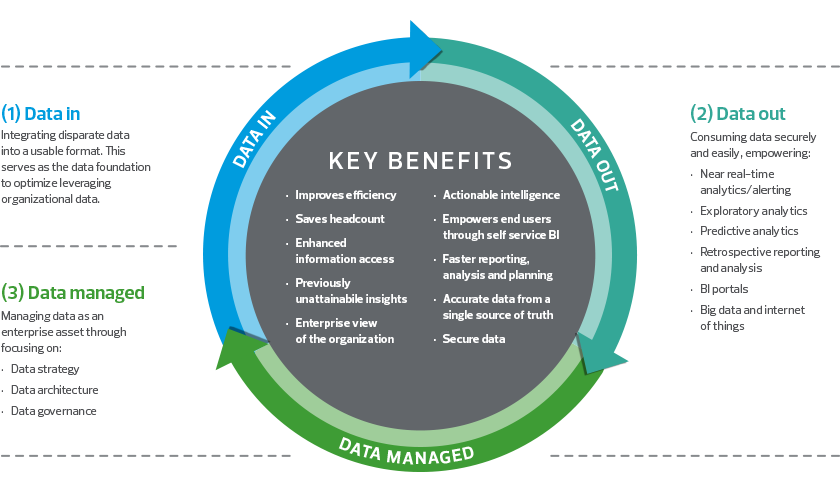
Core BI architecture components: data integration, storage, analysis, and reporting.
Credit: rsmus.com
Data Integration And Management
Data integration and management form the backbone of any successful business intelligence service. They ensure that data from various sources combines smoothly and remains accurate. Proper handling of data enables businesses to make informed decisions quickly and confidently.
Effective data integration connects different systems, allowing seamless data flow. Management keeps data organized, secure, and ready for analysis. Together, these processes improve data quality and accessibility across the organization.
Data Gathering Techniques
Data gathering collects information from multiple sources like databases, applications, and external feeds. Common techniques include batch processing, real-time streaming, and API integrations. Choosing the right technique depends on the business needs and data type.
Automated tools help capture data consistently and reduce errors. Manual data entry is less common but still used in some cases. Good data gathering builds a solid foundation for analysis and reporting.
Data Standardization Processes
Data standardization cleans and formats data to make it uniform and usable. It removes duplicates, corrects errors, and aligns data formats. This process ensures all data follows the same rules and definitions.
Standardization improves data accuracy and simplifies analysis. It also helps integrate data from different systems without confusion. Consistent data supports reliable insights and better business decisions.
Data Warehousing Infrastructure
Data warehousing stores large volumes of integrated data in one place. It organizes data for easy access and fast querying. Warehouses support historical data storage and complex analysis tasks.
Modern data warehouses use scalable cloud platforms or on-premises systems. They provide secure environments with backup and recovery options. Well-built warehousing infrastructure enables efficient business intelligence operations.
Data Governance and Security in BI
As BI systems become central to daily operations, data governance and security are non-negotiable. Governance defines who can access, modify, and share data, while security protects it from breaches and misuse. In practice, a common mistake is granting overly broad access to dashboards “just in case.” Instead, apply role-based permissions: sales teams see revenue data, not HR records. Encrypt data both at rest and in transit, and log all queries for audit trails. Aligning with national data governance standards helps ensure compliance with regulations like GDPR or CCPA, especially when handling customer information. A well-governed BI environment also reduces the risk of conflicting metrics — for example, marketing and finance using different definitions of “customer churn.” Investing in governance early prevents costly rework later.
Bi Tools And Platforms
Business Intelligence (BI) tools and platforms help companies gather and analyze data. They turn raw data into clear insights. These insights guide smart business decisions. Choosing the right BI tool affects how well a company uses its data.
BI tools vary by deployment, features, and cost. Some run on the cloud, while others stay on company servers. Each option offers different benefits and suits different business needs. Understanding these options helps businesses pick the best fit.
Cloud-based Bi Tools
Cloud-based BI tools store data and run software online. Users access these tools through a web browser. They do not need to install anything on their computers. Cloud BI offers quick setup and easy updates. It supports remote work and collaboration. Companies pay a subscription fee to use these services.
On-premises Bi Solutions
On-premises BI solutions install software on company servers. Companies control data and hardware directly. This option suits firms with strict security rules. It requires more IT staff to manage. On-premises BI may offer faster data processing. It often involves a one-time purchase or license fee.
Pricing Models And Licensing
BI tools use different pricing models. Cloud tools usually charge monthly or yearly fees. These fees depend on users or data volume. On-premises tools often require a one-time license purchase. Some vendors charge extra for support and updates. Choosing the right pricing model helps control costs and match business size.
Self-Service BI: Empowering Business Users
Self-service BI has become a must-have for organizations that want to scale insights without overloading IT. These platforms let business analysts, marketers, and operations managers build their own queries, dashboards, and reports using intuitive drag-and-drop interfaces. The trade-off is that without proper training, users may inadvertently create misleading visualizations or misinterpret data. A best practice is to establish a “BI center of excellence” that provides templates, data dictionaries, and peer review processes. Coupling self-service BI with machine learning in operational workflows allows frontline teams to detect anomalies — such as a sudden drop in website conversions — and investigate immediately, rather than waiting for a weekly report.
Team using BI dashboards to monitor key performance indicators in real time.
Credit: www.techanandrathi.com
Implementing Bi Successfully
Implementing Business Intelligence (BI) successfully requires more than just technology. It demands clear planning, continuous effort, and involvement across the organization. A well-structured approach ensures BI tools deliver real value. This section covers key areas to focus on for effective BI implementation.
Ongoing Bi Strategy
BI is not a one-time project. It needs a continuous strategy to adapt to changing business needs. Regularly review your BI goals and update them based on new data insights. Keep improving data sources and analytics methods. A flexible BI strategy helps maintain relevance and effectiveness over time.
User Training And Adoption
Users must understand how to use BI tools effectively. Provide easy training sessions focused on practical tasks. Encourage users to ask questions and share feedback. Make BI a part of daily work routines. Higher user adoption leads to better data-driven decisions and stronger ROI.
Measuring Bi Impact
Track the results of your BI efforts regularly. Define clear metrics like time saved, cost reduction, or sales growth. Use reports and dashboards to monitor progress. Adjust BI initiatives based on performance data. Measuring impact helps prove BI’s value and guides future improvements.
Choosing The Right Bi Partner
Choosing the right Business Intelligence (BI) partner is vital for your company’s success. The right partner helps turn data into clear insights. These insights guide better decisions and improve business outcomes. Picking a partner with the right skills and approach saves time and money.
Understanding what to look for in a BI service provider ensures your investment pays off. Focus on key areas like expertise, support, and cost to make a smart choice.
Evaluating Expertise
Check the partner’s experience with BI tools and platforms. Look for proven success in your industry or similar projects. Skilled experts know how to handle data securely and efficiently. Ask about their approach to data integration and analytics. Strong technical knowledge ensures your BI system works well.
Support And Maintenance
Reliable support keeps your BI system running smoothly. Choose a partner offering regular updates and quick problem resolution. Ongoing maintenance helps adapt to changing business needs. A good support team improves user experience and reduces downtime. Confirm their availability and response times before hiring.
Cost-effective Outsourcing
Outsourcing BI services can lower costs without losing quality. Compare pricing models and what each includes. Look for clear contracts to avoid hidden fees. A cost-effective partner balances price with skill and service. Outsourcing allows you to focus on core business tasks while experts manage your BI needs.
Future Trends In Business Intelligence
Business Intelligence (BI) is evolving rapidly. New technologies improve how companies use data. These changes help businesses make smarter decisions faster. Understanding future trends in BI can prepare your business for success.
These trends focus on smarter data use and faster insights. They help companies stay competitive. Below are key future trends shaping BI services.
Ai And Predictive Analytics
Artificial Intelligence (AI) is changing BI. AI tools analyze large data sets quickly. They find patterns humans might miss. Predictive analytics uses AI to forecast future events. This helps businesses plan better and reduce risks. Companies can act before problems arise.
Real-time Data Processing
Real-time data processing is becoming standard. It allows businesses to see data instantly. Fast insights improve decision-making and response times. This trend supports dynamic markets and customer needs. Businesses stay agile and informed at all times.
Enhanced Reporting Techniques
Reporting is more visual and interactive. Dashboards and data stories make reports easy to understand. Enhanced reporting helps teams focus on key facts. It improves communication across departments. This trend makes data more accessible for everyone.
Data Democratization and Citizen Data Scientists
By 2026, the push to put data in the hands of every employee is stronger than ever. Data democratization means giving non-technical staff access to clean, governed data so they can answer their own questions without a data analyst. Complementary to this is the rise of the “citizen data scientist” — a business user who uses AI-assisted tools to perform advanced analytics like regression or clustering. The challenge is balancing empowerment with control: too much freedom can lead to inconsistent metrics, while too little stifles innovation. The most successful organizations pair automation of data processes with a lightweight review process, ensuring that self-service insights remain trustworthy.
Read More : Best Database Deals and Discount: Save Big on Top Data Solutions
Frequently Asked Questions
What Is A Business Intelligence Service?
A business intelligence service designs and deploys tools to analyze data. It helps companies make informed decisions and improve performance.
What Are The Three Major Types Of Business Intelligence?
The three major types of business intelligence are descriptive, predictive, and prescriptive analytics. Descriptive analyzes past data. Predictive forecasts future trends. Prescriptive recommends actions to optimize outcomes.
What Are The 4 Concepts Of Business Intelligence?
The four concepts of business intelligence are data gathering, data standardization, data analysis, and reporting. These steps help businesses make informed decisions and improve performance.
How Much Does Business Intelligence Cost?
Business intelligence costs vary by type: per-user monthly fees, capacity-based pricing, or large upfront investments for enterprise solutions. Costs range from a few dollars per user to millions annually for on-premises setups. Choose based on business size, needs, and deployment method.
How Long Does It Take to See ROI from BI?
The timeline depends on the complexity of your data environment and the scope of the implementation. Many organizations see initial value within three to six months — often from faster report generation and reduced manual work. Full ROI, including revenue lift and cost savings from better decisions, typically takes 12 to 18 months. To speed up the process, start with a focused pilot project that addresses a clear business pain point, such as inventory optimization or customer churn analysis. Then expand based on proven results.
What Is the Difference Between BI and Data Analytics?
BI focuses on answering “what happened and what is happening now?” using historical and real-time data presented in dashboards and reports. Data analytics, by contrast, digs deeper into “why it happened” and “what will happen next,” often employing statistical models and machine learning. In practice, BI provides the foundation — clean, well-structured data — that analytics builds upon. Most organizations benefit from both: BI for operational monitoring, and analytics for strategic forecasting.
Conclusion
Business Intelligence services help companies make smart choices using data. They gather, analyze, and report information clearly. This helps teams spot trends and solve problems fast. Using BI tools, businesses improve efficiency and plan better. Investing in these services supports steady growth and success.
Explore BI options to see what fits your needs best. Data-driven decisions lead to stronger results every day.


3 thoughts on “Business Intelligence Services That Turn Data Into Profit”