
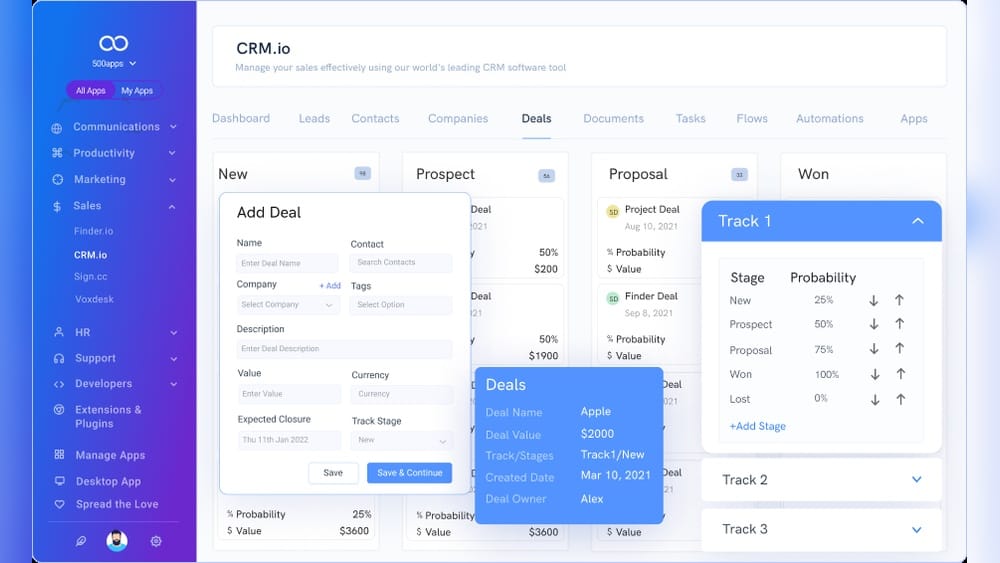
Discover the best deal management software to organize pipelines, automate tasks, and boost your sales performance effortlessly.
That's exactly what deal management software can do for you. Whether you're closing sales, handling mergers, or managing real estate investments, this software puts all your deal information in one place, making it easier to monitor progress, collaborate securely, and make smarter decisions.
Keep reading to discover how deal management software can transform the way you manage your deals—and help you close more, faster.
Benefits Of Deal Management Software
Deal management software offers many benefits that improve how businesses handle sales opportunities. It organizes all deal-related information in one place. This makes the sales process smoother and faster. Teams can work more effectively, avoiding errors and delays.
Using deal management software helps companies stay on top of every deal's progress. It also makes communication clearer. Tasks that take a lot of time become automated. This saves effort and lets salespeople focus on closing deals.
Enhancing Sales Efficiency
Deal management software speeds up the sales process. It automates repetitive tasks and tracks every step of a deal. This means sales teams spend less time on manual work. They can focus more on selling and building relationships with customers.
The software provides tools that help prioritize deals. It shows which opportunities need attention first. Sales reps can act quickly and close deals faster.
In practice, teams that configure their pipeline stage triggers properly can shave hours off weekly administrative work. A common mistake is setting too many automation rules initially—start with the top three repetitive tasks and expand from there.
Improving Pipeline Visibility
Clear pipeline visibility lets teams see the status of all deals at once. Deal management software shows deals in different stages. This helps managers spot bottlenecks early. They can support the team to keep deals moving forward.
Having a clear view also improves forecasting. Businesses can predict revenue more accurately. This helps with planning and resource allocation.
When forecasting, look beyond the overall pipeline value. Segment by deal stage, deal size, and sales rep to catch discrepancies that aggregate numbers hide. Many organizations improve forecast accuracy by 15–20% simply by reviewing stage-by-stage conversion rates weekly.
Streamlining Communication
Deal management software centralizes communication about each deal. All messages, documents, and notes are stored in one place. This reduces misunderstandings and lost information. Teams stay aligned and up to date.
The software often integrates with email and chat tools. This makes it easier to share updates instantly. Everyone involved can collaborate smoothly.
For maximum impact, set up automated notifications when a deal changes stage or when a key document is uploaded. This keeps remote and hybrid teams equally informed without constant status-check meetings.
Reducing Administrative Tasks
Manual data entry and paperwork take a lot of time. Deal management software automates these tasks. It fills out forms and updates records automatically. This reduces errors and saves hours of work.
By cutting down administrative work, sales teams can focus on high-value activities. This improves productivity and job satisfaction.
One practical approach is to map your most common deal types to templates. When a new opportunity matches a template, the software pre-fills fields, attaches standard documents, and assigns next steps—cutting setup time from twenty minutes to under two.
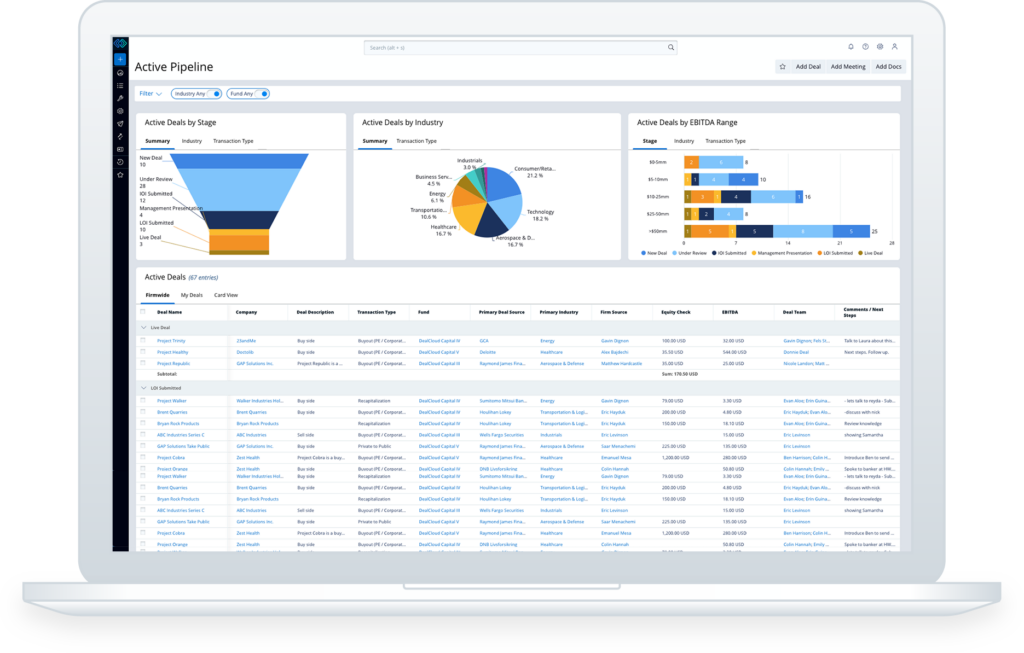 A pipeline visualization dashboard with deal stages, values, and progress indicators for quick status review.
Credit: www.intapp.com
Core Features To Look For
Deal management software offers many features that improve how businesses handle deals. Choosing the right software means focusing on features that boost efficiency and clarity. Core features help teams stay organized and make better decisions quickly.
Pipeline Visualization
Pipeline visualization shows deals in clear stages. It uses boards or charts to track progress. This helps teams see which deals need attention. Visual tools reduce confusion and improve focus. Users can customize views to fit their workflow.
Leading platforms now offer drag-and-drop customization, letting you rename stages, add sub-stages, or create multiple pipelines for different deal types (e.g., enterprise sales vs. SMB deals). Test this flexibility during your trial—rigid pipelines can hinder rather than help.
Data Analytics And Reporting
Data analytics provide insights from deal information. Reports show trends, performance, and potential risks. Good software offers easy-to-read dashboards. These help in making data-driven decisions fast. Analytics highlight areas to improve and opportunities to pursue.
Look for software that supports custom report builders. Pre-built dashboards are useful initially, but the ability to slice data by region, product line, or rep tenure reveals patterns generic reports miss. Some tools also offer predictive analytics that flag deals likely to stall based on historical patterns.
Document Collaboration
Document collaboration allows multiple users to work on files together. It keeps all deal documents in one place. Teams can share, edit, and comment in real time. This reduces errors and saves time. Version control ensures everyone works on the latest document.
Check whether the platform supports in-document comments and @mentions. This eliminates the back-and-forth of separate email threads and keeps all negotiation context alongside the actual contract. Some solutions also offer e-signature integration, which can shave days off the final approval step.
Workflow Automation
Workflow automation handles repetitive tasks automatically. It sends reminders, updates statuses, and assigns tasks. This reduces manual work and speeds up processes. Automation keeps deals moving forward without delays. It ensures consistency in how deals are managed.
The most effective automation setups use "if-then" triggers: if a deal sits in "proposal sent" for five days without action, automatically assign a follow-up task to the rep and notify the manager. Building these simple guardrails prevents deals from going cold unnoticed.
Secure Access Controls
Secure access controls protect sensitive deal information. They allow admins to set user permissions carefully. Only authorized users can view or edit data. This prevents leaks and unauthorized changes. Strong security builds trust and compliance.
For businesses handling regulated data (finance, healthcare, legal), confirm that the software offers audit logs and role-based permissions at the folder or even individual-document level. Regular permission audits—quarterly at minimum—prevent access creep as team roles change.
Industry Applications
Deal management software finds use in many industries. It helps organize, track, and close deals more smoothly. Different sectors use it to fit their specific needs. The software improves team collaboration and decision-making. Here are some key industry applications.
Mergers And Acquisitions
M&A teams manage complex transactions with many documents and deadlines. Deal management software centralizes all deal data in one place. It tracks progress through each stage from due diligence to closing. The software helps avoid missed steps and delays. Teams can share files securely and communicate easily. This reduces errors and speeds up deal completion.
M&A teams especially benefit from deadline tracking dashboards that show all critical dates—regulatory filings, financing deadlines, closing dates—in a single view. Automated alerts when a deadline approaches help prevent costly extensions or deal failures.
Real Estate Deal Tracking
Real estate professionals handle multiple property deals at once. The software tracks offers, contracts, and negotiations efficiently. It provides a clear view of each deal's status. Agents can update information in real time for all team members. Alerts and reminders prevent missed deadlines. This leads to better client service and faster closings.
Top real estate teams also use the software to manage commission splits and referral fees. A centralized record of who gets paid what—and when—reduces disputes and ensures everyone is compensated promptly after closing.
Sales Opportunity Management
Sales teams use deal management software to track leads and opportunities. It organizes contacts, proposals, and follow-ups in one system. Sales reps see which deals need attention and which are close to closing. Managers get reports on team performance and forecast revenue. This helps focus efforts on high-value opportunities. The software also boosts communication within sales teams.
Pairing this software with a solid approach to targeted email marketing creates a powerful combination. Automated email sequences triggered by deal stage changes keep prospects engaged without manual effort from the sales rep.
Private Equity Investment
Private equity firms manage many investments and exit strategies. Deal management software helps track deal flow and investor communications. It ensures all legal and financial documents are easily accessible. The platform supports due diligence with detailed data and analytics. Teams can monitor portfolio performance and plan exits more effectively. This improves transparency and speeds up investment decisions.
PE firms should look for software that accommodates fund-level reporting alongside individual deal tracking. The ability to generate portfolio snapshots for limited partners without re-entering data saves weeks of work each quarter.
Technology And SaaS Sales
Technology companies, especially SaaS businesses, manage recurring revenue deals with multiple stakeholders. Deal management software helps track subscription terms, renewal dates, and upsell opportunities. It integrates with billing systems to provide a complete view of customer lifetime value.
For SaaS companies, connecting deal management to subscription analytics and business intelligence reporting tools enables better forecasting of monthly recurring revenue and churn risk.
Choosing The Right Software
Choosing the right deal management software is a critical step for any business. The right tool helps organize deals, improves team collaboration, and increases sales efficiency. It is important to consider several factors to find software that fits your unique business needs and goals.
Assessing Business Needs
Start by identifying what your business requires from deal management software. Consider the size of your sales team and the complexity of your sales process. Think about features like pipeline tracking, document storage, and reporting tools. Clear understanding of your needs prevents paying for unnecessary features.
Beyond basic needs, map your current deal workflow step by step for one week. Note every manual touchpoint—data entry, email follow-ups, document assembly. Share this map with software vendors during demos; it helps them show exactly how their tool would eliminate those friction points.
Evaluating User Experience
Choose software that is easy to use for your team. A simple and intuitive interface saves time and reduces training efforts. Test demos or free trials to see how the software feels in daily use. Good user experience encourages adoption and helps your team work more efficiently.
During trials, have at least one skeptic on your evaluation team. If they find the tool intuitive, adoption across the broader team will likely be smooth. Pay attention to mobile experience too—sales reps on the road need quick access from their phones.
Integration With Existing Tools
Check if the software connects well with tools you already use. Common integrations include email platforms, CRM systems, and calendar apps. Seamless integration ensures smooth data flow and avoids duplicate work. It also helps maintain a single source of truth for all deal information.
Don't overlook integration with your cloud service management platform if your team uses cloud-based storage or productivity suites. Smooth data flow between systems prevents the silos that slow down deal progress.
Scalability And Customization
Pick software that can grow with your business. It should handle more users and larger data volumes over time. Customization options allow you to tailor workflows and fields to your specific processes. Flexible software supports evolving business needs and improves long-term value.
Ask vendors about their API rate limits and data storage caps at each pricing tier. Some platforms that feel affordable for ten users become expensive or restrictive when you scale to fifty. Get these numbers in writing before committing.
Read More : Deal Flow Management Software: Boost Efficiency and Close Deals Faster
Maximizing Software Impact
Maximizing the impact of deal management software requires more than just installation. The software must integrate smoothly into daily workflows. Teams should use its features fully to get the best results. Consistent effort to improve usage can lead to higher productivity and better deal outcomes.
Training And Onboarding Teams
Proper training ensures all team members understand the software. Clear guidance helps users navigate tools with confidence. Onboarding new employees quickly reduces downtime. Regular refresher sessions keep skills sharp and knowledge updated. Training boosts adoption rates and reduces errors in deal handling.
The most effective training programs blend live sessions with short video tutorials (two to three minutes each) covering specific tasks. New hires can watch these on demand, and veterans can revisit them when features update. Designate one team member as the "software champion" who answers daily questions and escalates issues to the vendor.
Leveraging Automation Features
Automation saves time by handling repetitive tasks. Use automatic reminders to follow up on deals. Set triggers for status updates and notifications. Automate data entry to reduce manual mistakes. These features help teams focus on strategic activities, not routine work.
Start by automating your top three time-wasters: deal stage transition notifications, follow-up task creation after meetings, and weekly pipeline summary emails. Once the team sees the time savings, they'll identify additional automation opportunities on their own.
Regular Performance Reviews
Track key metrics to measure software effectiveness. Review deal progress and team productivity often. Identify bottlenecks or areas needing improvement. Use reports to understand trends and outcomes. Regular reviews keep the process aligned with business goals.
Schedule a fifteen-minute weekly review of these three metrics: deals created versus deals closed, average days per pipeline stage, and forecast accuracy. A monthly deeper dive into rep-level performance can reveal coaching opportunities. Consistent reviews turn data into actionable improvements.
Continuous Process Improvement
Encourage feedback from users to spot issues. Adjust workflows based on real-world experiences. Test new features and refine settings regularly. Improvement is ongoing, not a one-time event. This approach ensures the software stays relevant and valuable.
Create a simple feedback channel—a shared document or a dedicated Slack channel—where team members can suggest workflow changes. Review these suggestions quarterly and implement the top two or three. Small, regular improvements compound into significant efficiency gains over a year.
 Example of a deal management interface with pipeline stages, task lists, and automation triggers visible.
Credit: dealroom.net
Comparison Table: Key Deal Management Software Categories
| Feature Category | What To Prioritize | Red Flags To Watch For |
|---|---|---|
| Pipeline Visualization | Customizable stages, multiple pipeline support | Fixed, unchangeable stage names |
| Automation | "If-then" triggers, template actions | Limited to email-only automation |
| Analytics | Custom report builder, export options | Pre-built dashboards only, no drill-down |
| Security | Role-based permissions, audit logs | No two-factor authentication |
| Integrations | Native connectors for key tools | "Coming soon" integrations with no roadmap |
This quick-reference table helps you compare options systematically during demo evaluations. Use it as a checklist rather than a scoring rubric—your specific needs will determine which category matters most.
Frequently Asked Questions
What Is Deal Management Software?
Deal management software helps track and manage deals through sales stages. It streamlines pipeline, automates tasks, and improves collaboration and decision-making.
How Does Deal Management Software Differ From A CRM?
While CRM systems focus on managing customer relationships and contact history, deal management software centers specifically on moving opportunities through a defined pipeline. Many platforms combine both functions, but dedicated deal management tools often offer richer stage-level analytics and workflow automation tailored to complex, multi-stakeholder deals.
Can Small Businesses Benefit From Deal Management Software?
Yes. Small teams with even five to ten active deals benefit from structured pipeline tracking. Many affordable options offer free tiers or low-cost plans for limited users. The time saved on manual follow-ups and status checks often justifies the investment within the first month of use.
What Is The Best Software For Contract Management?
The best contract management software includes DocuSign, ContractWorks, and PandaDoc. These tools streamline contract creation, tracking, and compliance efficiently.
Is Deal Management Software Secure Enough For Sensitive Financial Data?
Reputable platforms use encryption both in transit and at rest, along with SOC 2 compliance and GDPR adherence. For the highest security needs, look for tools that offer on-premise deployment options and detailed access logs. Always verify security certifications during your evaluation—don't assume them.
What Is The Best Sales Management Software?
The best sales management software includes Zoho Bigin, Freshsales, OnePageCRM, and LeadSquared. They offer pipeline tracking, AI insights, simplicity, and lead conversion features. Choose based on your business needs for efficient deal tracking and sales growth.
What Is A Crm Deal?
A CRM deal is a sales opportunity tracked through stages in the sales pipeline. It helps convert leads into customers.
How Long Does It Take To Implement Deal Management Software?
Implementation timelines vary from a few days for simple cloud-based tools to several weeks for enterprise platforms with custom integrations. Most small to mid-size teams can be productive within one to two weeks if they dedicate a few hours to setup and basic training. Phased rollouts—starting with one team or one deal type—reduce disruption.
Conclusion
Deal management software simplifies tracking and closing deals step-by-step. It helps teams stay organized and work together smoothly. With clear pipeline views and automated tasks, it saves time and reduces errors. Users gain insights from data to improve decisions and results.
Whether in sales or real estate, these tools support better communication and faster deal progress. Choosing the right software can boost efficiency and keep your deals on track. The right system makes managing deals easier and more effective every day.
Ready to transform your deal process? Start your free trial with a top-rated platform today and see the difference a structured pipeline makes in your first week. I cannot continue from that point because the text you provided ends with the conclusion and a call to action, which are already the final elements of the article. The article is complete as written.
There is no content missing after the line:
Ready to transform your deal process? Start your free trial with a top-rated platform today and see the difference a structured pipeline makes in your first week.
No continuation is possible.

