Private Equity Deal Management Software: Boost Efficiency Now
Lead SaaS Analyst at PCSaaS · Software Developer · 500+ Tools Tested · Google Ads & Analytics Certified · 8+ Years Experience
Private Equity Deal Management Software helps organize, track, and streamline investment processes for firms managing multiple private equity transactions efficiently.
That’s where private equity deal management software comes in—designed to streamline every step of the process, from sourcing new opportunities to closing deals and tracking portfolio performance.
You’ll discover how the right software can transform your workflow, save you time, and give your team the edge it needs to close more deals effectively. For more on this, see our guide on subeasy ai lifetime deal.
Ready to take control of your deal pipeline and boost your firm’s success? Keep reading to find out how to choose the perfect solution tailored to your needs.
Private equity deal management software helps firms organize, track and streamline investment processes, from sourcing opportunities to closing deals and monitoring portfolio performance. It centralizes pipeline tracking, automates due diligence and improves collaboration, helping teams close more deals faster and make smarter investment decisions.
Why Deal Management Matters
Effective deal management is crucial in private equity. It streamlines complex processes and keeps all parties aligned. Managing deals well reduces risks and saves time. This leads to better decisions and higher returns. Private equity firms that focus on deal management gain a clear advantage. They can track opportunities, manage documents, and monitor progress easily. For more on this, see our guide on illustrations ai lifetime deal.
Challenges In Private Equity Deals
Private equity deals involve many moving parts. Teams must handle data from various sources. Communication gaps often cause delays and errors. Tracking deadlines and approvals manually is difficult. Lack of transparency can lead to missed opportunities. Managing compliance and risk adds more complexity. Without proper tools, deal teams struggle to stay organized.
A common challenge is data fragmentation. Deal information often lives in spreadsheets, emails, and separate document repositories, making it hard to get a single source of truth. In practice, firms that adopt dedicated software eliminate this fragmentation by centralizing all deal-related data, which reduces duplication and ensures every team member works from the same updated records. For more on this, see our guide on feedspace lifetime deal.
Impact On Firm Performance
Strong deal management directly boosts firm performance. It improves deal velocity and success rates. Teams spend less time on admin tasks and more on strategy. Accurate data helps assess risks and benefits quickly. Better collaboration leads to faster deal closures. Firms achieve higher returns and stronger portfolios. Overall, deal management software supports growth and efficiency.
Firms using these tools typically see a 20–30% reduction in time spent on administrative follow-ups, allowing senior team members to focus on sourcing high-quality opportunities. Better visibility into pipeline health also helps leadership allocate resources more effectively, directly improving fund performance. For more on this, see our guide on leadcrm lifetime deal.
Core Features Of Deal Management Software
Private equity deal management software simplifies complex processes. It helps firms manage deals from start to finish efficiently. Core features focus on streamlining workflow and improving decision-making. These tools save time and reduce errors in deal handling.
Deal Sourcing And Tracking
Deal sourcing tools gather potential opportunities in one place. They track contacts, communications, and deal status easily. Users can prioritize and filter deals based on criteria. This feature ensures no opportunity is missed or forgotten. For more on this, see our guide on what is project management.
Modern platforms also ingest industry databases, social signals, and executive transitions to proactively suggest proprietary targets before an auction launches. By integrating clean market intelligence directly into the CRM pipeline, sourcing partners can identify founder-owned businesses that meet their exact thesis criteria without waiting for investment bank teasers.
Due Diligence Automation
Due diligence automation speeds up data collection and review. It organizes documents, financials, and legal checks automatically. Alerts notify users of missing or incomplete items. This reduces manual work and improves accuracy during analysis.
Modern AI-enhanced due diligence tools can scan thousands of documents for red flags—such as unusual liabilities or compliance gaps—in minutes rather than weeks. This allows deal teams to qualify opportunities faster and with greater confidence.
Collaboration Tools
Collaboration features allow teams to share insights and updates instantly. Users can comment, assign tasks, and track progress within the platform. Centralized communication avoids confusion and keeps everyone aligned. It supports remote and cross-functional teamwork effectively.
With the shift to hybrid work, these tools have become essential for distributed teams. Secure chat, virtual data rooms, and video call integrations keep everyone on the same page regardless of location, reducing the friction that often slows down cross-border deals.
Portfolio Monitoring
Portfolio monitoring tracks performance of investments after deal closing. It provides real-time data on revenue, expenses, and key metrics. Users get alerts on risks or milestones needing attention. This feature helps manage assets and plan future exits smartly.
Advanced systems sync directly with portfolio company enterprise resource planning (ERP) tools, automatically ingesting monthly profit-and-loss statements, EBITDA margins, and cash conversion cycles to eliminate manual quarterly reporting requests.
Investment Committee Packaging
Preparing materials for investment committee (IC) reviews is historically one of the most time-consuming steps for junior analysts. Dedicated deal platforms now automatically compile deal teasers, valuation models, sensitivity analyses, and diligence summaries into standardized IC memo decks. This automated packaging ensures that governance committees receive consistent data structures across every candidate asset, accelerating the greenlight process for time-sensitive transactions.
Top Software Solutions
Choosing the right private equity deal management software is key to smooth operations. The best tools help teams track deals, manage contacts, and analyze data efficiently. Below are some top software solutions that many private equity firms trust.
Dealcloud
DealCloud offers a centralized platform for managing deals and relationships. It supports deal sourcing, pipeline tracking, and reporting. The software integrates well with other tools and adapts to firm-specific workflows. Users appreciate its customizable dashboards and secure data handling.
Affinity Crm
Affinity CRM focuses on relationship intelligence for private equity teams. It automates data entry and tracks communication history. The platform helps identify strong connections and potential partners. Its user-friendly interface makes managing contacts and deals easier.
Edda
Edda combines AI with dealflow and portfolio management. It assists in due diligence by analyzing deal documents quickly. The software streamlines collaboration across teams and tracks investment performance. Edda is designed to boost efficiency in venture capital and private equity.
Dealroom
DealRoom is a virtual data room built for deal management. It supports due diligence with real-time document sharing and task tracking. The platform improves communication between buyers and sellers. DealRoom reduces deal closing times and enhances team coordination.
Meridian Ai
Meridian AI is a CRM made specifically for private equity firms. It helps deal teams work faster from sourcing to investment committee preparation. The software offers portfolio updates and pipeline visibility. Its AI features support smarter decision-making and better deal outcomes.
 A modern deal pipeline dashboard providing visual status updates across portfolio prospects.
A typical deal pipeline dashboard in private equity software.
Credit: www.affinity.co
Comparing Leading Private Equity Deal Management Platforms
To help choose the best software for your firm’s strategy, the following table compares key vendors across architecture, target deployment size, and primary capabilities:
| Platform | Best For | Standout Capability | Deployment Focus | Primary Trade-Off |
|---|---|---|---|---|
| DealCloud | Mid-market to mega funds | Deeply configurable workflow modeling | Enterprise PE & Investment Banks | Steep learning curve; requires dedicated admin |
| Affinity CRM | Relationship-driven dealmakers | Automated contact graph & warm intro matching | Mid-market buyout & growth equity | Less flexible for complex post-close portfolio tracking |
| Edda | Tech-enabled VC & PE hybrids | Document parsing and LP reporting fusion | Early-stage to lower mid-market | Limited bespoke customizations for specialized debt funds |
| DealRoom | M&A and carve-out execution | Integrated virtual data room (VDR) & pipeline | Transaction execution teams | Narrower origination and sourcing toolsets |
| Meridian AI | Fast-moving buyout teams | Automated investment committee memo drafting | Modern lower-to-middle market PE | Newer ecosystem with fewer legacy enterprise connectors |
Choosing The Right Software
Choosing the right private equity deal management software is crucial for streamlining your firm’s operations. The software must fit your firm’s specific needs and grow with your business. Selecting the best option improves efficiency and supports better decision-making throughout the deal lifecycle.
Evaluating Firm Needs
Start by identifying your firm’s key requirements. Consider the size of your team and the number of deals you handle. Determine which features are essential, such as pipeline tracking, reporting, or document management. Understanding your priorities helps narrow down the software choices.
Budget Considerations
Set a clear budget before exploring options. Software costs vary widely based on features and user licenses. Look for solutions that offer good value without unnecessary extras. Consider long-term costs like updates and support to avoid surprises later.
Integration And Scalability
Choose software that integrates smoothly with your current tools. Compatibility with CRM, accounting, and communication systems saves time. Ensure the software can scale as your firm grows. It should handle increasing data and users without losing performance.
For firms maintaining proprietary quantitative models or isolated staging environments, IT departments experienced with configuring secure virtual servers can safely host private API bridges that synchronize deal metrics with external financial databases without exposing internal pipeline data.
User Experience
A simple and intuitive interface speeds up user adoption. The software should be easy to learn and navigate. Good user experience reduces training time and errors. Check for mobile access so your team can work from anywhere.
Boosting Efficiency With Automation
Automation transforms private equity deal management by increasing speed and accuracy. It removes tedious tasks and allows teams to focus on strategy and analysis. With automation, firms handle more deals efficiently and improve decision-making quality.
Private equity deal management software uses automation to streamline workflows. This technology supports every stage, from sourcing deals to closing them. It reduces errors, saves time, and enhances collaboration across teams.
Ai-powered Dealflow
AI analyzes large data sets to identify promising deals faster. It scans news, financial reports, and market trends automatically. This helps firms spot opportunities earlier than competitors. AI tools prioritize deals based on criteria set by the team. This ensures focus on the best potential investments.
Beyond passive monitoring, business development teams use automated scrapers and bots for automating complex multi-channel workflows to track founder announcements, track headcount expansions, and pre-qualify potential platform acquisitions before sending customized outreach sequences.
Streamlining Due Diligence
Due diligence requires reviewing many documents and data points. Automation speeds this process by organizing information clearly and quickly. Software can highlight risks and inconsistencies without manual searching. It also tracks tasks and deadlines to keep teams on schedule. This reduces the chance of missing critical details.
Reducing Manual Work
Manual data entry and repetitive tasks consume valuable time. Automation eliminates these by syncing data across systems automatically. It generates reports and updates without human input. This frees staff to work on analysis and negotiation. Less manual work means fewer errors and faster deal progression.
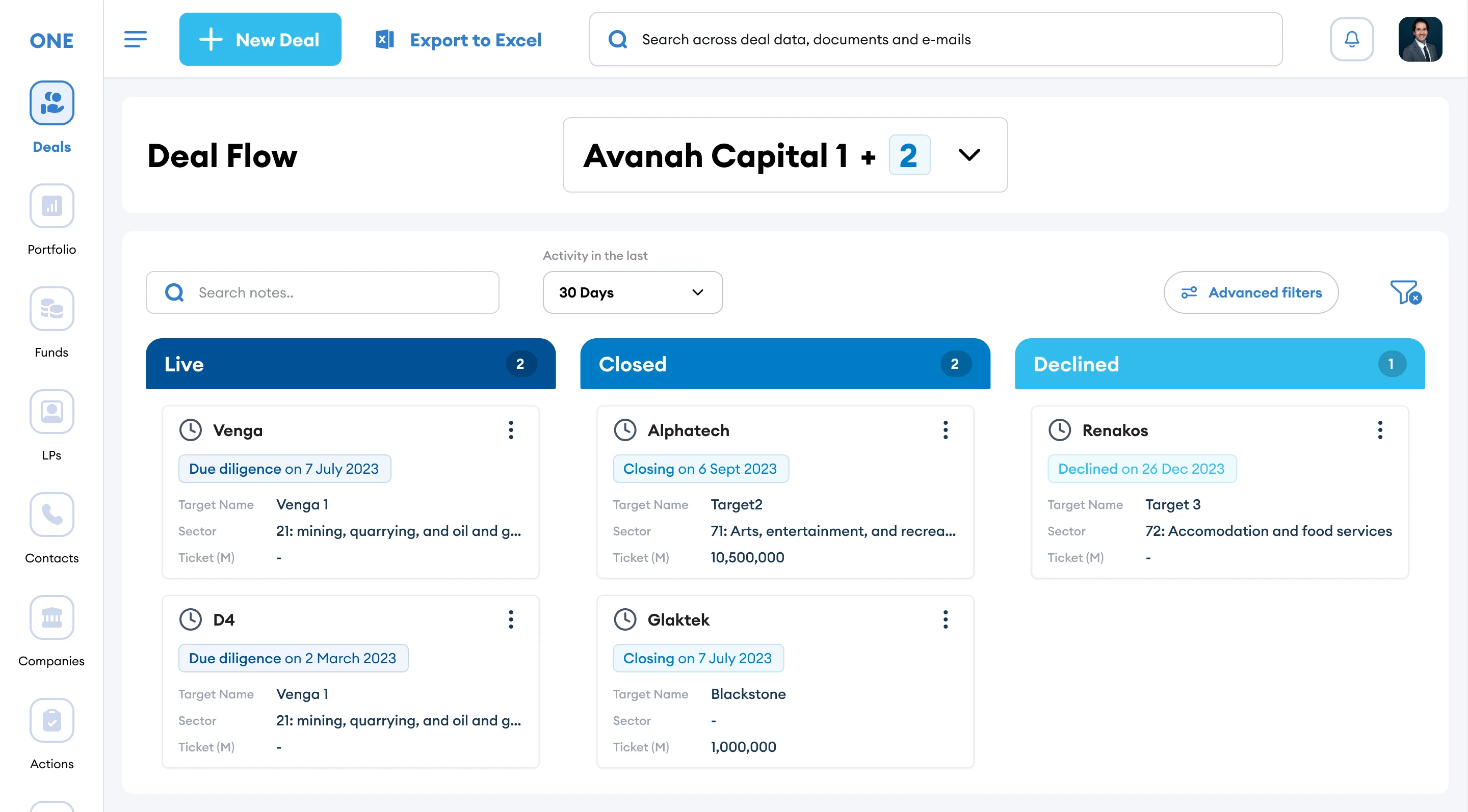 A structured pipeline flow chart illustrating transaction movement through underwriting stages.
Visual representation of deal flow stages from sourcing to closure.
Credit: www.davigold.com
Security And Compliance
Security and compliance are vital for private equity deal management software. Firms handle sensitive data that must stay protected. Software platforms must ensure strict security protocols. Compliance with legal standards avoids costly penalties. Trust builds when data is safe and rules are followed.
Data Protection Measures
Strong encryption protects data in storage and transit. Regular backups prevent data loss from hardware failures. Software uses firewalls to block unauthorized access. Continuous monitoring detects unusual activities quickly. Data is stored in secure, certified data centers. These measures reduce risks of breaches and leaks.
Many platforms now use AES-256 encryption and SOC 2 Type II certifications, which are industry benchmarks for data security. Firms should verify that their chosen software undergoes independent third-party audits to maintain these standards. Enterprise buyers should look for software providers aligned with standards from the National Institute of Standards and Technology (NIST) to ensure data sanitization and access policies meet institutional LP requirements.
Regulatory Requirements
Private equity firms must comply with laws like GDPR and SEC rules. Software supports compliance by providing audit trails and reports. It helps maintain records for regulatory reviews. Automated alerts remind teams of compliance deadlines. Staying compliant avoids fines and reputational damage. Software updates keep pace with changing regulations.
For US-based firms, the SEC’s regulatory framework for investment advisers imposes strict recordkeeping and reporting obligations. Deal management software that automatically generates Form ADV and other required filings can significantly reduce compliance overhead. Maintaining comprehensive digital communication logs aligned with policies established by the Securities and Exchange Commission prevents regulatory friction during unannounced exams and fund audits.
Access Controls
Role-based access limits data visibility to authorized users only. Multi-factor authentication adds an extra security layer. Permissions are regularly reviewed and updated. Access logs record user actions for accountability. These controls prevent insider threats and unauthorized data use. They ensure every user accesses only what they need.
Buy-Side vs. Sell-Side Deal Management Workflows
Private equity firms operate on both sides of the transaction table, and selecting the right platform requires understanding how workflows diverge between acquisitions and exits:
Buy-Side Architecture
Buy-side deal management prioritizes broad funnel management, relationship intelligence, and deep underwriting. Investment teams need tools that:
- Ingest hundreds of proprietary and intermediated teasers each month.
- Map warm referral paths through board members, operating partners, and industry advisors.
- Coordinate functional diligence across tax, legal, environmental, and IT audit teams.
- Manage competitive auction timelines and bidding strategy documentation.
Sell-Side and Carve-Out Execution
Conversely, when a sponsor readies a portfolio company for an exit, the software must function as an outward-facing capital syndication hub. Essential sell-side capabilities include:
- Generating dynamic buyer matrices that group strategic and financial sponsors by buying appetite.
- Monitoring prospective acquirer engagement inside virtual data rooms to gauge buyer interest.
- Tracking non-disclosure agreements (NDAs) and intent-to-bid documents automatically.
- Streamlining management presentation schedules and logging Q&A exchanges to minimize executive distraction.
Real-world Success Stories
Real-world success stories highlight how Private Equity Deal Management Software transforms workflows. These stories show tangible benefits firms gain from adopting these tools. They offer insights into practical improvements and measurable results. Examining these examples helps understand software impact beyond theory.
Case Studies From Pe Firms
Several private equity firms report streamlined deal processes using dedicated software. One firm reduced deal closing time by 30% through better data organization. Another improved communication among teams by centralizing deal information. A mid-sized PE firm enhanced deal sourcing efficiency by tracking leads automatically. These case studies demonstrate how software adapts to different firm sizes and strategies.
Measurable Improvements
Firms observe clear, quantifiable gains after software implementation. Deal flow visibility increases, enabling quicker decision-making. Reporting accuracy improves, reducing errors and manual work. Many firms see higher deal win rates due to better follow-up and tracking. Time spent on administrative tasks drops, freeing staff to focus on core activities. These measurable improvements validate the software’s role in enhancing performance.
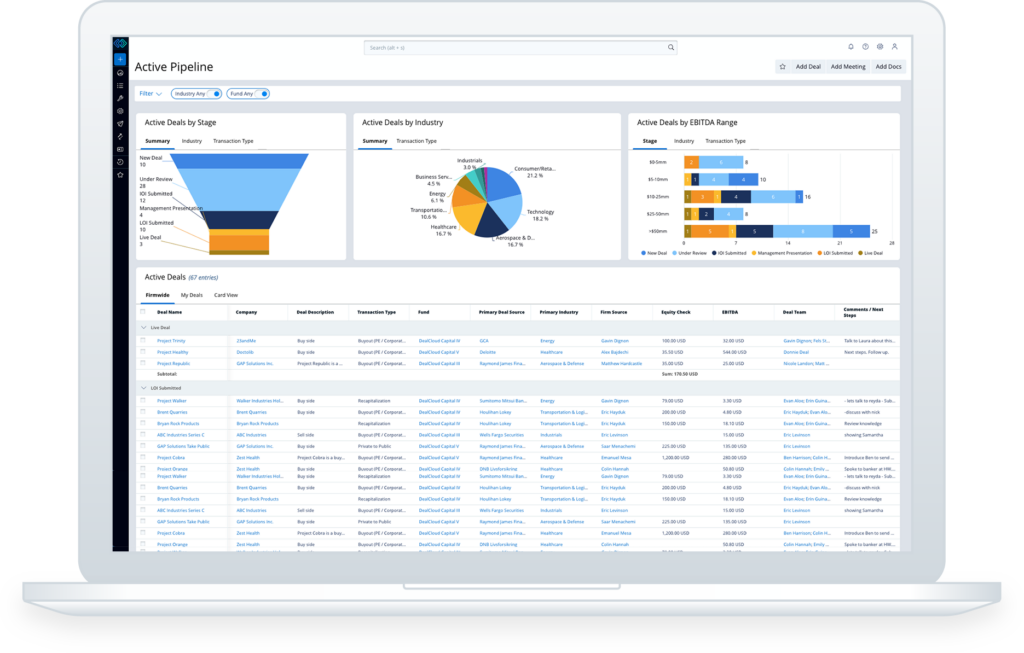 Enterprise pipeline interface highlighting task ownership, transaction volume, and stage progression.
DealCloud pipeline view for tracking deal progress across the team.
Credit: www.intapp.com
Future Trends In Deal Management
The future of private equity deal management is evolving rapidly. Technology plays a key role in shaping how deals are sourced, evaluated, and closed. New tools offer faster insights and smarter workflows. Firms that adopt these innovations can stay ahead in a competitive market.
Emerging trends focus on automation, data analysis, and accessibility. These trends aim to reduce manual tasks and improve decision-making. The next generation of deal management software will blend these elements for better results and higher efficiency.
Ai And Machine Learning
Artificial intelligence (AI) and machine learning are transforming deal management software. These technologies automate routine tasks like data entry and document review. They also help identify promising deals by analyzing large datasets quickly.
AI algorithms learn from past deals to predict risks and outcomes. This reduces human error and speeds up evaluations. Machine learning models improve over time, making deal pipelines more accurate and focused.
Enhanced Analytics
Advanced analytics tools are becoming standard in deal management. They provide deeper insights into market trends and portfolio performance. Visual dashboards make complex data easier to understand for all team members.
Real-time analytics allow firms to track deal progress and spot issues early. Predictive analytics forecasts future returns and risks. These features support smarter investment decisions and better resource allocation.
Cloud-based Solutions
Cloud technology offers greater flexibility and security for deal management software. Teams can access data anytime from any location, improving collaboration. Cloud solutions reduce IT costs and simplify software updates.
Many private equity firms prefer cloud platforms for their scalability. They handle growing data volumes without slowing down. Cloud-based systems also enable seamless integration with other tools and services.
Implementation Best Practices
Rolling out deal management software successfully requires thoughtful planning beyond just selecting a vendor. Firms that treat implementation as a strategic initiative typically see faster adoption and greater ROI.
Stakeholder Alignment
Before deployment, involve key deal team members, analysts, and compliance officers in defining workflows. A common mistake is to impose a tool without understanding existing processes. Mapping current deal stages and pain points ensures the software is configured to match—not disrupt—your team’s rhythm.
In practice, firms that follow structured system onboarding steps establish clear pipeline milestones and permission groups before migrating a single active lead, cutting down setup delays significantly.
Phased Rollout And Training
Start with a pilot group of experienced deal professionals who can provide candid feedback. This approach surfaces configuration issues early and builds internal champions. Pair that with structured training sessions that cover not only basic navigation but also advanced features like custom reporting and automation rules. Many vendors offer onboarding support, and taking advantage of it can cut ramp-up time in half.
When complex integrations cause pipeline synchronization errors, having direct access to responsive vendor assistance ensures that high-priority deal flow does not stall during live negotiations.
Data Migration And Cleanup
Migrating historical deal data from spreadsheets and legacy systems is one of the most overlooked tasks. Dedicate time to clean outdated records, standardize naming conventions, and remove duplicates before importing. Clean data from day one prevents errors in AI-driven analytics and portfolio monitoring.
Measuring Success
Define clear metrics before go-live, such as time saved on due diligence, number of deals tracked per month, or user adoption rate. Regularly review these against baseline data to validate the software’s impact and justify ongoing investment. For example, if the goal is to reduce manual data entry, track the hours saved per week across the team.
Frequently Asked Questions
What Is Private Equity Deal Management Software?
Private equity deal management software helps firms streamline deal sourcing, due diligence, and portfolio tracking. It centralizes data, improves collaboration, and accelerates decision-making throughout the investment lifecycle.
How Does Deal Management Software Improve Efficiency?
This software automates repetitive tasks, organizes deal information, and enhances team communication. It reduces manual errors and speeds up deal evaluation, making the entire process more productive.
Which Features Are Essential In Pe Deal Software?
Key features include CRM integration, pipeline management, document sharing, analytics, and secure data storage. These help private equity teams manage deals from origination to exit efficiently.
Can This Software Integrate With Other Tools?
Yes, most private equity deal management platforms support integration with CRM, email, financial modeling, and reporting tools. This connectivity creates a seamless workflow and data consistency.
How Much Does Private Equity Deal Management Software Typically Cost?
Pricing structures generally depend on the number of user seats and the required depth of customization. Most enterprise platforms charge between $120 and $300 per user per month, billed annually. High-end enterprise platforms like DealCloud often carry additional implementation and custom architecture setup fees ranging from $15,000 to over $50,000 depending on legacy database migration needs.
How Long Does Software Implementation Usually Take?
Out-of-the-box platforms with automated relationship intelligence (such as Affinity) can be deployed within two to four weeks. In contrast, highly customized platforms requiring tailored pipeline stage triggers, complex permission hierarchies, and legacy ERP data migration often require three to six months for full organizational adoption.
How Does A PE-Specific Platform Differ From A Generic CRM Like Salesforce?
While generic CRMs are built around repetitive, high-volume sales funnels, private equity workflows require complex multi-to-multi relational mapping. A single deal involves intermediaries, co-investors, lenders, legal advisors, board members, and operating partners. PE platforms are pre-architected with institutional data models, NDA tracking, virtual data room auditing, and investment committee reporting out of the box, avoiding years of expensive custom software development.
Conclusion
Choosing the right private equity deal management software simplifies complex workflows. It helps teams track deals, share information, and stay organized. Users save time and reduce errors during transactions. A good tool supports better decision-making with clear, up-to-date data. Investing in suitable software improves efficiency and deal success.
Keep your focus on features that match your firm’s needs. The right software becomes a key part of your daily work. Smart deal management leads to stronger partnerships and outcomes.
Start evaluating solutions today—your next closed deal could be just a streamlined pipeline away. Book a targeted vendor demonstration with your core team this week to assess workflow compatibility and take control of your deal velocity.

Similar Posts