Artificial Intelligence Chat: Revolutionizing Online Interaction
Founder & Lead SaaS Analyst at PCSaaS · Google Ads & Analytics Certified · SaaS Stack Architect · 500+ Software Tools Tested · 8+ years in B2B SaaS evaluation, AppSumo lifetime deal curation, performance marketing, and AI workflow automation
Explore how Artificial Intelligence Chat enhances communication, making online interactions faster and more efficient for everyone.
Imagine chatting with a computer that understands you. This is the magic of AI chat. It's not just for tech experts; it's for everyone. Whether you're asking for help, looking for information, or just chatting, AI can respond quickly and accurately. For more on this, see our guide on behuman online lifetime deal.
AI chat can help with customer service, answer questions, and even make recommendations. It's like having a smart assistant at your fingertips. This blog will explore how AI chat works, its benefits, and why it's becoming a crucial tool in our digital world. Let's dive in and see how AI chat is shaping our future.
Introduction To Ai Chat
Artificial Intelligence Chat, often known as AI Chat, is transforming the way we communicate. From customer service to personal assistants, AI Chat is becoming a part of our daily lives. This section will introduce you to the fascinating world of AI Chat. For more on this, see our guide on online nursing programs.
What Is Ai Chat?
AI Chat refers to systems that can engage in human-like conversation. These systems use complex algorithms to understand and respond to human queries. Common examples include chatbots and virtual assistants.
AI Chat uses natural language processing (NLP). This technology helps the system understand human language. It can analyze text and generate responses that mimic human conversation. For more on this, see our guide on dialora lifetime deal.
Historical Context
The concept of AI Chat is not new. The first chatbot, ELIZA, was created in the 1960s. ELIZA mimicked a psychotherapist's conversation style. It showed that machines could simulate human conversation.
In the 1990s, chatbots like ALICE advanced the field. ALICE used pattern matching to engage in more complex conversations. These early chatbots paved the way for modern AI Chat systems.
Today, AI Chat systems are much more sophisticated. They can understand context and provide personalized responses. This evolution continues to improve the efficiency and effectiveness of AI Chat.
How Ai Chat Works
Artificial Intelligence (AI) chat has transformed how we interact with technology. AI chat systems can understand and respond to human language. But how do they work? Let's break it down.
Key Technologies Behind AI Chat
AI chat systems rely on a combination of cutting-edge technologies to function seamlessly. At the core of these systems are machine learning (ML), natural language processing (NLP), and neural networks. These technologies work in tandem to enable machines to understand, interpret, and respond to human language in a meaningful way.
Machine Learning: Machine learning algorithms are another key part of AI chat. These algorithms help the AI learn from data. The more data it processes, the smarter it becomes. The AI uses past interactions to improve future responses. It identifies patterns in the data to make predictions. Supervised learning is one method used. In this method, the AI is trained with labeled data. It learns to associate inputs with correct outputs. Unsupervised learning is another method. Here, the AI finds patterns in data without labeled examples. This helps it discover new insights. Both methods help the AI chat system become more accurate and efficient. In summary, AI chat works through NLP and machine learning. These technologies enable the system to understand and respond to human language. The result is a more interactive and helpful user experience.
Natural Language Processing (NLP): NLP allows AI chat systems to process human language, interpret meaning, and generate relevant responses. It involves tasks like sentiment analysis, entity recognition, and syntactic parsing, ensuring the system can understand colloquialisms, idioms, and even emotional tones.
Neural Networks and Deep Learning: Deep learning, powered by neural networks, enhances AI chat’s ability to mimic human-like understanding and responses. By processing data through multiple layers, neural networks improve the system’s ability to grasp complex queries and provide nuanced answers.
Leading organizations like OpenAI continue to advance these technologies, making AI chat more accessible and powerful.
Machine Learning and Natural Language Processing (NLP)
AI chat systems rely heavily on NLP and ML to bridge the gap between human language and machine comprehension. For instance, Google's BERT (Bidirectional Encoder Representations from Transformers) and OpenAI's GPT models are transformative NLP technologies. They allow AI chatbots to process language in context, leading to responses that feel natural and personalized.
Benefits Of Ai Chat
Artificial Intelligence (AI) Chat has transformed the way businesses interact with customers. It offers a range of benefits that enhance customer service and operational efficiency. Here, we explore the key advantages of AI Chat.
Enhanced User Experience
AI Chat provides a seamless and personalized user experience. It quickly understands and responds to customer queries, making interactions smooth and efficient. This leads to higher satisfaction and loyalty.
AI Chat can remember past interactions, ensuring consistent and relevant support. It can also suggest products or services based on user preferences, enhancing the overall experience.
For example, an e-commerce site using AI chat can greet a returning customer by name, recommend products based on browsing history, and even assist with checkout — all within a single conversation. This frictionless experience directly contributes to higher conversion rates and customer retention. Integrating such capabilities with a dedicated communication platform can further elevate personalisation.
24/7 Availability
One of the most significant benefits of AI Chat is its 24/7 availability . Customers can get help at any time, even outside business hours. This ensures that no query goes unanswered, improving customer trust and satisfaction.
With AI Chat, businesses can reduce the need for a large customer service team, saving costs while still providing excellent support around the clock. This constant availability meets the demands of a global market, where customers may be in different time zones.
Moreover, AI chat can handle peak traffic without crashing, scaling automatically during high-demand periods like Black Friday or product launches. This resilience ensures that every customer receives timely assistance, reducing frustration and abandonment.

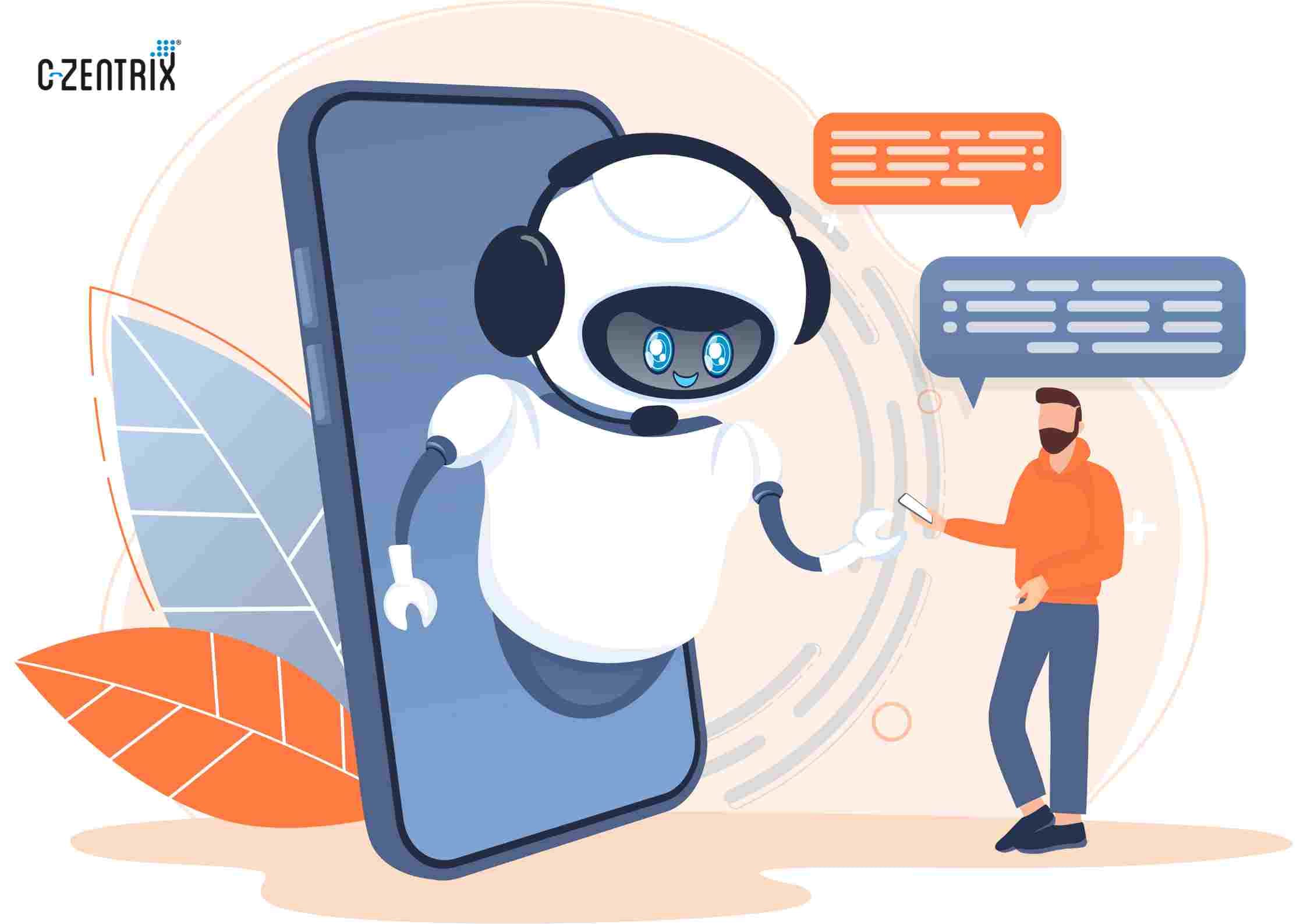
A user interacting with an AI chat assistant on a mobile device.
Credit: www.icebergwebdesign.com
Ai Chat In Customer Service
Artificial Intelligence (AI) chat is transforming customer service. Businesses now use AI chat to improve their customer interactions. This technology offers many advantages, making it a popular choice for companies. Let's explore some key benefits of AI chat in customer service.
Speed And Efficiency
AI chat responds to customer queries quickly. No more long waiting times. This speed improves customer satisfaction. It also allows businesses to handle more requests at once. Efficiency is another benefit. AI can process requests faster than humans. This reduces the workload for customer service teams.
A common mistake is assuming that speed alone suffices; however, accuracy must match pace. The best AI chat implementations combine fast response times with rigorous testing to maintain high-quality answers, often using human-in-the-loop validation for complex queries. For businesses looking to streamline their customer support, tools like Thrivedesk provide a solid foundation.
Personalized Responses
AI chat can provide personalized responses. It uses data to understand customer needs. This makes interactions more meaningful. Customers feel valued and understood. Personalized responses also build trust. AI can adapt its responses based on past interactions. This ensures a better customer experience every time.
Businesses can further enrich personalization by integrating AI chat with their CRM and analytics tools. This integration allows the chatbot to access purchase history, support tickets, and user preferences, delivering a truly one-to-one experience that builds long-term loyalty.
https://www.youtube.com/watch?v=AXn2XVLf7d0
Ai Chat In Social Media
AI Chat in Social Media is transforming the way we communicate online. From automated messaging to content moderation , AI is making social media more efficient and user-friendly. Let's explore how AI chat is shaping social media interactions.
Automated Messaging
Automated messaging is changing how businesses interact with users. AI chatbots can reply instantly to customer queries. This provides quick support and keeps users engaged. Below are some benefits of automated messaging:
24/7 Availability: AI chatbots are available all the time.
Instant Responses: Users get immediate replies to their questions.
Cost-Effective: Reduces the need for large support teams.
AI chatbots can also handle multiple conversations at once. This improves the user experience and boosts satisfaction. Businesses use automated messaging for:
Answering FAQs
Processing orders
Providing product information
In practice, automated messaging is most effective when designed with escalation paths — if the bot cannot resolve an issue, the conversation smoothly transfers to a human agent. This hybrid model ensures that complex or sensitive matters receive the empathy and nuance that only a person can provide.
Content Moderation
AI is crucial in content moderation on social media. It helps keep platforms safe and friendly. AI can quickly detect harmful content like spam, hate speech, and fake news. Here are key features of AI in content moderation:
Speed: AI reviews content faster than humans.
Consistency: AI applies the same rules to all content.
Scalability: AI can handle large volumes of content.
AI uses machine learning algorithms to improve over time. This makes content moderation more accurate. Social media platforms use AI to:
Identify and remove harmful posts
Filter spam messages
Protect users from inappropriate content
AI chat in social media is making online spaces safer and more enjoyable. Automated messaging and content moderation are just the beginning. The future of AI chat holds many exciting possibilities.
However, content moderation is not without challenges. AI systems can inadvertently flag benign content or miss subtle hate speech, especially when dealing with sarcasm or cultural nuances. Regular audits and updates to training data are essential to maintain fairness and accuracy.
Practical Applications of AI Chat
Beyond customer service and social media, AI chat is making a tangible impact across diverse industries. Here are three key areas where it is already driving value.
Healthcare
AI chat assists patients with symptom checking, appointment scheduling, and medication reminders. For example, a chatbot integrated with a hospital’s system can triage patients by asking initial questions and directing them to the appropriate department. This reduces administrative workload and speeds up care for non‑urgent cases.
E‑commerce
Online retailers use AI chat to guide shoppers through product selection, handle order inquiries, and process returns. Some systems even upsell or cross‑sell based on the user’s current cart. By remembering past purchases, the chatbot can suggest complementary items, increasing average order value.
Education
AI chatbots serve as virtual tutors, offering explanations, quizzes, and study reminders. Students can ask questions anytime and receive instant feedback. This is particularly valuable for remote learners or those who need extra help outside classroom hours. A well‑designed educational chatbot adapts its difficulty level to the student’s progress, much like a real tutor.
Ethical Considerations in AI Chat
As AI chat becomes more widespread, ethical concerns must be addressed to ensure responsible use.
Bias and Fairness
AI models trained on historical data can absorb and replicate biases present in that data. For instance, a hiring chatbot might favour certain demographics if trained on biased résumé data. Developers must actively audit training sets for bias and use techniques such as re‑weighting or adversarial debiasing.
Transparency
Users have the right to know when they are interacting with a machine. Clearly labelling AI chat as automated helps set appropriate expectations. Additionally, organisations should disclose how personal data is collected, stored, and used — especially in regulated industries like finance and healthcare.
Job Displacement
While AI chat automates routine queries, it doesn’t necessarily eliminate jobs — it shifts them toward higher‑value tasks. Human agents can focus on complex issues that require empathy and judgement, while the chatbot handles the first line of support. The key is thoughtful workforce transition planning.
Implementing robust data security solutions is critical, especially when handling sensitive health or financial information.
Challenges And Limitations
Artificial Intelligence (AI) chat systems have become part of our daily lives. They assist in customer service, provide information, and even engage in conversations. However, these systems come with their own set of challenges and limitations . Understanding these issues is essential for both users and developers.
Misunderstandings And Errors
AI chat systems can often misunderstand user input. They might provide incorrect or irrelevant responses. This is due to limitations in natural language processing (NLP) . These misunderstandings can frustrate users. For example, a simple question like "What's the weather?" could be misinterpreted. The AI might respond with unrelated information.
Additionally, AI chat systems lack common sense. They can't always grasp the context of a conversation. This leads to errors in responses. For example:
User Question AI Response
What’s the weather in Paris? Paris is a city in France.
What is the capital of France? The capital of France is France.
Such errors can reduce user trust in the AI chat system. Improving NLP and context understanding is crucial.
Another common issue is the AI's inability to admit uncertainty. When faced with a question outside its training scope, a poorly designed chatbot may fabricate an answer, misleading the user. Best practices include configuring the system to recognize its limitations and respond with "I'm not sure" or redirect to a human agent.
Privacy Concerns
Privacy is another major concern with AI chat systems. Users share personal information during conversations. This data can be sensitive. Protecting user data is essential. Without proper security, this information can be misused.
Some privacy issues include:
Data breaches
Unauthorized access
Data misuse
Users need to trust that their data is safe. Developers must implement strong security measures. Encryption and access control are key. These steps help in safeguarding user data.
Privacy policies should be clear and transparent. Users should know how their data is used and stored. This builds trust and ensures compliance with regulations.
Regulations such as GDPR and CCPA impose strict requirements on data collection and processing. Businesses deploying AI chat must ensure compliance by implementing data minimisation, anonymisation, and obtaining user consent. Regular security audits and encryption at rest and in transit are non‑negotiable for protecting sensitive conversations.
The Future of AI Chat
Advanced Personalization and Emotional Intelligence
The next generation of AI chat systems will emphasize personalization and emotional intelligence.
Hyper-Personalization: AI chat will integrate deeper user insights, providing more tailored recommendations and experiences.
Emotional Responses: Advances in sentiment analysis will enable AI chat to detect and respond empathetically to users' emotional states.
Expanding AI Chat Applications Across Industries
The potential applications of AI chat are virtually limitless, with opportunities to revolutionize various sectors.
Education: AI chat systems will serve as personalized tutors, offering adaptive learning experiences.
Entertainment: Virtual companions powered by AI chat will enhance gaming and storytelling.
Workplace Collaboration: AI chat will streamline team communication and automate routine tasks.
When combined with robust collaboration platforms, AI chat can transform how remote teams share updates and track project progress.
The future of AI chat looks promising. As technology advances, AI chatbots are becoming more efficient. They are learning to understand and respond better. This is changing how we interact with machines.
AI chat is not just about answering questions. It's about creating a seamless conversation. This makes it easier for users to get the help they need. The potential for AI chat is vast.
Advancements In Ai
AI chatbots are improving every day. Machine learning and natural language processing are key. These advancements allow chatbots to understand context better. They can now handle complex queries with ease.
AI chat systems are also getting faster. Real-time responses are becoming the norm. This speed enhances user experience. People no longer have to wait for answers.
Potential Applications
AI chat can be used in many fields. In customer service, chatbots provide quick support. They can answer FAQs and solve basic issues. This frees up human agents for more complex tasks.
In healthcare, AI chat can assist patients. They can provide information on symptoms and treatments. This can be especially helpful in remote areas.
Education is another area where AI chat can shine. Chatbots can help students with homework. They can also provide explanations and resources. This makes learning more accessible.
Example of an AI chat conversation flow for customer support.
Credit: juji.io
Getting Started with AI Chat
Implementing AI chat in your organisation may feel daunting, but a structured approach can simplify the process.
Define Your Use Case
Start by identifying the most repetitive or high‑volume queries your team handles. Common starting points are FAQs, order tracking, or account management. Prioritise one area to avoid overwhelming the system or your team.
Choose the Right Platform
Evaluate solutions based on language support, integration capabilities, and scalability. Some platforms offer drag‑and‑drop builders while others require coding. If your budget is tight, consider a lifetime‑deal option such as AI‑powered research tools that bundle multiple features into a single purchase.
Train and Test
Feed your chatbot with historical conversation logs and ensure it covers the most frequent scenarios. Run beta tests with a small group of users and iterate based on their feedback. Accuracy should be measured weekly, and the model retrained whenever new patterns emerge.
Monitor and Improve
Even after launch, track metrics like resolution rate, customer satisfaction, and average handling time. Use these insights to refine responses and expand the chatbot’s knowledge base. Regular updates keep the system aligned with changing customer needs.
OpenAI’s ChatGPT, a leading example of AI chat systems as of 2026.
Credit: www.headmind.com
Frequently Asked Questions
What Is An Ai Chat?
An AI chat is a conversation with an artificial intelligence. It uses machine learning to understand and respond.
How Does Ai Chat Work?
AI chat works by processing user inputs. It uses algorithms to generate accurate and relevant responses.
Can Ai Chat Replace Human Interaction?
AI chat can assist but not fully replace human interaction. It handles simple queries but lacks emotional understanding.
What Are The Benefits Of Ai Chat?
AI chat offers 24/7 availability. It provides instant responses, improves customer service, and reduces workload.
How does AI chat handle multiple languages?
Most modern AI chat systems are trained on multilingual datasets and can detect the user’s language automatically. They can respond in the same language or be configured to support a predefined set of languages. Accuracy may vary for less common languages, so testing is recommended.
Can AI chat be integrated with existing CRM systems?
Yes, many AI chat platforms offer APIs and pre‑built connectors for popular CRMs. This integration allows the chatbot to access customer profiles, purchase history, and support tickets, enabling truly personalised interactions.
What is the cost of implementing AI chat for a small business?
Costs vary widely — from free tier options with limited conversations to subscription‑based models (monthly or annual). Some vendors offer lifetime deals that can be a cost‑effective choice for small businesses. It’s important to factor in ongoing training and maintenance expenses.
Conclusion
Artificial Intelligence chat transforms communication. It offers quick, accurate, and efficient responses. Users enjoy a seamless experience. Businesses benefit from improved customer interaction. AI chat adapts and learns. It keeps conversations engaging and relevant. As technology advances, AI chat grows smarter.
Embrace this tool for better interactions. Stay updated with AI trends. Enjoy the future of communication.
Take the next step — explore our collection of AI‑powered tools and find the perfect chat solution for your objectives.

Similar Posts