

In the competitive world of digital marketing, Best SEO keyword tools have become indispensable. These tools help marketers, bloggers, and business owners identify the right keywords to drive traffic and improve search rankings. Choosing the best SEO keyword tool for your needs can save you time, boost your visibility, and increase your ROI.
In this comprehensive guide, we'll explore the top SEO keyword tools available today, their features, benefits, and how to use them effectively to dominate search engine rankings. For more on this, see our guide on etsy seo tools.
What is an SEO Keyword Tool?
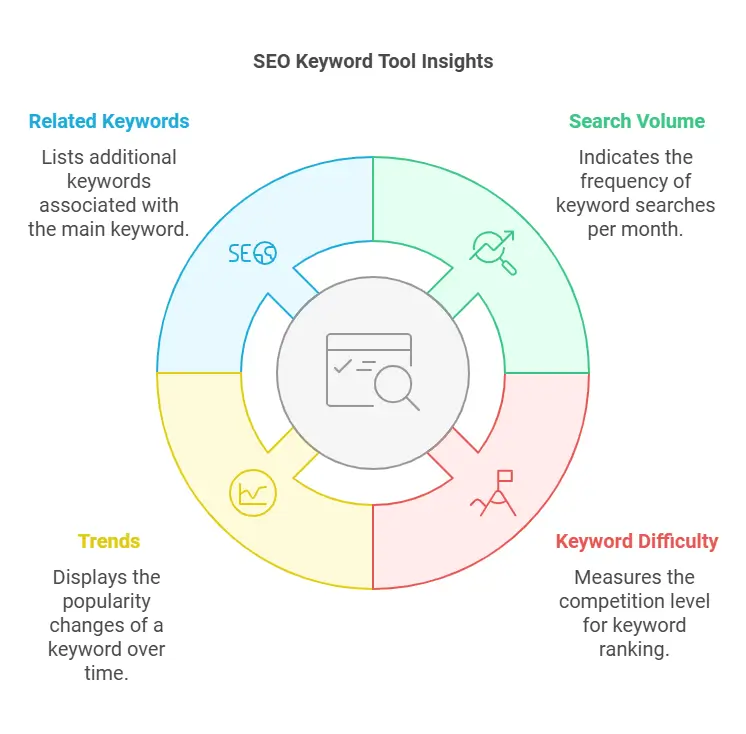
An SEO keyword tool is a software or platform designed to help users discover and analyze keywords relevant to their niche, industry, or target audience. These tools provide valuable insights such as:
Search volume : How many times a keyword is searched per month.
Keyword difficulty : The level of competition for ranking on a keyword.
Trends : Seasonal or long-term popularity of a keyword.
Related keywords : Other phrases that people search for alongside the main keyword.
Whether you're a beginner or an SEO expert, the right tool can give you an edge in identifying high-performing keywords and tailoring your content strategy accordingly.
An SEO keyword research dashboard displaying search volume, difficulty, and related terms. An example of an SEO keyword tool interface showing key metrics.
Why Are SEO Keyword Tools Important?
The internet is saturated with content. Without strategic keyword research, your chances of standing out are slim. Here's why SEO keyword tools are crucial:
Improved Targeting : They help you understand what your audience is searching for.
Competitive Analysis : Identify what keywords competitors are ranking for and outdo them.
Content Optimization : Optimize blog posts, landing pages, and product descriptions to rank higher.
Increased Traffic : Proper keyword use attracts organic traffic to your site.
Efficiency : Automate the research process, saving time and effort.
In practice, many marketers underestimate the time saved by using a single dashboard to uncover hundreds of keyword opportunities. For example, instead of manually browsing Google Suggest, a tool like Google Keyword Planner pulls data from the same official Google Ads platform — ensuring the numbers you see match what the search engine actually reports. Additionally, the automation built into these tools frees you up to focus on creating content rather than digging through spreadsheets. For more on this, see our guide on cheap seo tools.
Beyond mere rankings, consistent keyword research builds a feedback loop: the data you collect informs your content calendar, which in turn generates new search impression data that refines your next batch of keywords. Over time, this cycle compounds your organic visibility without requiring a proportional increase in effort.
Key Metrics to Understand Before Choosing a Tool
Before diving into tool features, it helps to know which metrics matter most for your strategy.
Search Volume – Monthly searches give a sense of demand, but high volume often means high competition.
Keyword Difficulty (KD) – A percentage or score that estimates how hard it is to rank in the top 10 results. Tools like Moz and Ahrefs calculate this differently, so compare scores across platforms.
Cost‑per‑Click (CPC) – Useful if you plan to run paid ads alongside organic efforts.
Click‑Through Rate (CTR) – Some tools (e.g., Moz) estimate the organic CTR based on position.
Trend Data – Google Trends helps separate seasonal spikes from evergreen opportunities.
A common mistake is fixating on volume alone. A keyword with 500 monthly searches but low competition can drive more targeted traffic than a 10,000‑search term with 90% difficulty. Understanding these trade‑offs will guide you to smarter choices when evaluating the tools below.
When you first open a keyword tool, the most practical starting point is to sort by “Keyword Difficulty” and filter for terms with a search volume above 100. This surfaces opportunities that would otherwise be buried under high‑competition head terms. Many experienced SEOs keep a separate spreadsheet of “quick wins” — keywords with KD under 30 and reasonable volume — and revisit it monthly.
Top SEO Keyword Tools for 2026
Here’s a curated list of the best SEO keyword tools available today, each tailored to different needs and budgets. For more on this, see our guide on best ai tools for seo.
1. Google Keyword Planner
Best for : Beginners and PPC Campaigns Google Keyword Planner is a free tool provided by Google Ads. It’s perfect for identifying keywords and estimating their performance on Google.
Key Features : Search volume and competition data
Cost-per-click (CPC) estimates
Integration with Google Ads for PPC campaigns
Why Use It : Free and user-friendly
Trusted data source from Google
2. SEMrush
Best for : Comprehensive SEO and Marketing Insights SEMrush is a powerhouse for keyword research and competitor analysis, offering tools that go beyond keywords.
Key Features : Keyword difficulty and search trends
Competitor keyword analysis
Content marketing toolkit
Why Use It : In-depth competitor insights
Broad range of features for SEO, PPC, and content marketing
3. Ahrefs
Best for : Backlink and Keyword Analysis Ahrefs is one of the most popular tools for SEO professionals, renowned for its extensive database.
Key Features : Keyword Explorer with global data
Backlink analysis
SERP analysis to see ranking pages
Why Use It : Detailed backlink profiles
Actionable keyword suggestions
4. Ubersuggest
Best for : Budget-Friendly SEO Research Created by Neil Patel, Ubersuggest is a versatile tool for keyword and content ideas.
Key Features : Keyword search volume and trends
Domain analysis for competitors
Content ideas based on keywords
Why Use It : Affordable pricing plans
Simple interface suitable for beginners
5. Moz Keyword Explorer
Best for : SEO Beginners and Small Businesses Moz's intuitive design and actionable insights make it an excellent choice for those new to SEO.
Key Features : Keyword difficulty score
Organic CTR estimates
Priority score combining all metrics
Why Use It : Easy-to-understand metrics
Strong focus on organic search results
6. AnswerThePublic
Best for : Content Creators and Question-Based Keywords AnswerThePublic visualizes search questions and queries, making it great for brainstorming content ideas.
Key Features : Question-based keyword suggestions
Preposition and comparison keywords
Visual data representation
Why Use It : Content idea generation
Unique visualization tools
7. KWFinder by Mangools
Best for : Finding Long-Tail Keywords KWFinder is specifically designed for discovering long-tail keywords with low competition.
Key Features : Easy-to-use interface
SERP analysis and SEO difficulty scores
Local keyword research
Why Use It : Focused on long-tail keyword opportunities
Affordable pricing plans
8. KeywordTool.io
Best for : E-commerce and Social Media Keywords This tool specializes in finding keywords for platforms like Amazon, YouTube, and Instagram.
Key Features : Keyword suggestions for multiple platforms
Search volume and competition insights
Supports over 20 languages
Why Use It : Excellent for niche platforms
Multilingual keyword research
9. Surfer SEO
Best for : Content Optimization and SEO Writing Surfer SEO combines keyword research with content optimization, ensuring your articles rank well.
Key Features : Content editor with keyword suggestions
SERP analysis and competitor insights
Integration with WordPress and Google Docs
Why Use It : Enhances on-page optimization
Ideal for bloggers and writers
10. SpyFu
Best for : PPC and Competitor Analysis SpyFu allows users to uncover competitors' strategies, including the keywords they rank for and target in ads.
Key Features : PPC keyword analysis
Domain overviews for competitors
Historical data for trends
Why Use It : Great for competitive intelligence
Affordable plans for small businesses

A visual summary of ten leading SEO keyword tools for 2026, highlighting their primary strengths. A 2026 overview of the most popular keyword research tools and their core features.
Quick‑Comparison Table
Tool Best For Starting Price (approx.) Free Tier? Keyword Difficulty Backlink Data
Google Keyword Planner Beginners / PPC Free Full access Yes No
SEMrush Comprehensive marketing $129.95/mo Limited (7‑day trial) Yes Yes
Ahrefs Backlink + keyword depth $99/mo No (7‑day $7 trial) Yes Yes
Ubersuggest Budget‑friendly research $12/mo (basic) Yes (limited daily) Yes Yes
Moz Keyword Explorer Simple, beginner‑friendly $49/mo 10 queries/mo free Yes Yes (limited)
AnswerThePublic Question‑based content Free (basic) Yes No No
KWFinder Long‑tail & local SEO $29.90/mo 10 searches/day free Yes Yes
KeywordTool.io E‑commerce / social $69/mo Yes (limited) Yes (paid plans) No
Surfer SEO On‑page optimization $89/mo No (7‑day trial) Yes No
SpyFu PPC competitor intel $39/mo Limited free version Yes Yes (historical)
This table helps you instantly compare pricing and core features. If budget is your primary constraint, starting with Google Keyword Planner and mixing in a free tier from Ubersuggest or KWFinder can yield great results without upfront cost. For more on this, see our guide on best free keyword research tools.
AI-Powered Keyword Tools: The 2026 Edge
The past two years have seen a surge in keyword tools that integrate large language models (LLMs) to generate seed keywords, write content briefs, and even predict content gaps before they become obvious. Tools like Kosmic's lifetime deal and Wordhero's offer combine keyword research with AI content generation, allowing you to go from a search query to a fully optimised draft in one workflow. Others, such as Katteb, use AI to automatically enrich your existing content with relevant keywords.
In practice, the biggest advantage of AI‑powered tools is speed: instead of manually combing through keyword lists, you can feed a single topic into the tool and receive a cluster of semantically related terms, frequently asked questions, and suggested headings — all aligned with current search intent. However, always verify the output against a trusted source like Google Trends to avoid hallucinated search volumes.
For teams running paid campaigns, combining AI keyword suggestions with email automation platforms can create a seamless funnel: the tool identifies high‑intent keywords, and the email system targets users who click through with personalised offers.
CTA: Try one of the AI‑enhanced tools listed above for a week and compare its suggested clusters against your existing keyword list — you'll likely uncover content ideas you hadn't considered.
How to Choose the Best SEO Keyword Tool
When selecting an SEO keyword tool, consider the following factors:
1. Budget
Free tools like Google Keyword Planner are great for those on a tight budget.
Paid tools like SEMrush or Ahrefs offer advanced features but come at a cost.
If you’re just starting out, you can get solid data from free tiers or low‑cost monthly plans. For example, a small blog might pair Google Keyword Planner with AnswerThePublic and a free KWFinder trial before committing to a paid subscription.
2. Features
- Decide whether you need basic keyword research or advanced features like competitor analysis, backlink data, and content optimization.
3. Ease of Use
- Tools like Ubersuggest and KWFinder are user-friendly, making them ideal for beginners.
4. Integration
- Ensure the tool integrates with platforms you use, such as WordPress, Google Analytics, or Google Ads.
Many keyword tools now offer native WordPress plugins or browser extensions that streamline your workflow. Surfer SEO’s direct integration with WordPress, for instance, lets you optimise content as you write without switching tabs.
5. Niche Requirements
- If you're targeting specific platforms like Amazon or YouTube, opt for tools like KeywordTool.io.
Tips for Effective Keyword Research
1. Focus on Long-Tail Keywords
- Long-tail keywords are specific, less competitive, and often have higher conversion rates.
In practice, a page targeting “best running shoes for flat feet women 2026” will face far fewer competitors than one targeting just “running shoes.” Start with a few long‑tail phrases and use the exact match data from your chosen tool to validate their actual search volume.
2. Analyze Competitors
- Use tools like Ahrefs and SEMrush to discover what keywords your competitors rank for.
You can also look at the “Also rank for” section in Moz or the domain overview in SpyFu to spot gaps — terms your competitors rank for but you don’t. These gaps often represent low‑hanging traffic opportunities.
3. Leverage Question-Based Keywords
- Tools like AnswerThePublic help identify questions your audience is asking.
4. Consider Search Intent
- Align keywords with the intent behind a search query, whether informational, navigational, or transactional.
5. Monitor Trends
- Regularly update your keyword strategy based on seasonal or industry trends.
A quarterly review of trending terms — using Google Trends or the trend feature inside SEMrush — ensures your content stays relevant. Set a calendar reminder to revisit your keyword list every three months.
Another powerful technique is topic clustering: use your keyword tool to group related terms into a single pillar page and supporting blog posts. For example, a pillar page on “email marketing” can link to articles about automation, deliverability, and list building. Tools like SEMrush and Ahrefs now offer built‑in clustering features that automate this grouping.
Common Mistakes to Avoid
Ignoring Search Intent : Focusing solely on volume without considering user intent can lead to poor results.
Overloading with Keywords : Keyword stuffing harms readability and SEO performance.
Neglecting Updates : Failing to refresh your keyword strategy can result in outdated content.
Using Only One Tool : Diversify your research with multiple tools for comprehensive insights.
Chasing High Volume Too Early : New sites often waste energy on ultra‑competitive head terms. Instead, target “low‑hanging fruit” with a KD under 30 and build authority gradually.
Forgetting Local Modifiers : If your business serves a specific city, ignoring location‑based keywords (e.g., “plumber Austin TX”) means missing local searchers who are ready to convert.
https://www.youtube.com/watch?v=RCT5DGhVJsE
How to Combine Multiple Tools for a Robust Workflow
No single tool covers every angle perfectly. A smart workflow uses two or three complementary tools:
Discovery phase – Use AnswerThePublic or Google Keyword Planner to brainstorm seed keywords.
Validation phase – Check search volume and difficulty in KWFinder or Moz Keyword Explorer.
Competition phase – Analyse competitor backlinks and keyword gaps with Ahrefs or SEMrush.
Optimisation phase – Write content with real‑time feedback from Surfer SEO.
This layered approach gives you the breadth of free tools and the depth of paid enterprise features without needing every subscription at once.
Future Trends in Keyword Research (2026 and Beyond)
Keyword research is moving beyond simple text queries. Voice search continues to grow, and tools are beginning to integrate natural language processing to better match conversational phrases. Meanwhile, visual search — where users upload an image to find products — creates a new frontier for keyword research, with tools like Ahrefs and SEMrush experimenting with image‑based suggestion algorithms.
For local businesses, the rise of “near me” searches and zero‑click results means that keyword tools must now also analyse Google Business Profile data and local pack rankings. Look for tools that offer dedicated local SEO modules, such as KWFinder’s location‑based filtering.
As search engines place greater emphasis on user experience signals (Core Web Vitals, dwell time), future keyword tools will likely incorporate engagement metrics — not just search volume and difficulty — to help you prioritise topics that keep visitors on the page. Staying ahead of these trends will require regular updates to your toolkit. For instance, using a reliable cloud hosting service for small business ensures your site loads quickly, which indirectly supports your keyword rankings.
Tip: Dedicate 15 minutes each month to test a new tool feature or read the release notes of your current suite — small adjustments often yield outsized gains.
FAQs About SEO Keyword Tools
1. Which is the best free SEO keyword tool?
Google Keyword Planner and AnswerThePublic are excellent free options.
2. Do I need multiple tools for keyword research?
Using multiple tools provides diverse insights, especially when combining competitor analysis and content optimization.
3. What is the difference between short-tail and long-tail keywords?
Short-tail keywords are broad and competitive, while long-tail keywords are specific, less competitive, and often more conversion-friendly.
4. Can keyword research improve local SEO?
Yes, tools like KWFinder specialize in local keyword research, helping you target a specific geographic audience.
5. How often should I update my keyword research?
Review your keyword list at least once per quarter, or whenever you launch a new product or enter a new market. Seasonal businesses should check trends monthly.
6. Can these tools help with YouTube SEO?
Absolutely. KeywordTool.io offers dedicated YouTube keyword suggestions, while Ahrefs and SEMrush can show what topics are gaining traction in video search.
7. What’s the biggest mistake beginners make when using keyword tools?
They often trust the default difficulty score without manually scanning the SERP. A “low difficulty” number might still have strong brands dominating the first page, so always look at the actual results before committing to a keyword.
Final Thoughts
Investing in the best SEO keyword tool can transform your digital marketing strategy, making it more targeted and efficient. Whether you're a beginner or an experienced marketer, these tools provide the data and insights you need to rank higher, attract more traffic, and boost conversions.
Remember, the key to success lies in continuous optimization. Regularly update your strategy and stay ahead of the competition by leveraging the power of the best SEO keyword tools.
Take the next step: choose one tool from the list above that best fits your current budget and skill level, then run a focused 7‑day experiment to see which keywords begin moving the needle for your site.











7 comments
[…] suits users who prefer a fast, clean interface with strong competitor data and broad keyword ideas. It offers better data visualization for strategy […]
[…] is a practical choice for creators wanting to improve YouTube SEO. It combines keyword tools and analytics in one platform. The free version alone offers useful insights to start. Pro plans […]
[…] It supports task assignments, timelines, and file sharing. The platform integrates with many SEO tools, enhancing workflow automation. Monday.com suits teams needing a clear overview of project […]
[…] users. They focus on ease of use and high conversion rates. Choosing the right tool can boost your SEO lead generation efforts […]
[…] additional free options can expand your keyword research toolkit. These tools provide valuable insights without costing a dime. They help uncover new […]
[…] outline already matches your video’s actual structure. You can also pair Maekersuite with a solid keyword research workflow to decide which search terms deserve a video in the first […]
From start to finish, your content is simply amazing. You have a talent for making complex topics easy to understand and I always come away with valuable insights.