Ai Chatbot Online: Transforming Customer Support Today
Lead SaaS Analyst at PCSaaS · Software Developer · 500+ Tools Tested · Google Ads & Analytics Certified · 8+ Years Experience
Discover how Ai Chatbot Online enhances customer service, automates responses, and boosts business efficiency.
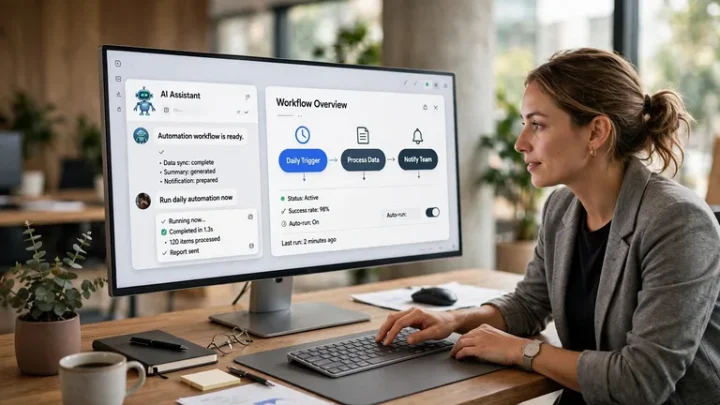
Imagine having a virtual assistant available 24/7 to assist with customer queries. AI chatbots online provide just that. These smart bots can simulate human conversation, making interactions smoother and more efficient. They understand and respond to questions, solving problems quickly.
For businesses, this means better customer service and increased productivity. For customers, it means quicker support and a better experience. Ready to explore the world of online AI chatbots? Let’s dive in! For more on this, see our guide on behuman online lifetime deal.
An AI chatbot online is software that uses artificial intelligence to simulate human conversation on a website or messaging app. It answers questions, provides information and assists with tasks around the clock. AI chatbots use natural language processing and machine learning to understand user intent, handle multiple queries at once and escalate complex issues to human agents.

AI chatbot interface displaying a conversational exchange with a user.
Introduction To Ai Chatbots
Artificial Intelligence (AI) chatbots are transforming the way businesses interact with customers. These virtual assistants offer instant responses and can handle multiple queries at once. With advancements in AI, chatbots have become smarter and more efficient. They are now a crucial part of many business strategies.
Evolution Of Chatbots
Chatbots have come a long way. In the past, they were simple programs with limited capabilities. Early chatbots could only respond to specific commands. They often failed to understand natural language. Over time, AI advancements changed this. Modern chatbots now understand and process natural language. They can learn from interactions and improve over time. This evolution has made them more useful and reliable. For more on this, see our guide on online nursing programs.
Today’s chatbots leverage large language models (LLMs) that can grasp nuance, detect sentiment, and even handle multi-turn conversations without losing context. This leap from rule-based systems to generative AI has made them far more capable in real-world support scenarios.
Importance In Modern Business
AI chatbots play a vital role in today’s business world. They provide 24/7 customer support. This helps businesses stay connected with customers round the clock. Chatbots also reduce the workload on human staff. They handle routine inquiries, allowing human agents to focus on complex issues. This improves overall efficiency. For more on this, see our guide on dialora lifetime deal.
Chatbots also enhance customer experience. They provide quick and accurate responses. This leads to higher customer satisfaction. Businesses can also use chatbots to gather valuable data. This data helps in understanding customer needs and preferences. Ultimately, AI chatbots help businesses grow and succeed in a competitive market.

A smartphone showing a typical AI chatbot interaction on a messaging app.
How Ai Chatbots Work
AI chatbots have become essential tools for businesses. They handle customer queries, provide support, and even engage users. But how do these chatbots work? They use advanced technologies to understand and respond to human language. Let’s explore the main components that make AI chatbots effective. For more on this, see our guide on wowoptin lifetime deal.
Natural Language Processing
Natural Language Processing (NLP) is the backbone of AI chatbots. It helps chatbots understand and interpret human language. NLP breaks down sentences into words and phrases. It then analyzes the meaning behind them. This allows chatbots to understand user intent and provide accurate responses. NLP involves various techniques like tokenization, stemming, and part-of-speech tagging. These techniques help in parsing and comprehending text.
Modern NLP also incorporates transformer-based architectures such as BERT and GPT, which excel at understanding context and disambiguating words with multiple meanings. A common mistake is expecting a chatbot to handle every possible phrasing perfectly from day one—real-world performance improves with fine-tuning on domain-specific data.
Machine Learning Algorithms
Machine Learning Algorithms play a crucial role in AI chatbots. These algorithms enable chatbots to learn from data. They improve their responses based on past interactions. Supervised learning uses labeled data to train the chatbot. Unsupervised learning finds patterns without labeled data. Reinforcement learning allows chatbots to learn from rewards and penalties. Combining these techniques helps create more accurate and efficient chatbots.
https://www.youtube.com/watch?v=7fv0K0axwnA
Benefits of Using AI Chatbot Online
The benefits of using AI chatbots are profound, making them a vital asset for businesses aiming to thrive in a digital-first world.
24/7 Availability
One of the standout advantages of AI chatbots is their ability to provide round-the-clock support. Customers can get instant answers at any time, leading to higher satisfaction and retention rates.
AI chatbots work round the clock. They don’t need breaks. Customers can reach out any time, day or night. This ensures that help is always available. No more waiting for business hours to get assistance.
This constant availability enhances customer satisfaction. Users feel valued and supported. It also means fewer bottlenecks during peak times. Chatbots handle the initial queries, freeing up human agents for complex issues.
In practice, businesses that deploy a 24/7 chatbot often see a measurable drop in after-hours ticket volume. Integrating a chatbot with a reliable messaging platform can be a cost-effective solution compared to staffing overnight shifts.
Cost-Effectiveness
AI chatbots reduce operational costs by automating repetitive tasks and minimizing the need for large customer support teams. Small and medium businesses, in particular, find them to be a cost-effective solution.
Beyond direct savings, chatbots also lower the cost per interaction—automated resolutions often cost pennies compared to a live agent call. For teams on a tight budget, exploring a lifetime deal for a support tool can provide long-term value without recurring subscription fees.
Enhanced Customer Engagement
By delivering personalized and instant responses, chatbots improve user engagement. They can recommend products, answer queries, and guide customers through their journeys, creating a more interactive experience.
Increased Efficiency
From handling high volumes of queries simultaneously to offering multi-language support, AI chatbots streamline operations and free up human resources for more complex tasks.
Benefits For Customer Support
AI chatbots are transforming customer support. They provide numerous advantages that make the experience better for both businesses and customers. Let’s delve into some key benefits these chatbots offer.
Instant Responses
AI chatbots provide immediate answers. There is no waiting. This speed is crucial in today’s fast-paced world. Customers expect quick solutions to their problems. Chatbots deliver just that.
Instant responses improve user experience. They reduce frustration and build trust. Customers know they can rely on your support system. This quick service can lead to higher customer retention rates.
Enhancing User Experience
In today’s digital age, enhancing user experience is key. AI Chatbots Online play a crucial role in achieving this. They provide quick, efficient, and personalized responses, improving overall user satisfaction. Let’s dive into how these chatbots enhance user experience.
Personalized Interactions
AI chatbots can offer personalized interactions. They use data to understand user preferences and behaviors. This allows them to provide tailored responses and recommendations. For instance:
- Remembering user preferences
- Suggesting relevant products or services
- Offering personalized greetings
These personalized touches make users feel valued and understood. It creates a more engaging and satisfying experience.
Handling Multiple Queries
Another advantage of AI chatbots is their ability to handle multiple queries. Unlike humans, chatbots can manage several conversations at once. This means:
- Faster response times
- Reduced wait times for users
- Increased efficiency
Here’s a quick comparison of human agents vs. AI chatbots:
| Feature | Human Agents | AI Chatbots |
|---|---|---|
| Response Time | Varies | Instant |
| Handling Capacity | Limited | Unlimited |
| Consistency | May vary | Consistent |
AI chatbots ensure that users get quick, accurate responses. This enhances their experience and keeps them coming back.
Cost Efficiency
Cost efficiency is a major benefit of AI chatbots online. Businesses can save money by using AI chatbots for various tasks. These chatbots offer significant advantages in reducing operational costs and scaling operations.
Reducing Operational Costs
AI chatbots can handle many customer queries without human intervention. This reduces the need for large customer service teams. A chatbot works 24/7, addressing issues instantly. This saves money on staffing and training. It also reduces the cost of overtime for employees.
Chatbots can manage repetitive tasks efficiently. This allows human employees to focus on complex issues. This improves productivity and reduces labor costs. Automated responses also minimize errors, saving money on corrections.
Scalability
Scalability is another key benefit. AI chatbots can handle multiple queries at once. This means they can manage increased customer interactions without extra cost. Human teams struggle to keep up with high volumes, but chatbots do not.
Businesses can scale their operations smoothly with AI chatbots. During peak times, chatbots maintain service quality. This ensures customer satisfaction without additional expenses. Scaling with chatbots is cost-effective and efficient.
Challenges And Limitations
AI chatbots are becoming more popular. They offer many benefits, but they also face challenges and limitations. These hurdles affect their efficiency and user experience. Understanding these issues helps in better deployment of AI chatbots.
Understanding Complex Queries
AI chatbots often struggle with complex queries. They are good at handling simple questions. But they can get confused with more detailed requests. This can lead to incorrect answers. Users get frustrated when they do not receive accurate help. Improving AI’s understanding of complex queries is crucial.
One approach to mitigate this is designing a fallback escalation path: when the chatbot detects uncertainty, it can hand off the conversation to a human agent along with the full context. This hybrid model preserves the speed of automation while preventing customer frustration. Many modern support platforms, such as those offered through a streamlined workflow tool, include built-in escalation routing.
Maintaining Human Touch
Chatbots lack the human touch. They can seem cold and impersonal. People miss the warmth and empathy of human interaction. This can make users feel disconnected. A balance between AI efficiency and human warmth is needed. Enhancing chatbots to feel more human can improve user satisfaction.
A practical tactic is to script the chatbot’s tone to match your brand voice—using friendly language, acknowledging the user’s frustration, and offering a smile or emoji where appropriate. Some teams also train the chatbot to detect emotional cues and respond with empathy before escalating. The goal is to make the interaction feel less like talking to a machine and more like a helpful colleague.
Future Of Ai Chatbots
The future of AI chatbots is incredibly promising. These intelligent systems are evolving rapidly. They are becoming more advanced and integrated. This transformation is revolutionizing how we interact online. Let’s explore the key advancements shaping the future of AI chatbots.
Advancements In Technology
AI chatbots are improving with each passing day. Machine learning algorithms are getting smarter. They can understand and process human language better. These advancements help chatbots respond more accurately. Natural Language Processing (NLP) is a key factor. It allows chatbots to grasp context and intent. This makes conversations feel more natural. Voice recognition technology is also advancing. This helps in creating voice-activated chatbots. These bots can understand spoken language. They can respond in real-time, making interactions seamless.
Integration With Other Systems
AI chatbots are not standalone tools. They are integrating with various systems. This includes Customer Relationship Management (CRM) software. It helps businesses manage customer data effectively. Chatbots can access this data and provide personalized responses. They can also integrate with e-commerce platforms. This allows them to assist with online shopping. Users can browse and purchase products through chatbots. Integrating with social media is another trend. Chatbots can engage with users on platforms like Facebook and Twitter. This broadens their reach and functionality.

Analytics dashboard for an AI chatbot tracking user interactions and resolution rates.
Implementing Ai Chatbots
Implementing AI chatbots can transform the way businesses interact with customers. These chatbots offer quick responses, automate repetitive tasks, and improve customer satisfaction. But, setting up an AI chatbot requires careful planning and execution. In this section, we will explore key steps and best practices for implementing AI chatbots.
Choosing The Right Platform
Choosing the right platform is crucial for successful chatbot implementation. There are various platforms available, each with unique features. Evaluate platforms based on ease of use, integration capabilities, and scalability. Some popular platforms include Dialogflow, Microsoft Bot Framework, and IBM Watson. Ensure the platform you choose supports your business needs and goals.
Best Practices
Follow best practices to ensure your AI chatbot is effective. Start with a clear purpose for your chatbot. Define specific tasks it will handle. Keep the conversation flow simple and natural. Use short sentences and direct responses. Regularly update the chatbot to handle new queries. Monitor its performance and gather user feedback. This helps improve its accuracy and usefulness over time.
Security And Privacy Considerations
When deploying an AI chatbot, safeguarding customer data is non-negotiable. Chatbots often process personally identifiable information (PII) such as names, email addresses, and payment details. Businesses must ensure that the chatbot platform complies with regulations like GDPR and CCPA.
Use encryption for data in transit and at rest, and limit the data the chatbot stores to only what is necessary for the conversation. Additionally, provide clear opt-in and opt-out options for users who prefer not to have their interactions logged. A transparent privacy policy builds trust and reduces legal risk. For teams handling sensitive data, integrating with a secure knowledge base or CRM that follows industry-standard security practices is essential.
Measuring Success: KPIs For Chatbot Performance
To know whether your AI chatbot is delivering value, track these key performance indicators:
- Resolution Rate – the percentage of queries the chatbot resolves without human handoff.
- First Response Time – how quickly the chatbot replies after a user sends a message.
- Customer Satisfaction Score (CSAT) – post-interaction surveys asking users to rate the experience.
- Escalation Rate – how often the chatbot passes a conversation to a human agent.
- Average Conversation Length – shorter conversations can indicate efficient resolution, while longer ones may signal confusion.
Regularly review these metrics and adjust the chatbot’s responses, training data, and escalation rules accordingly. Many analytics platforms provide these reports automatically; adopting a tool that aligns with your workflow can simplify the process.
Common Pitfalls To Avoid
Even well-designed AI chatbots can fail if certain mistakes are overlooked. Here are three to watch for:
- Overpromising capabilities – claiming the chatbot can handle everything raises expectations and leads to disappointment when it cannot. Be transparent about its limits.
- Neglecting the human handoff – a chatbot that traps users in frustrating loops damages trust. Always provide a clear path to a live agent.
- Ignoring user feedback – the chatbot should evolve based on actual conversations. Review logs regularly to identify misunderstood queries and update the training data.
Avoiding these pitfalls helps maintain a positive user experience and ensures the chatbot remains a helpful tool rather than a barrier.
Frequently Asked Questions
What Is An Ai Chatbot?
An AI chatbot is a software that uses artificial intelligence to simulate human conversation. It can answer questions, provide information, and assist with tasks.
How Do Ai Chatbots Work?
AI chatbots use natural language processing and machine learning to understand and respond to user inputs. They analyze text and generate appropriate replies.
What Are The Benefits Of Ai Chatbots?
AI chatbots provide 24/7 customer support, improve response times, and enhance user experience. They can handle multiple queries simultaneously, reducing workload.
Can Ai Chatbots Understand Multiple Languages?
Yes, many AI chatbots can understand and respond in multiple languages. This makes them useful for global businesses and diverse user bases.
How Much Does It Cost To Implement An AI Chatbot?
Costs vary widely depending on the platform and complexity. Free tiers exist for basic chatbots, while enterprise solutions can run hundreds per month. Some software providers offer lifetime plans that eliminate ongoing fees, making them attractive for small businesses.
Do AI Chatbots Replace Human Agents Entirely?
No. The best approach is a hybrid model where the chatbot handles routine tasks and escalates complex issues to human agents. This preserves the personal touch while maximizing efficiency.
How Do I Train My AI Chatbot?
Training typically involves providing sample conversations, defining intents, and uploading knowledge base articles. Many platforms allow you to start with pre-built templates and then refine the model based on real user interactions.
What Metrics Should I Track?
Key metrics include resolution rate, customer satisfaction, first response time, and escalation rate. Monitoring these helps you continuously improve the chatbot’s performance.
Enhancing AI Chatbot Functionality
To maximize the effectiveness of AI chatbots, consider these enhancements that can elevate their functionality:
Integrating with Knowledge Bases
AI chatbots can be significantly improved by integrating them with comprehensive knowledge bases. This enables them to provide accurate information on a wide range of topics, which can enhance their reliability. Businesses should routinely update their knowledge bases with the latest information to keep responses relevant.
Implementing Feedback Loops
Creating feedback loops is essential for continuous improvement. Chatbots should regularly solicit user feedback after interactions, asking users for their satisfaction ratings and any areas for potential improvement. This data can be used to refine the chatbot’s responses and training data, ensuring it evolves with user needs.
Leveraging Multimodal Capabilities
As technology evolves, utilizing multimodal capabilities—where chatbots can engage with users through text, voice, and even video—will enhance user interactions. This technology can improve accessibility and user experience for diverse audiences.
Conclusion
Online AI chatbots offer great benefits. They save time and provide quick answers. Businesses and individuals both find them useful. Easy to use, AI chatbots enhance customer support. They also help in gathering data efficiently. In today’s fast-paced world, quick communication is key.
AI chatbots meet this need effectively. Explore their potential for your tasks. Enjoy the convenience and improved productivity.
Start integrating an AI chatbot into your support workflow today and see the difference—your customers will thank you for it.

Similar Posts