
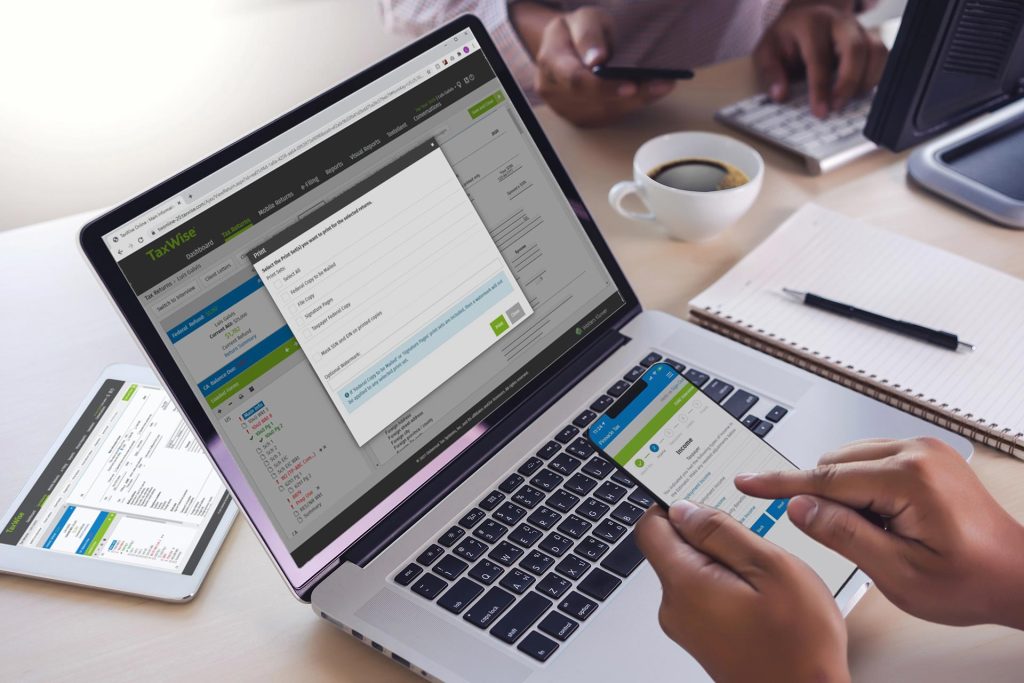
Discover the best tax software for small tax preparers! Streamline filings, save time, and boost efficiency with top tools tailored for your needs in 2026.
Choosing the best tax software is crucial for efficiency and accuracy. Small tax preparers need tools that simplify complex processes and save time. With various options available, it can be challenging to find the perfect fit. The ideal software should offer user-friendly interfaces, comprehensive features, and reliable customer support.
It should help manage client data, prepare accurate returns, and ensure compliance with tax laws. In this blog post, we will explore top tax software choices tailored for small tax preparers. These tools can streamline your workflow and enhance your business. Ready to find the best tax software? Let’s dive in!
Introduction To Tax Software
Tax software has revolutionized the way small tax preparers manage their business. With the right software, tax preparation becomes more efficient, accurate, and less stressful. This can ultimately save time and increase productivity for small tax preparers.
Importance For Small Tax Preparers
Small tax preparers need reliable tools to handle complex tax returns. Tax software simplifies the process by automating calculations and ensuring compliance with tax laws. This minimizes errors and helps in maintaining a professional reputation.
Using the right software also provides a competitive edge. It allows small tax preparers to handle more clients efficiently. This leads to better client satisfaction and potentially more referrals.
Key Features To Look For
When choosing tax software, small tax preparers should consider several key features. Below is a list of essential features to look for:
- Ease of Use: The software should be user-friendly with an intuitive interface.
- Accuracy: It should offer reliable calculations and error-checking mechanisms.
- Compliance: Ensure it complies with the latest tax laws and regulations.
- Customer Support: Look for software with strong customer support and training resources.
- Integration: The ability to integrate with other financial tools can be beneficial.
Here is a table summarizing these features:
| Feature | Description |
|---|---|
| Ease of Use | User-friendly interface, simple navigation |
| Accuracy | Reliable calculations, error-checking mechanisms |
| Compliance | Up-to-date with latest tax laws and regulations |
| Customer Support | Strong support and training resources |
| Integration | Ability to integrate with other financial tools |
Choosing the right tax software can make a significant difference. It streamlines operations, enhances accuracy, and ensures compliance. This allows small tax preparers to focus on growing their business and serving their clients better.
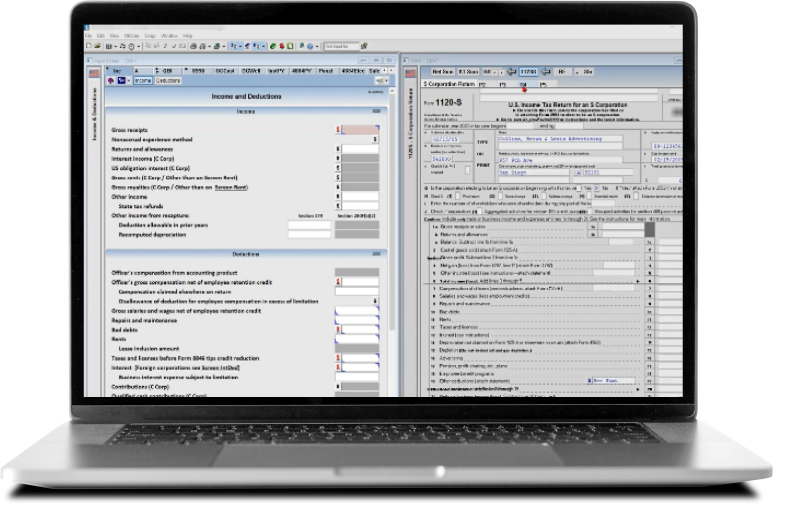 UltraTax is a professional-grade preparation tool used by many small firms.
Credit: tax.thomsonreuters.com
UltraTax is a professional-grade preparation tool used by many small firms.
Credit: tax.thomsonreuters.com
What Changed For The 2026 Filing Season
The 2026 filing season is for tax-year 2025 returns, so the software you choose needs to be the edition the vendor supports for that season. Before buying, confirm that the package supports the federal, state, and business forms you actually file, and that the vendor has already posted its 2026-season updates. Since the IRS continues to expand digital filing, U.S.-based preparers should also check that the software handles IRS Modernized e-File (MeF) and allows them to use their own EFIN and PTIN. Most professional vendors will state which forms and state jurisdictions they support, so use that checklist before you migrate any client data.
Even if the core features look identical on the surface, the difference between a good season and a stressful one is often data import, error-checking, and e-file acknowledgement. The best time to test these workflows is before your first client appointment, not in the middle of the rush.
Turbotax
TurboTax is a popular tax software choice for small tax preparers. It offers a range of features to make tax filing easier and more efficient. This section will explore its features, along with its pros and cons.
Features
TurboTax provides several features to help small tax preparers:
- User-Friendly Interface: Easy to navigate with step-by-step guidance.
- Accuracy Check: Identifies errors and ensures accurate returns.
- Import Capabilities: Import W-2s and 1099 forms directly from employers.
- Deduction Finder: Helps to find deductions and credits to maximize refunds.
- Live Support: Access to tax experts for advice and answers to questions.
Pros And Cons
| Pros | Cons |
|---|---|
| Simple and intuitive interface | Higher cost compared to some competitors |
| Comprehensive error-checking features | Limited features in the basic version |
| Extensive import options | Potential upselling of additional services |
| Effective deduction finder | Not ideal for complex tax situations |
| Live support from tax experts |
https://www.youtube.com/watch?v=ODwmsfaLObE
TurboTax is most practical for preparers who handle straightforward individual returns and want a guided, consumer-friendly workflow. If you use it professionally, double-check that your edition lets you enter your own preparer information and e-file under your EFIN; many retail versions are built for individual filers rather than paid preparers, so they may not provide a preparer workflow.
H&r Block
H&R Block is a popular choice for small tax preparers. It offers user-friendly software that simplifies the tax filing process. Many small businesses trust H&R Block for its reliable features and support.
Features
H&R Block includes a range of features. These help small tax preparers manage their work efficiently.
- Easy-to-use interface
- Step-by-step guidance
- Import previous tax returns
- Access to tax experts
- Automatic data backup
Pros And Cons
Every software has its strengths and weaknesses. H&R Block is no different.
Pros
- Simple for beginners
- Comprehensive support
- Affordable pricing plans
- Accurate calculations
Cons
- Limited advanced features
- Some features cost extra
- Occasional software updates
H&R Block sits somewhere between DIY filing and professional tax software. It is a reasonable option if you are starting your practice with simple individual returns and appreciate interview-style guidance, but as your client list grows into partnerships and S-corporations, you will likely need a more scalable professional product.
Taxact
TaxAct is a popular tax software designed for small tax preparers. It offers a blend of affordability and efficiency, making it ideal for small businesses. With TaxAct, you can streamline your tax preparation process and ensure accuracy. Let's explore its features, pros, and cons.
Features
TaxAct offers a range of features that cater to small tax preparers. Key features include:
- Comprehensive Tax Forms: Access to a wide range of federal and state forms.
- Import Options: Easily import data from previous years or other software.
- Audit Support: Guidance and resources in case of an audit.
- Deduction Maximizer: Tools to ensure you claim all eligible deductions.
- Accuracy Guarantee: Assurance that calculations are accurate.
Pros And Cons
- Affordability: Competitive pricing for small businesses.
- User-Friendly Interface: Easy to navigate, even for beginners.
- Comprehensive Support: Access to tax experts for guidance.
- Data Import: Simple import from other platforms.
- Accuracy: High accuracy in calculations and filing.
- Limited Advanced Features: May lack some advanced features needed by larger firms.
- Occasional Bugs: Some users report occasional software glitches.
- Customer Support Response Time: Support can sometimes be slow to respond.
TaxAct can work well for sole practitioners who prepare mostly straightforward 1040s and simple business returns. Before you buy, compare the professional edition price against the consumer product, because the multi-client workflow features you need as a preparer are usually in the professional tier rather than the basic version.
Drake Tax
Drake Tax is a trusted name in tax software. It is favored by many small tax preparers for its robust features and user-friendly interface. This software simplifies the tax preparation process, making it easier for small businesses to manage their taxes efficiently.
Features
Drake Tax offers a comprehensive suite of features tailored for small tax preparers:
- Comprehensive Tax Forms: Supports federal, state, and local tax forms.
- Data Import: Easily imports data from various sources.
- e-Filing: Facilitates electronic filing of returns.
- Client Management: Efficiently manages client information and documents.
- Reporting: Generates detailed financial and tax reports.
Pros And Cons
Understanding the pros and cons of Drake Tax can help you decide if it is the right choice for your small tax preparation business.
| Pros | Cons |
|---|---|
| User-Friendly: Easy to navigate and use. | Cost: Can be expensive for very small businesses. |
| Comprehensive Features: Covers all necessary tax forms and functions. | Learning Curve: Initial setup and learning can be time-consuming. |
| Reliable Support: Offers excellent customer service and support. | Updates: Regular updates may be needed to stay current. |
| Time-Saving: Automates many manual tasks, saving time. |
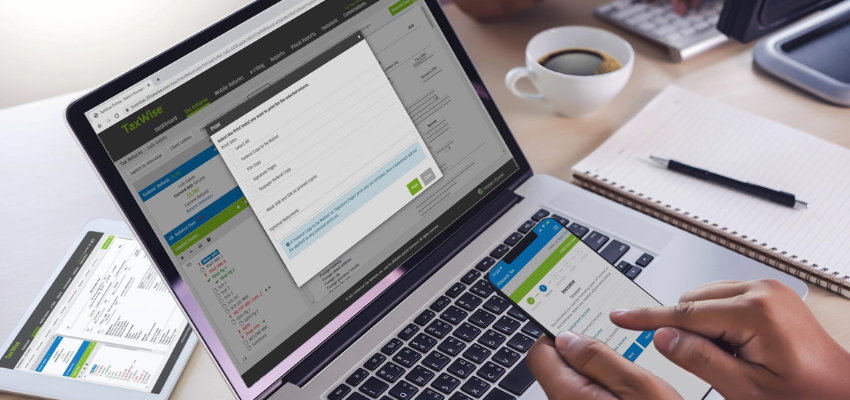 This overview illustrates the type of professional workflow small preparers can expect.
Credit: bestarion.com
This overview illustrates the type of professional workflow small preparers can expect.
Credit: bestarion.com
Drake Tax is often the product that a dedicated small firm grows into. Because its pricing is built around per-return or unlimited packages, it rewards preparers who file a steady volume each week. A common mistake is underestimating the learning curve, so take advantage of Drake's training materials and support resources before tax season starts.
Proseries
ProSeries by Intuit is a popular choice among small tax preparers. It offers a user-friendly interface and a range of features. ProSeries simplifies the tax preparation process, making it easier for professionals to manage client files. Let's dive into its features, pros, and cons.
Features
ProSeries includes comprehensive tax forms for federal and state returns. It offers robust e-filing options. The software integrates with QuickBooks, streamlining data transfer. It provides error-checking tools to reduce mistakes. ProSeries supports multi-user access, allowing team collaboration. The software includes customizable client letters and organizer templates.
Pros And Cons
ProSeries offers many benefits. Its interface is intuitive and easy to use. The error-checking feature helps avoid costly mistakes. Integration with QuickBooks saves time on data entry. E-filing options are extensive and reliable. It supports both federal and state tax forms. Multi-user access enables better teamwork.
There are some downsides. The cost can be high for small practices. Some users report occasional software glitches. Customer support might be slow during peak times. The learning curve can be steep for new users.
ProSeries is especially practical if you already run your bookkeeping practice in QuickBooks, because the integration saves hours of trial-balance entry. If you are considering it, request a demo file and run a partnership and an S-corp return through the full workflow before you commit.
How To Choose The Right Tax Software For Your Practice
The best tax software is not the one with the most impressive feature list; it is the one that matches your client mix, your filing volume, and the states you work in. Start by writing down the types of returns you prepare: simple 1040s, rental properties, sole proprietors, S-corps, partnerships, nonprofits, or trust returns. Then compare software against that list, not against a generic marketing page.
Here are the practical criteria that tend to matter most for small preparers:
- Per-return pricing vs. unlimited plans. If you file only 30 returns a year, a per-return plan can be far cheaper than an unlimited subscription. If you file several hundred, unlimited pricing will usually win.
- Preparer-specific workflow. Look for client organizers, document checklists, preparer signatures, and diagnostic reports. Those small features determine how many clients you can move through each day.
- State support. Confirm that the software covers every state where you have clients. Some low-cost products treat state returns as an add-on, which changes your real cost per return.
- Data migration. Ask how the software imports prior-year client data from your current system, and test it with a sample client before moving everyone over.
- Peak-season support. The quality of customer support matters most from mid-January through April 15. Check whether phone support is available, and look for a user community or knowledge base you can search at night.
A useful next step is to sign up for demo or trial accounts with the two products that fit your return mix, then prepare one test return with each. Use last year's client data and include your most complicated form. The software that requires the fewest manual workarounds is usually the right long-term choice.
Other Professional Options Worth Considering
The original list covers the most popular names, but small preparers also evaluate TaxSlayer Pro, Lacerte, and UltraTax when their practices grow. These products are often grouped with Drake and ProSeries in terms of professional workflow, and they all expect you to hold a PTIN and e-file through the IRS. If your practice handles business returns with depreciation, inventories, and multi-state allocations, add one of these names to your short list and ask for a quote alongside the others.
Comparison Of Top Picks
Choosing the best tax software is crucial for small tax preparers. Each software offers unique features. Let's compare the top picks based on pricing, user experience, and customer support.
Pricing
Pricing is a key factor for small tax preparers. Here's a breakdown of the pricing for the top tax software options:
| Software | Basic Plan | Pro Plan |
|---|---|---|
| Software A | $50/year | $100/year |
| Software B | $40/year | $80/year |
| Software C | $60/year | $120/year |
Treat those figures as a generic illustration, not a current price list. Most professional packages have moved to per-return pricing or tiered unlimited plans, and the exact number depends on state returns, e-filing volume, and add-ons such as client portals. Always request a written quote from the vendor for your state count before choosing.
User Experience
User experience is essential for efficiency. Here's how each software ranks:
- Software A : Intuitive interface, easy navigation, and clear instructions.
- Software B : User-friendly, with step-by-step guides and helpful tips.
- Software C : Advanced features, which might be complex for beginners.
Software A and Software B are great for beginners. Software C suits experienced tax preparers due to its advanced features.
Customer Support
Reliable customer support is critical. Here's a comparison:
- Software A : 24/7 support via chat and email.
- Software B : Phone support during business hours, email support 24/7.
- Software C : Dedicated account manager, priority support for Pro users.
Software A offers the best round-the-clock support. Software C provides premium support for higher-tier users.
 Dashboards like this help you monitor filings and spot clients still waiting on forms.
Credit: www.feedbackwrench.com
Dashboards like this help you monitor filings and spot clients still waiting on forms.
Credit: www.feedbackwrench.com
Comparison At A Glance
| Software | Best For | Pricing Model | Standout Feature |
|---|---|---|---|
| TurboTax | Simple individual returns and first-time filers | Tiered retail pricing | Step-by-step guidance |
| H&R Block | Retail filers who value expert support | Tiered retail pricing | Access to tax experts |
| TaxAct | Cost-conscious small preparers | Affordable tiered pricing | Deduction Maximizer |
| Drake Tax | Volume-oriented professional firms | Per-return or unlimited plans | Comprehensive forms and e-filing |
| ProSeries | QuickBooks-using tax practices | Professional tiered pricing | QuickBooks integration |
The pricing models above should be treated as a starting point. Ask each vendor for a written quote based on your state count and return volume before making the final call.
Security And Compliance Checklist
Tax preparers hold sensitive client data, so security belongs in the software-selection process. Before moving a single client file, check that the product offers multi-factor authentication, role-based user access for your staff, and encryption for data both in transit and at rest. If the software includes a client portal, confirm that clients upload documents through a secure connection rather than email.
From a compliance standpoint, U.S.-based preparers should make sure their PTIN is current and their EFIN is active before e-filing the first return. The IRS website is the best place to confirm current IRS guidance on e-file requirements and security standards for tax professionals. You should also write out a simple data security plan for your office — including who can access client files, how you handle document retention, and what happens when a client leaves.
Building The Rest Of Your Tax-Prep Stack
The filing software is the engine of your practice, but a small tax business also runs on onboarding, communication, and marketing. Keep your overhead low by looking for tools that replace monthly subscriptions.
- Use webinar hosting to run a quarterly client Q&A about tax-law changes and upcoming deadlines.
- Lean on AI writing help for newsletter drafts that nudge clients to send in their documents early.
- Explore mobile app builders if you want clients to access a preparation checklist from their phone.
- A branding toolkit keeps your client handouts, invoices, and email templates looking consistent.
- An all-in-one business platform can house intake forms, e-signatures, and payment reminders in one place.
These extras are useful only if the core tax software files accurately. Evaluate the filing product first, and treat the rest of the stack as an efficiency boost rather than a replacement for a solid workflow.
Frequently Asked Questions
What Is The Best Tax Software For Small Tax Preparers?
The best tax software for small tax preparers varies. Popular choices include TurboTax, H&R Block, and TaxAct. Each offers unique features.
How Do I Choose Tax Software For Small Business?
Choose tax software based on your business needs. Look for user-friendly interfaces, cost-effectiveness, and customer support.
Are There Free Tax Software Options For Small Preparers?
Yes, there are free options like Cash App Taxes. These may have limitations but can be effective for simple filings.
Can Tax Software Help With Complex Tax Returns?
Yes, advanced tax software can handle complex returns. Features like deduction finders and audit support are beneficial for intricate filings.
Do I Need A PTIN And EFIN To Use Professional Tax Software?
Yes. To prepare federal returns for compensation, you need a current Preparer Tax Identification Number (PTIN). To e-file returns for clients, you also need an EFIN from the IRS. The software will ask for both during setup, and some consumer editions do not support preparer e-filing at all.
How Much Does Professional Tax Software Typically Cost?
Cost depends on whether you choose per-return pricing or an unlimited package, and on the number of state returns you file. Most professional vendors quote annually and include e-filing in the package, so get a formal quote rather than relying on advertised retail prices.
Can I Switch From One Tax Software To Another Mid-Season?
It is possible, but avoid it if you can. Export client data and test the new software with a sample return before migrating real files, and finish any open e-files in the original system to avoid duplicate submissions.
What Security Features Should I Look For To Protect Client Data?
Look for multi-factor authentication, role-based user access, at-rest and in-transit encryption, audit logs, and a clear data-retention policy. If the provider offers a client portal, confirm it uses secure uploads rather than email attachments.
Conclusion
Choosing the right tax software is crucial for small tax preparers. It saves time, reduces errors, and increases efficiency. Compare features and prices before making a decision. Consider your specific needs and budget. Always check for user reviews and support options.
Reliable software can make your tax season smoother. Find the best fit for you and your clients. Tax preparation doesn't have to be stressful. With the right tools, it can be manageable and efficient. Happy tax filing!

