Machine Learning and Programming: The Future of Intelligent Tech
Founder & Lead SaaS Analyst at PCSaaS · Google Ads & Analytics Certified · SaaS Stack Architect · 500+ Software Tools Tested · 8+ years in B2B SaaS evaluation, AppSumo lifetime deal curation, performance marketing, and AI workflow automation
Machine Learning and Programming: The Future of Intelligent Tech
Discover how machine learning and programming combine to create smart, adaptive systems that transform industries and careers.
Imagine teaching a computer not by giving it exact instructions, but by showing it examples and letting it figure out the rest. This blend of machine learning and programming is transforming industries, solving complex problems, and opening up exciting career paths. For more on this, see our guide on youbooks lifetime deal.
You’ll discover how machine learning works, why programming skills are essential, and how you can start mastering both to create smart, adaptive systems that can change the way you work and live. Ready to dive in? Let’s explore the fascinating world of machine learning and programming together.
Top programming languages for machine learning ranked by community adoption and library support.
Credit: www.analyticssteps.com
Machine Learning Basics
Machine learning is a field of computer science that allows computers to learn from data. Instead of following fixed instructions, machines find patterns and make decisions on their own. This ability makes machine learning useful in many areas like speech recognition, image analysis, and recommendation systems. For more on this, see our guide on skillplate lifetime deal.
Understanding the basics of machine learning helps programmers build smarter applications. It involves key ideas and different types of learning methods. These basics form the foundation for anyone interested in this technology.
Key Concepts
Machine learning relies on data and algorithms. Data provides examples that the machine uses to learn. Algorithms are sets of rules the machine follows to find patterns in data. For more on this, see our guide on invideo ai video generator.
The goal is to create a model. A model is a program that makes predictions or decisions based on new data. Training a model means teaching it by showing many examples.
Accuracy measures how well the model performs. Good models make fewer mistakes. Testing uses new data to check the model’s accuracy. For more on this, see our guide on how to buy domain name.
The quality of the data directly affects how well the model learns. In practice, cleaning data by removing duplicates, handling missing values, and normalising features is often the most time-consuming part of a project. A common mistake is to spend too little effort on data preparation and then wonder why the model underperforms.
Types Of Machine Learning
There are four main types of machine learning. Each type has a different way of learning from data.
Supervised Learning: The model learns from labeled data. Each example has a correct answer. The model tries to predict these answers.
Unsupervised Learning: The model learns from unlabeled data. It finds hidden patterns or groups without guidance.
Semi-Supervised Learning: This combines labeled and unlabeled data. The model uses both to improve learning.
Reinforcement Learning: The model learns by trial and error. It receives rewards or penalties to guide learning.
Choosing the right type depends on the data you have and the problem you want to solve. If you already have many labeled examples, start with supervised learning. If you have no labels, unsupervised learning may reveal unexpected clusters. Blending approaches can sometimes give the best results.

A developer coding a machine learning algorithm in an IDE with code on screen.
Credit: bdtechtalks.com
Supervised Learning
Supervised learning is a key technique in machine learning that uses labeled data to teach computers. It helps machines learn from examples and make predictions or decisions. This method is straightforward and widely used in many fields.
In supervised learning, the computer receives input data paired with the correct output. The goal is for the computer to learn the relationship between inputs and outputs. Once trained, the model can predict outcomes for new, unseen data.
How It Works
The process starts with a labeled dataset. Each input has a matching output or label. The model studies this data to find patterns and connections.
It adjusts its internal settings to reduce errors between its predictions and the real labels. This training continues until the model performs well enough.
After training, the model can predict the label for new inputs it has never seen. This ability to generalize makes supervised learning powerful for many tasks.
Common Applications
Supervised learning is used in email spam detection. The model learns from emails marked as spam or not spam.
It also helps in image recognition, such as identifying objects in photos. The model trains on images labeled with their contents.
Other uses include speech recognition, fraud detection, and medical diagnosis. In all these cases, labeled data guides the model to accurate predictions.
A practical trade-off is the risk of overfitting when the model memorises the training data instead of learning general patterns. Techniques like cross-validation, regularisation, and using a separate validation set help mitigate this. Another common mistake is assuming more data always improves accuracy; sometimes noisy or irrelevant features hurt performance.
Unsupervised Learning
Unsupervised learning is a key part of machine learning. It helps computers find patterns in data without labels or instructions. The system explores data on its own. It groups similar items or finds hidden structures. This method works well when data is large and unlabeled. Unsupervised learning can reveal new insights that humans might miss.
This type of learning is different from supervised learning. Supervised learning needs labeled data with correct answers. Unsupervised learning relies on the data alone. It uses algorithms to discover the natural structure within the data.
Mechanisms
Unsupervised learning uses various algorithms to analyze data. Clustering is one common technique. It groups data points based on similarity. Another method is dimensionality reduction, which simplifies data by reducing features. Algorithms like K-means and hierarchical clustering are popular. These help in finding hidden groups or patterns. Autoencoders and principal component analysis (PCA) reduce data complexity. The system adjusts itself to reveal the data’s true form.
Real-world Uses
Unsupervised learning has many practical uses. It helps businesses segment customers based on buying habits. This improves marketing strategies and customer service. In healthcare, it groups patients by symptoms or genetics to find new treatments. Fraud detection systems spot unusual transactions by finding outliers. Image and speech recognition also use unsupervised methods to improve accuracy. It helps in organizing large data sets without manual labeling.
Evaluating the quality of unsupervised models is inherently harder because there are no ground-truth labels. In practice, data scientists rely on internal metrics (silhouette score, inertia) and manual inspection of clusters. A common mistake is to assume that clusters are meaningful without domain validation – always compare results with subject-matter experts.
Semi-supervised Learning
Semi-supervised learning blends two key types of machine learning: supervised and unsupervised. It uses a small amount of labeled data alongside a larger set of unlabeled data. This approach helps improve learning accuracy without needing a lot of labeled examples.
Labeling data can be expensive and time-consuming. Semi-supervised learning reduces this burden. The model learns from labeled data and finds patterns in unlabeled data. This combination helps create better predictions and classifications.
Approach Explained
Semi-supervised learning starts with a few labeled samples. The model uses these samples to understand the task. Then, it analyzes the unlabeled data to find hidden structures and relationships. This step refines the model’s knowledge.
The model applies what it learned from labeled data to guess labels for unlabeled data. It updates its rules based on these guesses. This iterative process helps the model grow smarter with less supervision.
Practical Examples
One example is in email filtering. A small set of emails is marked as spam or not spam. The model learns from these labels and then scans many unlabeled emails. It classifies them accurately by recognizing patterns.
Another example is image recognition. A few images have tags, while many do not. The model uses tagged images to learn features. It then groups unlabeled images and assigns probable tags, improving its accuracy over time.
Semi-supervised learning works best when the labeled data is representative of the overall distribution. A common pitfall is using too few labeled samples that mislead the model, causing it to reinforce errors through self-training. Combining it with active learning—where the model requests labels for uncertain examples—can improve results.
Reinforcement Learning
Reinforcement learning is a special type of machine learning. It teaches machines to make decisions by trying actions and learning from results. The machine learns to choose the best action to get the highest reward. This process is similar to how humans learn from experience.
The learning happens through a system of rewards and penalties. The machine tests different actions and sees which lead to success. Over time, it improves its choices to reach its goals more effectively. This trial-and-error method helps the machine adapt to complex tasks.
Learning Process
Reinforcement learning uses an agent, environment, and rewards. The agent takes actions in the environment. Each action results in a reward or penalty. The agent aims to maximize total rewards over time. It uses feedback to update its strategy. This cycle continues until the agent learns the best actions.
The agent explores new actions and exploits known ones. This balance helps it find the best path to success. Algorithms like Q-learning and deep reinforcement learning guide this process. They help the agent learn even in complex environments.
Use Cases In Ai
Reinforcement learning powers many AI applications today. It helps robots learn to move and manipulate objects. In gaming, it enables AI to play and win complex games. Self-driving cars use it to make safe driving decisions.
It also improves recommendation systems by learning user preferences. In finance, it helps with trading strategies and risk management. These examples show how reinforcement learning makes AI smarter and more adaptable.
One of the hardest practical challenges is setting up the reward function correctly. If the reward is too sparse, the agent may never learn; if it rewards unintended shortcuts, the agent can exploit them. Engineers often spend significant effort designing reward shaping and using safe exploration strategies to avoid catastrophic failures.
Machine Learning Algorithms
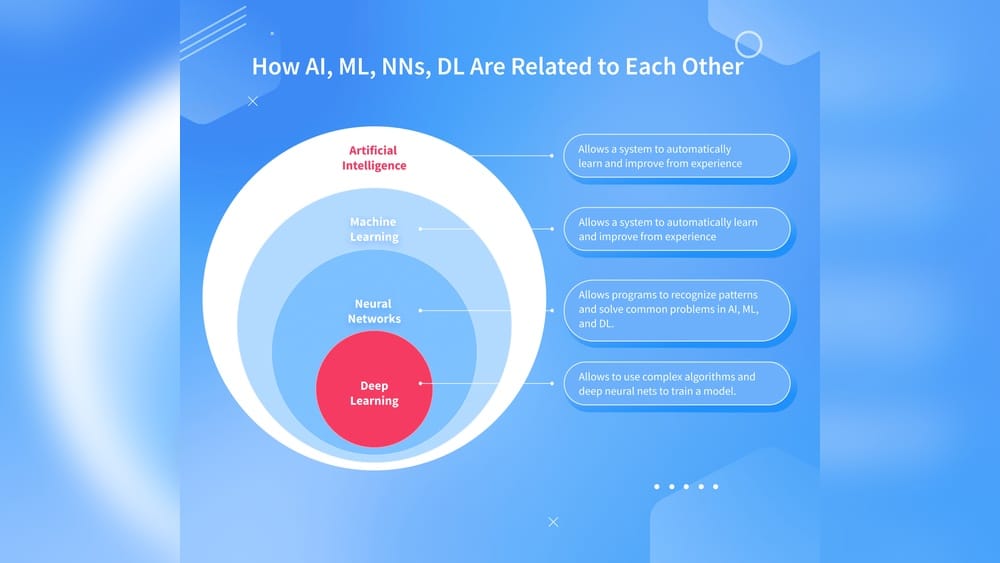
Machine learning algorithms are the core tools that enable computers to learn from data. These algorithms help programs recognize patterns and make decisions without being explicitly programmed for each task. Understanding different algorithms is key to applying machine learning effectively.
Each algorithm works in a unique way and fits certain types of problems better. Choosing the right one improves accuracy and performance. Below, we explore popular machine learning models and how to select the best algorithm for your project.
Popular Models
Some machine learning models appear frequently due to their success in various tasks. Linear regression predicts continuous values by fitting a line to data points. Decision trees split data based on features to make easy-to-understand predictions.
Support vector machines find the best boundary to separate classes in data. Neural networks mimic the brain’s structure to solve complex problems like image and speech recognition. K-means clustering groups data without labels to find hidden patterns.
Each model has strengths suited to different data types and goals. These popular models form the foundation of many machine learning applications.
Selection Criteria
Choosing the right algorithm depends on several factors. First, consider the type of problem: classification, regression, clustering, or others. The size and quality of your data also matter greatly. Large datasets may require models that scale well, like neural networks.
Simple models often work better with small or clean data. Check the interpretability needs; some algorithms are easier to explain, like decision trees. Training time and computational resources affect model choice, especially for real-time applications.
Finally, evaluate the model’s accuracy and generalization ability using validation techniques. Testing different algorithms and tuning parameters helps find the best fit for your task.
After selecting an algorithm, hyperparameter tuning can significantly boost performance. Grid search and random search are common techniques, but Bayesian optimisation is often more efficient. A practical tip: start with default parameters, then narrow the search space based on early results.
Data Preparation and Feature Engineering
Before feeding data into any algorithm, you must transform raw data into a format the model can understand. This step, often called data preprocessing, includes handling missing values, encoding categorical variables, scaling numerical features, and splitting the dataset into training, validation, and test sets.
Feature engineering is the process of creating new input variables from existing data to improve model performance. For example, extracting day-of-week from a timestamp, combining product categories into broader groups, or creating interaction terms between numerical features. Good feature engineering can often beat even the most sophisticated algorithm.
A common mistake is to use all available features without checking for redundancy or noise. Techniques like correlation analysis and feature importance from tree-based models help you identify which features actually contribute. Automated feature engineering tools exist, but domain knowledge remains invaluable for crafting meaningful predictors.
Programming’s Role In Ml
Programming plays a key role in machine learning (ML). It forms the foundation for building and running ML models. Without programming, computers cannot learn from data or make decisions.
Programming helps create algorithms that process data. It also enables the automation of tasks that would take humans too long. Writing clear and efficient code improves the performance of ML systems.
Choosing the right programming language and tools affects how quickly and well an ML project develops. Good code ensures models are reliable and easy to maintain.
Languages And Tools
Python is the most popular language in ML due to its simplicity and libraries. Libraries like TensorFlow, PyTorch, and scikit-learn speed up model building. Other languages like R, Java, and Julia also support ML tasks.
Tools such as Jupyter notebooks allow programmers to write and test code interactively. Version control systems like Git help manage changes in code. Cloud platforms offer resources to train large models efficiently.
Writing Effective Code
Effective code in ML is clean, readable, and reusable. It reduces errors and makes debugging easier. Programmers should write small functions to handle specific tasks.
Documenting code helps others understand the logic behind model training. It also supports collaboration in team projects. Testing code regularly ensures the ML system works as expected.
Efficient code also considers memory and compute resources. For large datasets, using batch processing and lazy loading can prevent out-of-memory errors. Profiling your code to find bottlenecks is a habit that separates experienced ML engineers from beginners. Additionally, using containerisation (Docker) ensures reproducibility across environments.
Integrating Ml With Software Development
Integrating machine learning (ML) with software development blends data-driven intelligence with traditional coding. This fusion enhances applications by adding predictive and adaptive capabilities. Developers combine ML models with software to create smarter, more efficient solutions.
This process requires careful planning and coordination. It involves adapting ML workflows to fit into existing development cycles. Understanding the challenges helps ensure smooth integration and effective deployment.
Workflow Integration
Integrating ML into software development starts with aligning workflows. Data scientists build and train ML models. Developers then embed these models into applications. Clear communication between teams is essential.
Version control systems must handle both code and ML models. Continuous integration tools should include testing for model accuracy. Automating model updates supports consistent performance. This approach reduces errors and improves collaboration.
Deployment Challenges
Deploying ML models presents unique challenges. Models often require specific environments and dependencies. Ensuring compatibility between ML frameworks and software platforms is critical.
Performance can vary depending on hardware and data input. Monitoring models after deployment helps detect issues early. Managing model updates without downtime demands careful planning. Security also plays a vital role in protecting sensitive data.
The emerging practice of MLOps addresses many of these challenges. MLOps brings together automated pipelines for data validation, model training, deployment, and monitoring. Tools like MLflow and Kubeflow help track experiments, version models, and roll back to previous versions if a new deployment degrades performance. Setting up these practices early saves significant time later.
Model Evaluation and Validation
Once you have trained a model, you need to know how well it will perform on unseen data. Evaluation starts by splitting your dataset into training and test sets. Common metrics include accuracy, precision, recall, F1-score for classification, and mean absolute error or R-squared for regression.
Cross-validation is a more robust technique that rotates the training and test splits to reduce variance in performance estimates. K-fold cross-validation (often with k=5 or 10) is widely used. A common mistake is to evaluate on the training set only, which gives an overly optimistic view due to overfitting.
Validation is also about checking that the model generalises to different subpopulations. Slicing your test data by important groups (e.g., age, region) can reveal disparities. If the model performs poorly on a specific slice, you may need more representative data or a different algorithm.
Career Paths In Ml And Programming
Career paths in machine learning (ML) and programming offer diverse opportunities. Both fields are growing fast and provide many job options. Professionals with skills in ML and programming can work in various industries like technology, healthcare, finance, and more.
These careers involve creating software, analyzing data, and building intelligent systems. Understanding different roles helps you pick a path that fits your interests and goals. Salary and job demand are important factors to consider for a successful career.
Job Roles
Machine learning and programming careers include several job titles. Data Scientist analyzes data to find useful insights. ML Engineer builds and improves machine learning models. Software Developer creates applications and software tools. AI Researcher studies new algorithms and methods in AI. Data Analyst interprets data and supports decision-making. DevOps Engineer manages software deployment and infrastructure. Each role has unique tasks and skills required.
Salary Insights
Salaries in ML and programming vary by role, experience, and location. Entry-level jobs often start with a good salary compared to other fields. ML Engineers and Data Scientists typically earn higher than average. Programming roles also offer competitive pay, especially in tech hubs. Professionals with strong ML skills see steady salary growth. Companies invest more in experts who can handle complex data tasks.
Building a strong portfolio of projects is more important than degrees for many entry-level positions. Contributions to open-source ML libraries or personal projects that solve real problems demonstrate practical skills. For those starting out, structured coding courses and hands-on projects from platforms like Kaggle can accelerate learning. Additionally, understanding the business context of your models – how they drive revenue or save costs – sets you apart in interviews.

An infographic showing the leading programming languages for machine learning and their ecosystem support.
Credit: www.geeksforgeeks.org
Future Trends In Ml And Programming
The future of machine learning (ML) and programming holds exciting possibilities. These fields continue to evolve rapidly. New tools and techniques emerge regularly. They promise to change how we develop software and analyze data. Understanding upcoming trends helps developers and businesses stay prepared.
Machine learning will become more integrated with programming languages. This integration will simplify building intelligent applications. Developers will write less code but achieve more powerful results. Automation in coding and testing will increase, saving time and reducing errors.
Emerging Technologies
Quantum computing could impact machine learning by speeding up complex calculations. This technology is still in early stages but shows great promise. Edge computing will grow, enabling ML models to run on devices like phones and sensors. This reduces the need for constant internet connection and improves speed.
Explainable AI will gain importance. It helps users understand how ML models make decisions. This is key for trust and fairness in applications. New programming frameworks will appear to support these advances. These frameworks will focus on ease of use and performance.
Impact On Industries
Healthcare will benefit from ML with better diagnosis and personalized treatments. Programming tools will help create applications that analyze medical data quickly. In finance, ML will improve fraud detection and risk management. It will also optimize investment strategies.
Manufacturing will use smart automation to increase efficiency. Programming for robotics and IoT devices will become more common. Retail will leverage ML for customer behavior analysis and inventory management. These changes lead to better services and lower costs.
As ML systems become more pervasive, ethical considerations grow in importance. Bias in training data can lead to unfair outcomes, especially in hiring, lending, and law enforcement. Developers and data scientists must proactively audit datasets for representativeness and monitor models for disparate impact. Regulatory frameworks like the EU AI Act are emerging, making ethical ML not just good practice but a legal requirement.
Unlock lifetime analytics with Sensfrx and make smarter decisions today.
Frequently Asked Questions
What Is Machine Learning And Programming?
Machine learning teaches computers to learn from data and improve tasks without explicit programming. Programming writes precise instructions for computers to follow. Both enable automation but differ in approach: programming uses fixed rules, while machine learning adapts from examples to make predictions or decisions.
Who Earns More, Ai Or Ml?
AI engineers typically earn higher salaries than machine learning engineers due to broader skill demands and industry impact. Salary varies by experience and location.
Can I Learn Ml In 3 Months?
Yes, you can learn machine learning basics in 3 months with focused study and practical projects. Consistency and practice matter.
What Are The 4 Types Of Machine Learning?
The four types of machine learning are supervised, unsupervised, semi-supervised, and reinforcement learning. Supervised learning uses labeled data to predict outcomes. Unsupervised learning finds patterns in unlabeled data. Semi-supervised learning combines labeled and unlabeled data. Reinforcement learning learns through rewards and penalties.
Conclusion
Machine learning and programming work hand in hand to solve problems. Programming gives instructions, while machine learning finds patterns in data. Both fields need practice and patience to get better. Understanding their basics helps you build smarter applications. Keep exploring these skills to stay updated in technology.
The future holds many opportunities for those who learn both. Start small and grow step by step.
Take the next step: explore our curated AI tool deals and lifetime software offers to accelerate your ML journey.

Similar Posts