Revolutionize Machine Learning in Operations: Cut Costs & Boost Efficiency Now
Lead SaaS Analyst at PCSaaS · Software Developer · 500+ Tools Tested · Google Ads & Analytics Certified · 8+ Years Experience
Revolutionize Machine Learning in Operations: Cut Costs & Boost Efficiency Now
Struggling with slow processes and hidden inefficiencies? Discover how machine learning in operations automates tasks, uncovers patterns, and drives smarter decisions. Overcome challenges and turn data into your ultimate competitive advantage—start optimizing today!
Imagine automating routine processes while spotting hidden patterns that save time and cut costs. This isn’t just about technology—it’s about giving you the tools to work smarter every day. You’ll discover how machine learning transforms operations, what challenges you might face, and how to unlock its full potential for your success.
Keep reading to see how you can turn data into your most powerful asset.
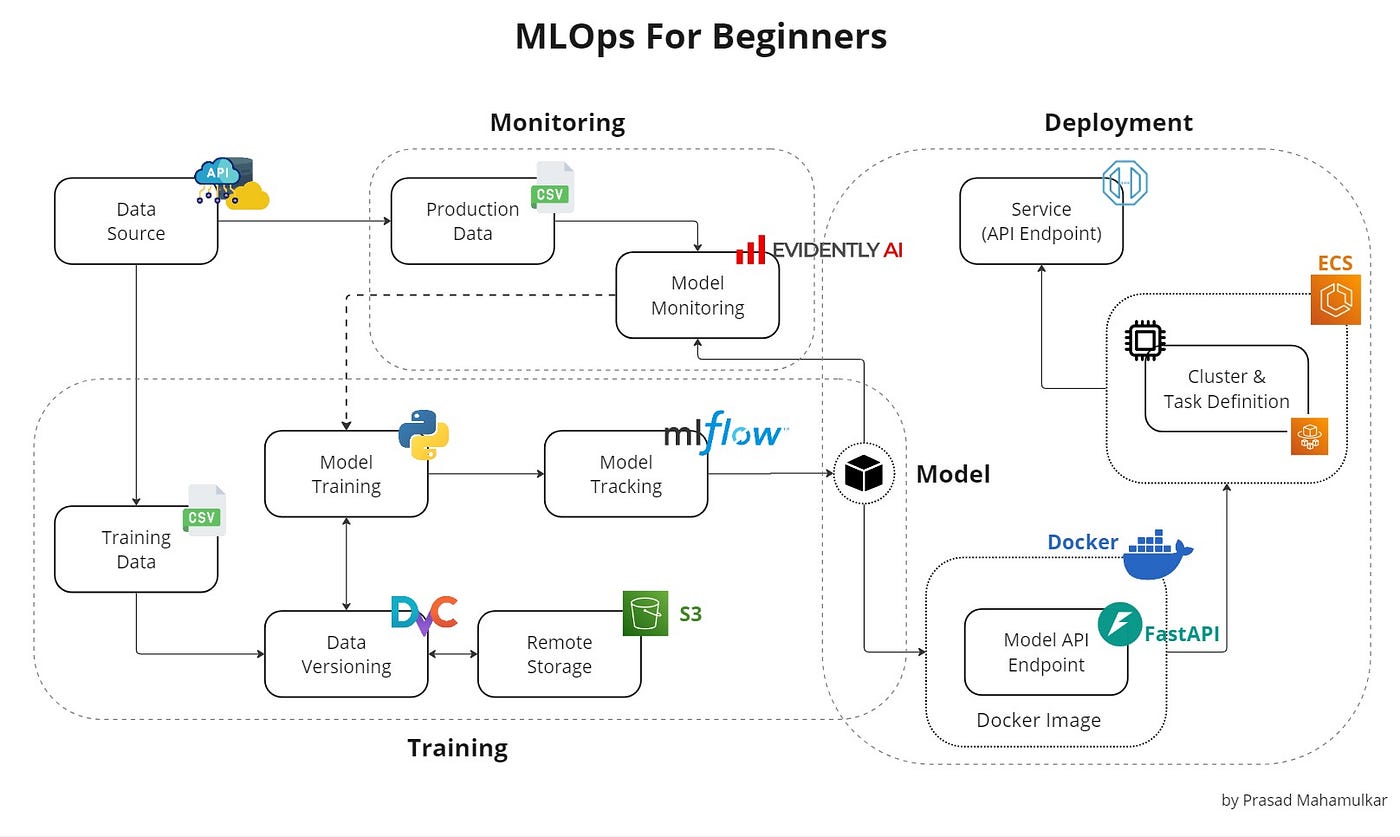
Conceptual illustration showing how machine learning streamlines operational workflows and drives data-driven decisions.
Credit: medium.com
Machine Learning In Operations
Machine learning is changing how businesses handle their daily operations. It helps companies work smarter, not harder. By using data and smart algorithms, operations become faster and more accurate. This technology fits into many parts of a business, making processes smoother and reducing errors.
Operations teams can use machine learning to predict problems before they happen. It also helps in managing resources better and improving customer service. The result is a more efficient business that saves time and cuts costs.
Role In Business Efficiency
Machine learning improves business efficiency by automating routine tasks. It analyzes large amounts of data quickly, finding patterns that humans might miss. This leads to better decisions and faster responses. Workflows become more streamlined, reducing delays and errors. Employees can focus on more important tasks instead of repetitive jobs.
It also helps in predicting maintenance needs, avoiding costly downtimes. Inventory management benefits by forecasting demand accurately. These improvements lower expenses and boost overall productivity.
In retail and digital commerce, integrating real-time inventory predictions directly into custom digital storefront layouts prevents stockout friction, dynamically highlights high-margin items, and aligns supply schedules with live checkout velocities.
Driving Growth Through Automation
Automation powered by machine learning supports business growth by speeding up operations. It handles tasks like data entry, customer support, and supply chain management automatically. This reduces human error and frees up staff for creative work.
Machine learning models adapt and improve over time, making automation smarter. Businesses can scale their operations without adding many new employees. Faster and more reliable processes lead to better customer experiences and higher sales.
In practice, companies that deploy automation for order processing and inventory replenishment often see labor costs drop by 20–30%. Automated anomaly detection in manufacturing can catch defects early, preventing significant rework expenses. Retraining models on fresh data every few weeks ensures they stay aligned with current demand patterns rather than drifting into staleness. For outreach and growth pipelines, linking operational predictive models with social media workflow automation enables teams to trigger lead qualification sequences automatically based on verified operational triggers.
Mlops Fundamentals
Machine Learning Operations, or MLOps, blends machine learning with IT operations. It helps teams build, deploy, and maintain ML models efficiently. MLOps tackles unique challenges like data changes and model updates. It creates a smooth flow from development to real-world use.
Key MLOps fundamentals focus on teamwork, automation, monitoring, and clarity. These principles ensure models work well and stay reliable over time. As of 2026, the field has matured into a standard practice across industries, deeply integrated with cloud-native architectures and CI/CD pipelines.
Collaboration Between Teams
MLOps encourages close cooperation among data scientists, engineers, and IT staff. Sharing knowledge and tools speeds up model development. Teams align goals and avoid duplicated work. Collaboration reduces errors and improves model quality.
A common operational friction point occurs during the handoff between data science exploration and software deployment. Data scientists typically write experimental scripts in exploratory notebooks, while infrastructure engineers demand containerized code, unit tests, and structured APIs. Establishing a unified codebase with shared repository standards bridges this gap early in the development cycle.
Automation Of Ml Pipelines
Automation handles repetitive tasks like training, testing, and deploying models. It uses pipelines that run automatically on code updates. This saves time and cuts manual errors. Automated pipelines help deliver updates faster and more often.
Continuous integration in MLOps goes beyond standard code linting; it must validate data schemas, verify data integrity, test baseline model metrics against previous checkpoints, and automatically reject regressions before any artifact reaches staging environments.
Continuous Monitoring
Monitoring tracks model performance after deployment. It detects problems like data drift or accuracy loss early. Alert systems notify teams to fix issues quickly. Continuous monitoring keeps models reliable and effective in changing environments.
Operational teams must track two distinct telemetry layers: system-level metrics (CPU utilization, memory saturation, inference latency, throughput) and statistical metrics (concept drift, feature distribution skew, output distribution shifts). If inference latency spikes or prediction confidence drops below an established confidence threshold, the monitoring framework should automatically alert on-call engineers.
Reproducibility And Transparency
MLOps ensures every step of model creation is recorded and repeatable. Teams can reproduce experiments using the same data and code. Transparency builds trust in ML results and decisions. Clear records help audit models and meet compliance standards. For a deeper look at how governance frameworks align with operational needs, the NIST AI Risk Management Framework provides authoritative guidance on managing transparency and accountability.
Key Mlops Stages
MLOps integrates machine learning with operations for smooth workflows. It covers all steps from data handling to model maintenance. Understanding key MLOps stages helps teams deliver reliable AI solutions. These stages ensure efficiency, quality, and scalability in machine learning projects.
Data Preparation And Feature Engineering
Data preparation cleans and organizes raw data. Feature engineering transforms data into useful inputs for models. These steps improve model accuracy and reduce errors. Well-prepared data creates a strong foundation for machine learning success.
Feature stores play a crucial role at this stage by acting as a single source of truth for both offline batch training and online real-time inference. Feeding predictive models with live operational signals often requires connecting reliable external data feeds alongside internal transactional databases, ensuring the model reacts to macro market shifts as smoothly as it reacts to internal telemetry. Keeping training corpora clean and free of corrupted formatting can be reinforced with automated text hygiene utilities before inputs populate production feature tables.
Model Training And Governance
Model training uses algorithms to learn from data patterns. Governance sets rules to manage model quality and compliance. It tracks versions, approvals, and audits to ensure trustworthiness. Proper governance avoids risks and maintains model integrity.
Deployment To Production
Deployment moves the trained model to a live environment. It enables real-time or batch predictions for users or systems. Automation tools help deploy models quickly and safely. Careful deployment prevents downtime and performance issues.
Robust deployment strategies typically rely on blue-green rollouts, canary deployments, or shadow testing. In shadow deployment, live operational production traffic is mirrored to the new model without surfacing its predictions to users. This allows engineers to assess latency, stability, and predictive behavior under realistic load before committing to full migration.
Inference And Serving
Inference generates predictions from new data using deployed models. Serving delivers these predictions efficiently to applications. It requires low latency and high availability for smooth user experiences. Scalable serving handles varying loads and data volumes.
Experiment Tracking
Experiment tracking records details of model tests and variations. It logs parameters, metrics, and outcomes for comparison. This practice supports better decisions and faster improvements. Tracking experiments creates transparency and repeatability.
Performance Monitoring And Optimization
Monitoring observes model behavior and accuracy in production. It detects issues like data drift or errors early. Optimization fine-tunes models to maintain or improve results. Continuous monitoring ensures models stay effective over time.

The end-to-end MLOps lifecycle, covering data preparation, model training, deployment, and continuous monitoring.
Credit: www.datascience-pm.com
DevOps vs. MLOps: Understanding the Architectural Differences
A frequent misconception is assuming that standard DevOps practices can be applied to machine learning systems without modification. While both methodologies prioritize automation, continuous integration, and rapid delivery, machine learning introduces non-deterministic data dependencies that require fundamentally different operating standards.
| Operational Dimension | DevOps | MLOps |
|---|---|---|
| Primary Artifact | Compiled code, binaries, and static configuration files | Code, dynamic data snapshots, and serialized model binaries |
| Pipeline Trigger | Code commits, pull requests, and scheduled release tags | Code modifications, schema updates, data drift, and performance degradation |
| Testing Scope | Unit tests, integration tests, and security regression suites | Code tests, data validation, feature drift analysis, and model accuracy benchmarks |
| Monitoring Target | Server uptime, latency, memory usage, and error codes | System health plus statistical drift, prediction skew, and feature degradation |
| Deployment Lifecycle | Static deployment until the next code build is pushed | Dynamic retraining loops that retrain and redeploy based on incoming data streams |
| Core Team Dynamics | Software engineers, QA testers, and systems administrators | Data scientists, ML engineers, data engineers, and DevOps specialists |
Benefits Of Mlops
MLOps brings many advantages to organizations using machine learning. It combines best practices from machine learning and IT operations. This union helps manage models better and faster. The benefits include cost savings, higher accuracy, quick deployment, and easier compliance. These gains improve business outcomes and operational efficiency.
Reduced Downtime And Costs
MLOps automates many manual tasks in the machine learning lifecycle. Automation reduces errors and speeds up processes. Models are deployed and updated smoothly without long delays. This lowers downtime and cuts operational costs. Early detection of issues prevents costly failures. Teams save time by avoiding repetitive work.
Improved Model Accuracy
Continuous monitoring helps spot model drift or performance drops. MLOps enables quick retraining with fresh data. This keeps models accurate and reliable. Automated testing ensures models meet quality standards before deployment. Collaboration between teams leads to better data and model improvements. Accurate models drive better decisions and results.
Faster Time To Market
MLOps streamlines workflows with clear processes and automation. Models move from development to production much faster. CI/CD pipelines allow frequent and safe updates. Faster deployment means businesses can react quickly to changes. It improves competitiveness by delivering new features sooner.
Enhanced Compliance And Auditing
MLOps ensures all model changes are tracked and documented. It maintains records of data, code, and experiments. This transparency supports regulatory compliance and audits. Automated logging reduces manual errors and missing information. Clear audit trails build trust with stakeholders and regulators.
Measuring ROI of Machine Learning in Operations
Beyond the qualitative benefits, it’s essential to quantify the return on investment from MLOps. Track metrics such as time saved per automated workflow, reduction in false positives/negatives, and cost per inference. A common practice is to compare the operational cost before and after ML deployment—many teams report a 3–5× payback within the first year from reduced manual effort and faster decisions. For example, using performance tracking tools like custom dashboards allows you to tie model outputs directly to revenue or cost centers. When evaluating tools, consider how their reporting features can demonstrate ROI to stakeholders.
Step-by-Step Implementation Framework for Operational Machine Learning
Deploying operational machine learning without a structured roadmap frequently leads to runaway cloud costs, technical debt, and abandoned pilots. Organizations seeing measurable efficiency gains follow a disciplined five-step deployment sequence:
Step 1: Identify High-Impact, Low-Complexity Operational Bottlenecks
Resist the temptation to tackle ambiguous enterprise-wide transformations immediately. Instead, target specific operational bottlenecks characterized by repetitive, structured data and measurable cost centers. Ideal starting points include inbound support ticket categorization, invoice anomaly detection, or warehouse replenishment forecasting.
Step 2: Establish Clean Baseline Metrics and Target KPIs
Before writing training scripts, calculate the exact cost and error rate of the incumbent manual process. Record metrics such as mean time to resolution (MTTR), human labor hours per transaction, and error remediation expenses. Define a clear success threshold (for example, achieving 85% automation coverage while maintaining human-equivalent accuracy).
Step 3: Construct Minimal End-to-End Pipelines
Build a simple, robust baseline pipeline before experimenting with complex model architectures. Train a lightweight linear model or decision tree, deploy it behind an internal API, and test the logging and prediction infrastructure under real traffic conditions. Establishing end-to-end data pipelines early reveals data formatting bottlenecks before significant compute budgets are expended.
Step 4: Implement Automated Validation and Fallback Mechanisms
Operational safety requires programmatic guardrails. If a model encounters input features outside its trained distribution, the serving infrastructure must automatically route the transaction to a deterministic rule-based fallback or flag it for human review. Never allow an uncalibrated inference to execute downstream business actions autonomously.
Step 5: Institute Automated Monitoring and Feedback Loops
Integrate continuous logging to collect ground-truth labels from operational outcomes. As discrepancies are resolved by operational staff, feed those corrected labels back into the feature store to serve as curated training data for the next scheduled retraining cycle.
Challenges In Ml Operations
Machine learning operations face many challenges that affect model success. These challenges require careful planning and constant attention. Teams must handle evolving data, fairness issues, infrastructure needs, and clear communication. Understanding these obstacles helps create better ML workflows and reliable outcomes.
Managing Data Drift
Data drift happens when the input data changes over time. This change can reduce model accuracy and cause errors. Detecting drift early is essential to keep models useful. Regular retraining and validation help adjust models to new data patterns. Without managing drift, predictions become less reliable and can mislead decisions.
Statistical tests like the Kolmogorov-Smirnov test for numerical features and population stability index (PSI) for categorical variables allow teams to quantify drift mathematically before customer-facing metrics degrade.
Ensuring Model Fairness
Models must treat all groups fairly to avoid bias. Bias can harm users and damage trust. Fairness means checking data and model outcomes for discrimination. Teams should test models on diverse data and use techniques to reduce bias. Ensuring fairness promotes ethical AI and better acceptance.
Scaling Infrastructure
ML operations need strong infrastructure to handle growing data and users. Scaling means adding more computing power and storage smoothly. Poor scaling causes slow responses and failures. Cloud platforms and automation tools help expand resources fast. Efficient infrastructure supports continuous training and deployment.
When testing localized microservices, running lightweight continuous integration jobs, or staging pipelines on a budget, configuring a dedicated virtual environment gives teams isolated compute environments to evaluate containerized inference setups without running up high cloud hyper-scaler costs.
Maintaining Transparency
Transparency means clear understanding of how models work and make decisions. It builds trust with users and stakeholders. Documentation, explainable AI methods, and open reporting improve transparency. Teams should share model goals, data sources, and limitations. Transparent ML helps catch errors and ensures accountability.
Techniques like SHAP (SHapley Additive exPlanations) and LIME (Local Interpretable Model-agnostic Explanations) provide local attribution scores, letting operators see exactly which input variables drove a specific recommendation.
Common Pitfalls in MLOps and How to Avoid Them
Even experienced teams run into recurring issues. One major pitfall is over‑automating without adequate testing—releasing an under‑validated model into production can cause more harm than good. Always run canary deployments and A/B tests alongside a fallback rule‑based system. Another mistake is ignoring data lineage; if you can’t trace where training data came from, debugging becomes impossible. Use version control for datasets and code together. Finally, teams often underestimate the cost of model retraining—schedule retraining windows and budget compute resources accordingly. Addressing these pitfalls early saves months of rework.
Practical Strategies for Controlling Operational ML Compute Costs
One of the quickest ways machine learning initiatives fail is unmonitored infrastructure consumption. Training large transformer architectures and hosting low-latency endpoints on expensive GPU hardware can drain operational budgets rapidly. Implement these proven cost-control mechanisms to maintain a lean infrastructure:
- Model Quantization and Distillation: Convert floating-point 32-bit weights (FP32) to 8-bit integers (INT8) or 16-bit floating points (FP16). Quantization routinely cuts memory consumption by 50% to 75% with negligible accuracy trade-offs, allowing high-throughput models to run on affordable CPU instances rather than dedicated GPU clusters.
- Inference Caching: In many operational applications, a large fraction of queries share identical or near-identical inputs. Placing an in-memory cache (such as Redis) in front of the inference server ensures that repeat queries return instant cached responses at near-zero compute cost.
- Dynamic Auto-Scaling and Serverless Endpoints: Operational workloads follow distinct peak and off-peak patterns. Configure autoscalers that drop endpoint instances to minimum levels during non-business hours, or route unpredictable batch workloads through serverless inference architectures that charge strictly per executed millisecond.
- Spot Instances for Batch Retraining: Training scheduled offline models on spot or preemptible cloud instances saves between 60% and 80% compared to on-demand pricing. Implement checkpointing inside the training script so that if an instance is reclaimed, progress resumes seamlessly from the latest epoch.
Tools And Technologies
Machine learning in operations relies on a range of tools and technologies. These tools help teams manage the entire lifecycle of machine learning models. From development to deployment, the right technology makes processes smooth and efficient. They support automation, monitoring, and collaboration, which are essential for successful ML operations.
Ci/cd For Ml
Continuous Integration and Continuous Delivery (CI/CD) pipelines automate ML workflows. They ensure that code changes and model updates are tested and deployed quickly. CI/CD tools reduce errors and speed up delivery. Popular tools include Jenkins, GitLab CI, and Azure DevOps. These tools help maintain model quality and consistency.
Monitoring Solutions
Monitoring tools track ML model performance in real time. They detect problems like data drift and model decay early. Monitoring helps maintain accuracy and reliability of predictions. Solutions like Prometheus, Grafana, and MLflow provide clear insights. These tools send alerts if models behave unexpectedly.
Automation Frameworks
Automation frameworks simplify repetitive ML tasks. They handle data preprocessing, model training, and deployment automatically. Tools like Kubeflow, Apache Airflow, and TFX support end-to-end pipelines. Automation saves time and reduces human errors in operations. It allows teams to focus on improving models.
Collaboration Platforms
Collaboration platforms connect data scientists, engineers, and stakeholders. They enable sharing of code, data, and experiments easily. Platforms such as GitHub, GitLab, and DVC improve teamwork and version control. Good collaboration speeds up problem-solving and innovation. These platforms keep all team members aligned.
Teams may also benefit from dedicated upskilling platforms (like the ones featured in Skillplate Lifetime Deal) to bridge knowledge gaps in MLOps tools and best practices.
Leveraging ML in Everyday Business SaaS Tools
Machine learning doesn’t only live in custom pipelines—many SaaS platforms now embed ML to automate routine operations. For instance, you can use AI-generated video content for customer onboarding and marketing, effectively handled by tools like Invideo Ai Video Generator. Subscription management becomes friction‑free with platforms that leverage predictive churn models—explore Subeasy Ai Lifetime Deal for one such solution. If you run an online course business, automated course delivery can be enhanced with ML‑driven recommendations, as seen in Tagmango Lifetime Deal. And for teams needing reliable data replication across environments, Repliq Lifetime Deal provides a solid foundation. These integrations let you experiment with ML without building everything from scratch.
Future Trends
The future of machine learning in operations holds many exciting trends. These trends focus on improving efficiency, accuracy, and collaboration in IT and business processes. Organizations will rely more on intelligent automation and smarter models. The growing complexity of systems demands new approaches and skilled talent.
Ai-driven It Operations (aiops)
AIOps uses artificial intelligence to manage IT systems. It helps detect issues faster and reduces downtime. Automated analysis of large data sets allows better decision-making. AIOps supports predictive maintenance and problem resolution. It lowers costs by automating routine tasks and alerts.
Multimodal And Multilingual Models
Multimodal models process different types of data like text, images, and audio. These models improve understanding and accuracy in operations. Multilingual models handle many languages, helping global teams work better. They enable smoother communication and wider data coverage. This trend supports diverse and complex operational needs.
Teams experimenting with next-generation operational workflows frequently deploy advanced generative multimodal prompts to parse unstructured shipping manifests, visual inspection logs, and technical customer tickets across several global business units in parallel.
Nearshore Mlops Talent
Nearshore MLOps talent refers to hiring skilled experts close to the company’s location. This approach offers better collaboration and faster communication. It reduces time zone issues and cultural gaps. Nearshore teams help maintain and improve machine learning systems efficiently. More companies use this model to build strong MLOps capabilities.
Evolving Governance Standards
Governance standards for machine learning are becoming stricter. Organizations must follow rules on data privacy and model transparency. Evolving standards ensure ethical and safe use of AI in operations. They promote accountability and trust in automated systems. Staying updated with regulations is vital for compliance and success.
Formalized guidelines from standard-setting authorities such as the International Organization for Standardization (under ISO/IEC 42001 for artificial intelligence management systems) are setting worldwide benchmarks for operational compliance, risk assessment, and lifecycle management.
Google’s MLOps guide offers a current, industry‑recognized framework for implementing these governance and automation practices in 2026.
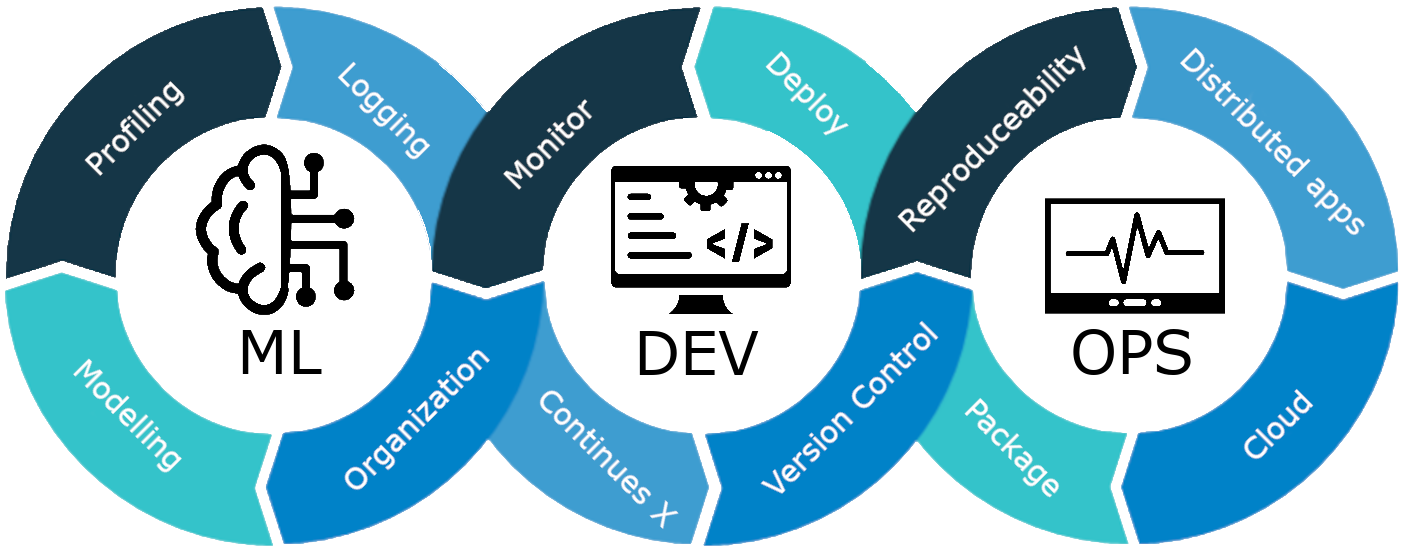
Iterative MLOps loop emphasizing continuous improvement, feedback, and retraining for sustained model accuracy.
Credit: skaftenicki.github.io
Read More : Private Equity Deal Management Software: Boost Efficiency Now
Frequently Asked Questions
What Are Machine Learning Operations?
Machine learning operations (MLOps) standardize and automate the ML lifecycle from development to deployment and maintenance. MLOps ensures collaboration, continuous monitoring, reproducibility, and transparency. It handles model training, deployment, monitoring, retraining, and governance to maintain effective, reliable AI systems in production.
What Is Mlops’ Salary?
MLOps salaries typically range from $90,000 to $150,000 annually, depending on experience and location. Senior roles can exceed $180,000.
What Are The 4 Types Of Machine Learning?
The four types of machine learning are supervised, unsupervised, semi-supervised, and reinforcement learning. Each type uses different data and feedback methods.
Is Mlops Harder Than Devops?
MLOps can be harder than DevOps due to managing complex ML models, data drift, and continuous retraining. It requires collaboration across data science and IT teams. DevOps focuses mainly on software deployment, while MLOps demands extra monitoring and model governance for machine learning pipelines.
What key metrics should I track in MLOps?
Focus on model accuracy over time, inference latency, data drift frequency, and retraining cost. Also track deployment success rate and time to rollback. A solid monitoring dashboard gives visibility into these metrics and helps correlate model performance with business outcomes.
How can a small team start with MLOps?
Begin with one well-defined use case (e.g., demand forecasting). Use free tiers of cloud MLOps platforms and version control for data and code. Prioritize automation of the training pipeline and add monitoring in incremental steps. Small teams often succeed by leveraging a limited set of tools and scaling only when the value is proven.
How does edge machine learning factor into physical operations?
Edge machine learning deploys optimized, quantized models directly onto local hardware devices, such as industrial sensors, microcontrollers, and edge gateways, rather than routing data through remote cloud servers. This approach eliminates latency, ensures business continuity during network outages, and dramatically lowers bandwidth costs in settings like manufacturing floors, retail stores, and remote transit hubs.
How do data privacy laws like GDPR impact operational ML pipelines?
Privacy regulations require strict data governance, consumer consent tracking, and the technical capability to honor the “right to be forgotten.” In operational MLOps pipelines, teams must implement automated data anonymization, isolate personally identifiable information (PII) from training sets, and maintain auditable lineage records. If an individual requests record deletion, systems must trace and purge corresponding feature entries to avoid costly compliance penalties.
Conclusion
Machine learning improves operations by making processes faster and smarter. Teams work closely to build and maintain effective models. Automation handles repetitive tasks, saving time and reducing errors. Continuous monitoring keeps models accurate and reliable over time. Clear tracking helps teams understand how models evolve and perform.
Using machine learning in operations leads to better decisions and smoother workflows. Embracing these practices supports ongoing growth and efficiency in any business. Ready to take the next step? Evaluate your current operational bottlenecks and identify one workflow where predictive automation could deliver immediate savings. Implement your first MLOps pipeline this quarter to start seeing real results. Audit your data assets, pick an accessible starting project, and establish automated tracking to turn operational intelligence into long-term enterprise value.

Similar Posts