

What is SEO and how does it help websites improve visibility in search engines by optimizing content and structure for better user experience and ranking.
Imagine your website showing up right at the top when someone searches for what you offer—that’s the power of SEO. It’s not just for big companies; whether you have a blog, a small business, or an online store, SEO can help you attract more visitors without spending a fortune on ads. By understanding and applying SEO best practices, you can make sure search engines easily find and rank your pages higher. This means more people will discover your site exactly when they need it. Curious to learn more and take your website to the next level?
Credit: ashikjibon.com
Introduction To Seo: Understanding Its Purpose And Importance
SEO is a fundamental part of online success. It helps websites become visible on search engines like Google. This visibility attracts visitors who are interested in your content, products, or services. Understanding SEO’s purpose and importance is key to growing any online presence.
SEO involves optimizing your website to rank higher in search results. This boosts the number and quality of visitors. It also builds trust, making users more likely to engage with your site. Below, we explore what SEO means, why it matters, and how it stands out from other ways to get traffic.
What Is Seo? Defining Search Engine Optimization
SEO stands for Search Engine Optimization. It means improving your website so search engines can find and show it to users. The goal is to appear near the top of search results for words people use to find your content.
SEO focuses on three main areas:
- Content: Creating useful, clear, and relevant information.
- Structure: Organizing your site for easy navigation and crawling.
- Visibility: Making your site easy to find by search engines.
Search engines use bots called crawlers to scan websites. They check your pages and add them to an index. When users search, the engine ranks pages based on relevance and quality.
Why Seo Matters: Increasing Quality And Quantity Of Website Traffic
SEO brings organic traffic—visitors who find your site naturally through search. This traffic is valuable because these users are actively looking for what you offer.
Benefits of SEO include:
- More Visitors: Higher rankings lead to more clicks.
- Better Quality Leads: Users who search have intent, so they are more likely to convert.
- Long-Term Results: SEO builds lasting visibility without ongoing ad costs.
- Trust and Credibility: Users trust top search results more than ads.
SEO helps small and large sites compete on a level playing field. It reduces reliance on paid ads, saving money and increasing return on investment.
How Seo Differs From Other Traffic Sources
Website traffic comes from different sources. SEO traffic is organic, unlike paid or social media traffic. Here is how SEO compares:
| Traffic Source | Description | Key Feature |
|---|---|---|
| SEO (Organic Search) | Visitors find your site by searching keywords on search engines. | Free, targeted, intent-driven traffic. |
| Paid Ads | Traffic from ads you pay for on search engines or social media. | Immediate but costs money continuously. |
| Social Media | Visitors come from platforms like Facebook or Instagram. | Can be viral but less intent-driven. |
| Direct Traffic | Users type your URL directly or use bookmarks. | Loyal visitors but limited growth. |
SEO traffic tends to be more sustainable and focused on users ready to engage. It builds a strong foundation for steady website growth.
How Seo Works: The Process Behind Search Engine Optimization
Search Engine Optimization (SEO) involves a clear process that helps search engines find, understand, and show your website to users. This process has three main stages: crawling, indexing, and ranking. Each stage plays a vital role in making your website visible and relevant in search results.
Understanding these steps helps you optimize your site to reach more visitors and improve your online presence.
Crawling: How Search Engines Discover Your Content
Search engines use automated programs called crawlers or spiders. These bots scan the internet by following links from one page to another.
They look for new pages and updates to existing content. A well-structured website helps crawlers find all your important pages.
- Use clear navigation and internal links
- Create an XML sitemap for easier discovery
- Keep content fresh by updating regularly
- Fix broken links and crawl errors
These steps make it easier for crawlers to explore your site fully and efficiently.
Indexing: Organizing And Storing Web Content
After crawling, search engines index your web pages. Indexing means storing and organizing the content in a giant database.
Only indexed pages can appear in search results. The search engine analyzes your content for keywords, topics, and quality during indexing.
- Relevant, clear content helps proper indexing
- Use descriptive titles and meta tags
- Ensure fast page loading and mobile-friendly design
Good indexing improves the chances your pages will show up for relevant searches.
Ranking: Determining The Most Relevant Search Results
Ranking is the final step where search engines decide the order of results for a query.
Algorithms evaluate many factors to find the most useful and trustworthy pages.
| Ranking Factor | What It Means |
|---|---|
| Content Quality | Helpful, original, and well-written information |
| Keywords | Matching terms users search for |
| User Experience | Easy navigation and fast loading |
| Backlinks | Links from other trusted websites |
| Mobile Friendliness | Good performance on smartphones and tablets |
Better scores in these areas lead to higher rankings, making your site easier to find.
Key Seo Tactics: Strategies To Boost Your Website Traffic
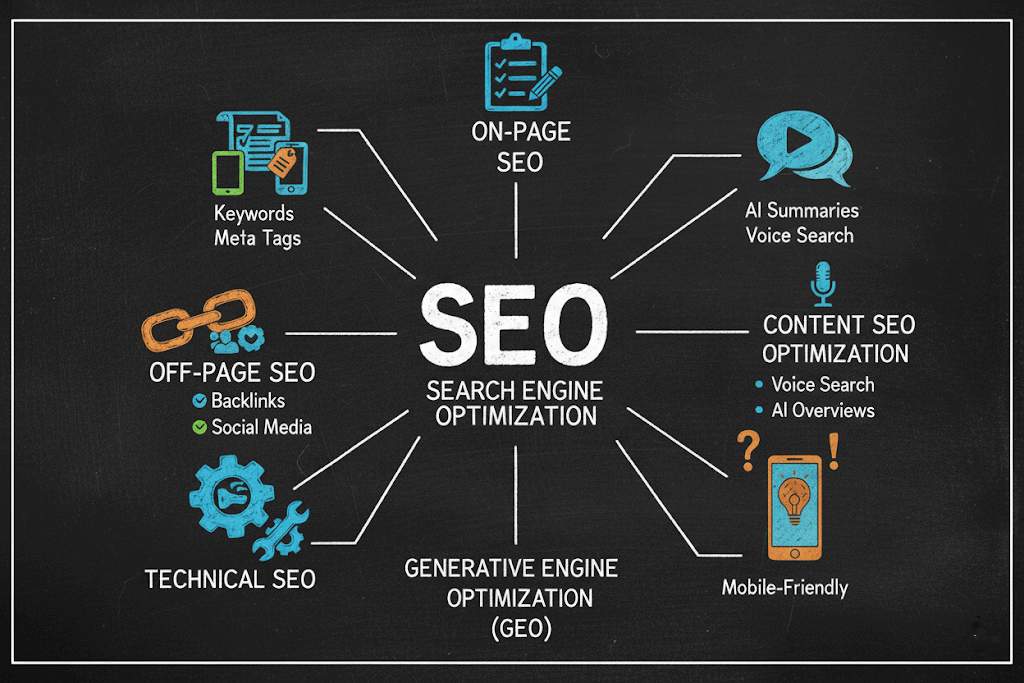
SEO involves different tactics to improve your website’s position on search engines. Using the right strategies increases your site’s visibility and attracts more visitors. Focus on three main areas: on-page SEO, off-page SEO, and technical SEO.
On-page Seo: Optimizing Content And Structure For Better Visibility
On-page SEO means improving the content and layout of your web pages. It helps search engines understand what your site is about. This makes your pages more likely to show up in search results.
- Use relevant keywords naturally in titles, headings, and text.
- Create high-quality content that answers users’ questions.
- Optimize meta descriptions to improve click-through rates.
- Use clear headings (H1, H2, H3) to organize content.
- Ensure fast page loading and mobile-friendly design.
- Include internal links to related pages for better navigation.
These steps make your pages easier to read and more attractive to both users and search engines.
Off-page Seo: Building Authority Through Quality Backlinks
Off-page SEO focuses on actions outside your website. The main goal is to build your site’s authority by earning links from other trusted websites.
- Get backlinks from reputable and relevant sites.
- Engage in guest posting on industry blogs.
- Share content on social media and forums.
- Build relationships with influencers and other website owners.
- Avoid low-quality or spammy links that can hurt your ranking.
High-quality backlinks act as votes of confidence, signaling to search engines that your site is trustworthy.
Technical Seo: Enhancing Website Performance And Crawlability
Technical SEO improves your site’s backend to help search engines crawl and index your pages efficiently.
- Use an organized site structure with clear navigation and internal links.
- Create an XML sitemap to guide search engines.
- Fix broken links and crawl errors regularly.
- Improve page speed by optimizing images and code.
- Make your website mobile-friendly for all devices.
- Use HTTPS to secure your site.
These improvements help search engine bots discover and rank your site better.

Credit: searchengineland.com
Unique Features Of Seo And Their Benefits
SEO has several unique features that help websites rank higher and attract the right visitors. These features focus on optimizing content, site structure, and technical aspects to meet search engine requirements and user needs. Understanding these features can improve your website’s visibility, usability, and credibility.
Keyword Research: Targeting What Your Audience Is Searching For
Keyword research identifies the exact words and phrases people type into search engines. By targeting these keywords, your content matches what users want. This increases the chances of your site appearing in relevant search results.
- Find popular and relevant keywords.
- Focus on search intent behind keywords.
- Use long-tail keywords for more specific traffic.
Targeting the right keywords drives qualified traffic and improves your site’s ranking.
High-quality Content Creation: Meeting User Intent Effectively
Content must answer users’ questions and solve their problems. High-quality content is clear, useful, and well-structured. It keeps visitors engaged and encourages sharing.
Meeting user intent helps search engines trust your site, boosting its rank. Good content also lowers bounce rates and increases time spent on your pages.
Schema Markup: Helping Search Engines Understand Your Content
Schema markup is a code added to your website to explain your content to search engines. It helps engines understand details like reviews, events, products, and more.
| Benefit | Explanation |
|---|---|
| Rich Snippets | Enhanced search results with images, ratings, and info. |
| Better Ranking | Clearer content understanding boosts SEO performance. |
| Improved CTR | Attractive listings get more clicks from users. |
Site Speed Optimization: Improving User Experience And Rankings
Slow websites lose visitors fast. Site speed optimization makes pages load quickly on all devices. This improves user experience and keeps visitors longer.
Search engines prefer fast sites. Speed boosts your ranking and reduces bounce rates.
- Compress images and files.
- Use caching and content delivery networks (CDNs).
- Minimize code and scripts.
Mobile-friendliness: Capturing Mobile Traffic Seamlessly
More people use mobile devices to browse. A mobile-friendly site adapts to all screen sizes and works smoothly on phones and tablets.
Mobile-friendly sites rank higher in search results. They also provide a better experience, increasing visitor retention and engagement.
Securing Your Site With Https: Building Trust And Ranking
HTTPS encrypts data between your website and visitors. This keeps information safe and builds trust.
Search engines favor secure sites and rank them higher. HTTPS also protects your site from hacking and improves user confidence.
Pricing And Affordability Of Seo Services
SEO pricing varies widely depending on the approach and provider. Many factors influence costs, including the scope of work, expertise, and tools used. Understanding different options helps businesses choose affordable SEO without sacrificing quality.
The goal is to balance budget with effective SEO strategies that improve search rankings and traffic.
In-house Vs Agency Seo: Cost Considerations
Hiring an in-house SEO team means paying salaries, benefits, and training. This option suits businesses with long-term SEO needs and larger budgets.
Agencies charge either a monthly retainer or project-based fees. Their prices depend on services offered, expertise, and company size.
| Factor | In-House SEO | Agency SEO |
|---|---|---|
| Cost | High (salaries + tools) | Variable (retainer or project) |
| Expertise | Limited to team skills | Access to specialists |
| Flexibility | Full control | Depends on contract |
| Scalability | Slower growth | Easy to scale |
Agencies can be costlier but offer diverse expertise and faster results.
Freelance Seo Experts: Budget-friendly Options
Freelancers offer SEO services at lower prices than agencies. They work independently and often specialize in specific SEO areas.
Freelancers provide flexible contracts and can customize their services to fit small budgets. Common pricing models include hourly rates or fixed project fees.
- Hourly rates: $30 to $100+
- Project rates: $500 to $5,000 depending on scope
Freelancers suit startups and small businesses needing affordable, personalized SEO help.
Diy Seo Tools: Affordable Solutions For Small Businesses
Do-it-yourself SEO tools help small businesses manage SEO tasks cheaply. These tools guide keyword research, site audits, and content optimization.
Popular SEO software offers monthly subscriptions from $20 to $100. Examples include:
- Keyword research tools
- Backlink checkers
- Technical SEO audit tools
- Content optimization platforms
DIY tools save costs but require time and effort to learn SEO basics.
Combining DIY tools with freelance support can create a cost-effective SEO strategy.
Credit: itsprime.co.uk
Pros And Cons Of Seo Based On Real-world Usage
SEO offers clear benefits and some challenges based on practical experience. It can bring steady website traffic and build trust over time. Yet, it demands patience and constant attention to changing search engine rules. Understanding both sides helps set realistic goals and avoid common mistakes.
Advantages: Long-term Traffic Growth And Brand Authority
SEO drives organic traffic that lasts longer than paid ads. Once your site ranks well, it can attract visitors daily without extra cost. This steady flow helps businesses grow sustainably.
Building brand authority is another key advantage. Ranking high on search results shows users that your site is reliable and relevant. Over time, this strengthens your brand’s reputation and user trust.
- Improves visibility on Google and other search engines
- Brings targeted visitors actively searching for your content
- Supports content marketing and social media efforts
- Enhances user experience through better site structure
Challenges: Time Investment And Algorithm Changes
SEO requires a significant time commitment. Results do not appear overnight and may take months to show impact. Consistency in content updates and technical fixes is essential.
Search engines update their algorithms frequently. These changes can impact your rankings suddenly. Staying updated and adapting SEO strategies is critical to maintaining traffic.
| Challenge | Description | Impact |
|---|---|---|
| Time Investment | SEO tasks like keyword research, content creation, and link building take time | Slow initial results; requires patience and ongoing effort |
| Algorithm Changes | Search engines update ranking factors regularly | Rankings can drop; need to adjust SEO methods quickly |
Common Pitfalls To Avoid In Seo Campaigns
Many SEO campaigns fail due to avoidable errors. Watch out for these common pitfalls:
- Keyword stuffing: Overusing keywords makes content unnatural and can lower rankings.
- Ignoring mobile users: Sites not optimized for mobile lose traffic and rankings.
- Neglecting site speed: Slow websites frustrate users and search engines alike.
- Using low-quality backlinks: Poor links can harm your site’s credibility.
- Skipping analytics: Without tracking data, you cannot measure or improve SEO performance.
Focus on quality content, user experience, and ethical SEO practices for lasting success.
Who Should Invest In Seo? Recommendations For Ideal Users
SEO benefits many types of websites and businesses. It helps improve visibility, attract visitors, and build trust. Investing in SEO suits those aiming for long-term organic growth. Understanding who gains the most helps prioritize efforts and resources effectively.
Small Businesses Looking To Grow Organically
Small businesses often have limited budgets for ads. SEO offers a cost-effective way to increase online presence. It helps compete with larger companies by targeting local and relevant searches. Organic traffic from SEO is sustainable and builds steady customer flow.
- Improves local search visibility
- Builds credibility in competitive markets
- Attracts customers without high ad costs
- Supports long-term growth and brand building
E-commerce Websites Needing Increased Visibility
E-commerce sites depend on traffic to generate sales. SEO boosts product page rankings and category visibility. It drives targeted visitors actively searching for products. Optimized sites convert better and reduce reliance on paid ads.
| SEO Benefit | Impact on E-Commerce |
|---|---|
| Keyword Optimization | Targets buyer intent with relevant terms |
| Site Structure | Improves navigation and user experience |
| Content Marketing | Supports product discovery and trust |
| Technical SEO | Speeds up site and improves mobile usability |
Content Creators And Bloggers Seeking Audience Expansion
Content creators and bloggers need readers to grow influence. SEO helps reach new audiences through search engines. It increases article visibility, driving more organic traffic to blogs. Consistent SEO efforts build loyal readers and higher engagement.
- Research keywords relevant to audience interests
- Optimize blog posts with clear titles and headings
- Use internal links to keep visitors on site longer
- Update old content to maintain rankings
Large Enterprises Focused On Brand Awareness And Leads
Large companies use SEO to protect and expand market share. SEO supports brand awareness by ranking for high-volume, competitive keywords. It also generates qualified leads through targeted content. SEO integrates with other marketing channels for maximum impact.
- Strengthens authority in crowded markets
- Drives high-quality traffic for lead generation
- Improves user experience across multiple domains
- Supports global and local SEO strategies
Conclusion: Leveraging Seo To Maximize Website Traffic
SEO is a key tool for increasing website visitors. It improves how search engines see your site. This helps your site rank higher in search results. More visibility means more organic traffic. Applying SEO strategies effectively leads to better online presence and more potential customers.
SEO is not just about keywords. It involves website structure, content quality, and user experience. Each part plays a role in helping search engines understand and rank your pages well. Consistent SEO efforts build trust and authority over time.
Recap Of Seo’s Role In Digital Marketing Success
- SEO drives organic traffic without paying for ads.
- It improves site visibility on search engines like Google.
- SEO builds credibility by ranking higher than competitors.
- It involves three key steps: crawling, indexing, and ranking.
- Good SEO means a clear site structure and fresh, quality content.
SEO helps businesses, blogs, and online stores reach more people. It balances technical setup and content optimization. This creates a strong foundation for digital marketing success.
Next Steps To Implement Effective Seo Strategies
- Audit your website to identify issues with structure and content.
- Create quality content that matches what users search for.
- Optimize on-page elements like titles, headings, and meta descriptions.
- Build internal links to improve site navigation and crawler access.
- Use tools like Google Search Console to fix errors and monitor performance.
- Update content regularly to keep your site fresh and relevant.
- Focus on user experience by making your site fast and mobile-friendly.
Starting with these steps sets a solid SEO foundation. Track changes and adjust your strategy based on results. SEO is a continuous process that grows your website traffic over time.
Frequently Asked Questions
What Is Seo And How Does It Work?
SEO (Search Engine Optimization) improves a website’s visibility in organic search results. It works by optimizing content and technical elements. Search engines crawl, index, and rank pages based on relevance. Higher rankings attract more visitors, increasing traffic and potential conversions.
What Is An Example Of Seo?
An example of SEO is optimizing a webpage with relevant keywords and high-quality content to rank higher in Google search results.
What Is Technical Seo And How Does It Work?
Technical SEO optimizes website infrastructure to improve crawling, indexing, and ranking by search engines. It ensures fast loading, mobile-friendliness, secure connections, and clean code for better visibility and user experience.
Can I Do Seo On My Own?
Yes, you can do SEO on your own by learning basics like keyword research, content optimization, and link building. Consistency and patience matter.
Conclusion
SEO helps your website show up in search results. It makes your content easier to find. Good SEO increases website visits without paying for ads. It focuses on clear structure, relevant keywords, and fresh content. Understanding SEO basics can improve your online presence. Keep learning and applying SEO best practices regularly. For a deeper dive, check out What Is SEO. This guide offers helpful tips to boost your site’s ranking and visibility. SEO is a tool anyone can use to grow online.

