
Choosing the right hosting can be daunting for beginners. Comfort and ease of use are key.
Choosing the right hosting can be tricky for beginners. Comfort and ease of use are key. Starting your online journey should be easy and stress-free. For beginners, web hosting can feel overwhelming. Knowing which hosting service is the most comfortable can save you time, effort, and money. The right choice helps you build your website with confidence.
In this post, we’ll look at Most Comfortable Hosting for Beginners: Your Ultimate Guide . These services are easy to use, offer great customer support, and are reliable. You’ll be able to manage your site without needing any tech skills. Let’s explore the best hosting solutions to get your online presence started.
Key Features Of Most Comfortable Hosting for Beginners
Choosing the right hosting can be a challenge for beginners. The key features of beginner hosting make the process simpler. Let's explore these key features.
Ease Of Use
Beginner hosting should be easy to use. A simple control panel helps manage websites. Drag-and-drop builders make site creation simple. Clear instructions help every step of the way. No need for technical skills.
In practice, the most beginner-friendly hosts offer a custom dashboard that hides advanced server settings. This means you see only the tools you need — file manager, email setup, one-click installs — without the clutter. A common mistake is picking a host that assumes you already understand terminology like “nameservers” or “PHP version.” Look for a provider that uses plain language and includes tooltips that explain each option.
Customer Support
Good customer support is crucial for beginners. Look for 24/7 support availability. Support via chat, email, and phone is ideal. Friendly and patient support staff make a difference. They should resolve issues quickly and effectively.
The best support teams don’t just fix problems — they teach you how to avoid them in the future. For example, a knowledgeable support agent might explain why a plugin caused a white screen and how to deactivate it without panic. Many hosts also provide a knowledge base with step-by-step articles and video tutorials. Before choosing a host, test their live chat with a simple question to gauge response time and clarity.
Additional Beginner-Friendly Features
Beyond ease of use and support, look for these features that make a beginner’s life easier:
- One-click installations – Install a content management system like WordPress, Joomla, or Drupal with a single click. No manual uploading or database creation required.
- Free website migration – If you already have a site elsewhere, many hosts will move it for you at no charge. This saves you the technical hassle of transferring files and databases.
- Money-back guarantee – Most reputable hosts offer a 30- to 45-day refund period. This lets you test the service risk-free.
- Free SSL certificate – Essential for website security and trust. Many hosts include it automatically with all plans.
- Automatic backups – Daily or weekly backups ensure you can restore your site quickly if something goes wrong.
Choosing a provider with these extras removes common roadblocks for newcomers. For instance, you can start building your site immediately using a one-click WordPress installation rather than struggling with manual setup.
Top Hosting Providers
Choosing the right hosting provider is crucial for beginners. The right provider offers ease of use, reliability, and affordability. The following sections will help you compare the best options available.
Comparing The Best
To make your decision easier, let's compare the top hosting providers:
Provider Features Ease of Use
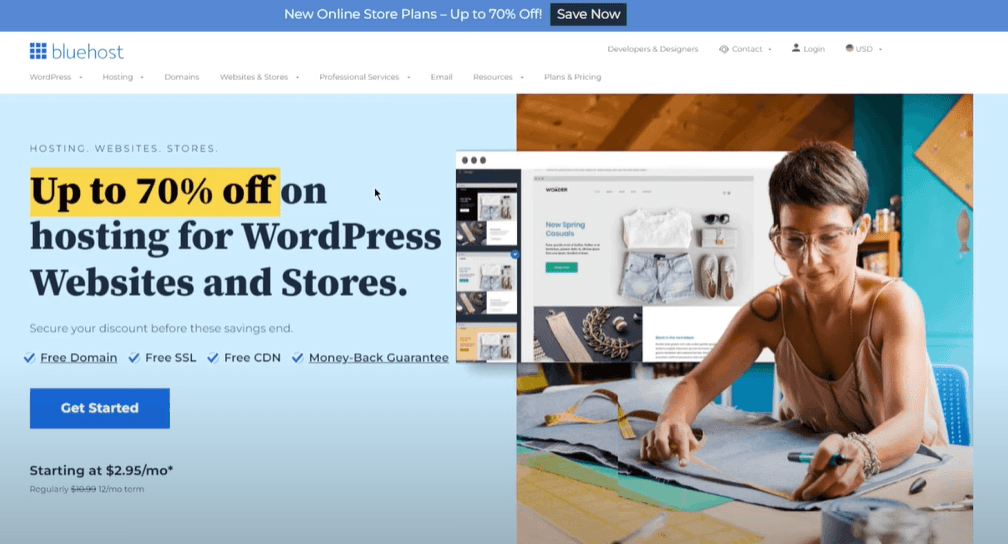
Bluehost Free Domain, 24/7 Support Very Easy
HostGator Free SSL, 45-Day Guarantee Easy
SiteGround Daily Backups, Free CDN Moderate
Pricing And Plans
Pricing is a key factor for beginners. Here are the basic plans for these providers:
Bluehost: Starts at $2.95/month
HostGator: Starts at $2.75/month
SiteGround: Starts at $3.99/month
Each plan includes essential features like a free domain and SSL certificate. These features are important for a beginner's website security and credibility.
Consider these options and choose the one that fits your needs and budget. Each provider offers a money-back guarantee, so you can try them risk-free.
Note that the prices shown are introductory offers and typically renew at a higher rate — often two to three times the initial cost. Always check the renewal price and plan details before committing. For the best long-term value, consider a month-to-month plan or a multi-year discount that locks in a lower rate.
Setting Up Your Hosting
Starting a website can seem like a huge task. But with the right hosting, you can make it easy. This guide will help you set up your hosting. Follow these simple steps and avoid common mistakes.
Step-by-step Process
Choose a Hosting Provider: Research and select a reputable hosting provider. Look for user-friendly options for beginners.
Register Your Domain: Select a domain name that represents your site. Check its availability and register it.
Purchase a Hosting Plan: Choose a plan that fits your needs. Many providers offer basic plans for beginners.
Set Up Your Account: Create your hosting account. Provide your details and set up your login credentials.
Install a CMS: Use a Content Management System (CMS) like WordPress. Most hosts offer easy one-click installations.
Configure Your Settings: Adjust your site settings. Set up your themes, plugins, and basic configurations.
Upload Your Content: Add your content. Use easy-to-understand structures like headings, paragraphs, and lists.
Common Pitfalls
Choosing the Wrong Plan: Beginners often pick advanced plans. Start with a basic plan and upgrade later.
Ignoring Security: Ensure your hosting plan includes security features. Look for SSL certificates and backups.
Forgetting Updates: Regularly update your CMS and plugins. This helps prevent security issues and ensures smooth operation.
Not Backing Up: Always back up your site. This prevents data loss during unforeseen events.
Overlooking Support: Choose a host with strong customer support. This is crucial for beginners needing help.
Setting up your hosting doesn't have to be hard. Follow these steps and avoid common pitfalls to ensure a smooth start.
User-friendly Control Panels
When starting with web hosting, a user-friendly control panel is essential. It simplifies management tasks, making it easier to handle your website. Let’s explore some popular options that offer a smooth experience for beginners.
Cpanel Basics
cPanel is one of the most popular control panels for web hosting. It provides an intuitive interface, making it easy to navigate for beginners.
Simple file management
One-click installations for popular apps
Email account management
Domain management
cPanel also offers a wide range of tutorials and documentation. This helps users understand and utilize its features effectively. Here’s a quick overview of its main sections:
Section Purpose
Files Manage your website’s files
Databases Handle MySQL databases
Domains Manage domain names and subdomains
Email Set up and manage email accounts
Softaculous Install scripts and apps with one click
Alternative Control Panels
While cPanel is widely used, there are other control panels that offer unique features and ease of use.
Plesk : Known for its clean interface and comprehensive tools. Suitable for both Linux and Windows hosting.
DirectAdmin : Lightweight and cost-effective. Ideal for those needing basic features without the extras.
ISPConfig : Open-source control panel. Offers flexibility and customization for advanced users.
Each of these alternatives provides a different set of features. Choose the one that best fits your needs and comfort level.
Remember, the right control panel can make managing your website much easier. Explore your options and select the one that offers the most comfort and functionality for your needs.
Security Essentials
When choosing a hosting provider, security is a top priority for beginners. A secure hosting service protects your website from threats. This ensures smooth operation and peace of mind. Let's explore essential security features that make hosting comfortable for beginners.
Basic Security Features
Basic security features provide a strong foundation. They protect your website from common threats. Look for hosting services that offer SSL certificates. SSL encrypts data between your site and its visitors. This keeps sensitive information safe.
Firewalls are another key feature. They block unauthorized access to your site. Ensure your hosting provider includes a reliable firewall. Regular backups are also crucial. They protect your data in case of a breach. Choose a host that offers automated backups.
Advanced Security Options
Advanced security options offer extra protection. These features are ideal for growing websites. One advanced option is DDoS protection. It shields your site from traffic overload attacks. This keeps your site online and running smoothly.
Another advanced feature is malware scanning. It detects and removes malicious software. Look for hosts that provide regular malware scans. Two-factor authentication adds another layer of security. It requires a second form of verification. This keeps your account safe from hackers.
These security essentials ensure a safe hosting experience. They protect your website and provide peace of mind. Choose a host that offers both basic and advanced security features. This makes hosting comfortable and secure for beginners.
 Key security features every beginner should look for in a hosting provider.
Performance Optimization
Performance optimization is crucial for hosting beginners. It ensures websites run smoothly and efficiently. This section will cover key areas of performance optimization. These include speed enhancements and resource management. Together, they help create a seamless experience for users.
Speed Enhancements
Speed is vital for any website. Fast-loading pages keep visitors engaged. Several methods improve website speed. One effective method is using a Content Delivery Network (CDN). CDNs distribute content across multiple servers. This reduces load times for users.
Another technique is image optimization. Large images slow down websites. Compress images to reduce their size without losing quality. Use tools like TinyPNG or JPEG-Optimizer.
Browser caching also boosts speed. It stores static files in users' browsers. This reduces the need to reload files on each visit. Configure caching settings in your hosting control panel.
Resource Management
Resource management ensures efficient use of server resources. It helps prevent website crashes and slowdowns. One key aspect is monitoring server performance. Use tools like New Relic or Nagios.
Another important factor is database optimization. Databases can become slow over time. Regularly clean and optimize your database. Remove unnecessary data and optimize tables.
Load balancing is another effective technique. Distribute traffic across multiple servers. This prevents any single server from becoming overwhelmed. Use load balancers like HAProxy or Nginx.
Efficient resource management is essential. It keeps your website running smoothly. Ensuring a positive experience for visitors.
Watch this video for a practical walkthrough of performance optimization techniques.
https://www.youtube.com/watch?v=GyGyesn2qPI
Choosing the Right Hosting Type for Your Needs
Not all hosting is the same, and understanding the differences helps you pick the right foundation for your site.
- Shared Hosting – Your website lives on a server with many other sites. It’s the most affordable and easiest to manage, making it the top choice for beginners. Resources are shared, so it works well for small personal blogs and low-traffic business sites.
- VPS (Virtual Private Server) Hosting – You still share a physical server, but a virtual partition gives you dedicated resources. This offers better performance and more control, but requires some technical comfort. Move to VPS when your site outgrows shared hosting.
- Cloud Hosting – Your site runs on a network of virtual servers. It scales automatically, handles traffic spikes well, and you pay only for what you use. Many cloud hosts offer beginner-friendly dashboards.
- Dedicated Hosting – You get an entire physical server to yourself. This provides maximum performance and security, but it’s expensive and usually overkill for beginners.
- Managed WordPress Hosting – A specialized service designed specifically for WordPress sites. The host handles updates, security, and performance tuning. If you plan to use WordPress, this can save you a lot of hands-on work.
For most beginners, starting with shared hosting is the wisest move. You can always upgrade to a VPS or cloud plan later as your traffic grows. The key is to choose a provider that makes upgrading easy — ideally a one-click process without downtime.
Tips for Evaluating Hosting Providers as a Beginner
Before you commit to a host, take a few minutes to evaluate it with a beginner’s eye:
- Read recent user reviews on independent platforms – Look for comments about ease of setup, support quality, and uptime. A host with thousands of glowing reviews for advanced users might still be confusing for a beginner.
- Check the knowledge base – Does the host have clear, searchable articles? Videos? A community forum? A rich knowledge base signals they invest in educating new customers.
- Try the support before you buy – Most hosts have live chat available without an account. Ask a question like “How do I install WordPress?” and see how quickly and clearly they respond.
- Look for a free trial or a long money-back guarantee – A 30-day guarantee gives you enough time to test the control panel, install a test site, and verify performance.
- Consider the domain registration options – Some hosts offer a free domain for the first year, but only if you register it through them. Compare this with a dedicated domain registrar if you want to keep domain and hosting separate.
By taking these steps, you’ll avoid the frustration of switching hosts a few weeks after starting.
Scaling Your Hosting
Scaling your hosting is essential for a growing website. Beginners often start with basic plans. But as your site attracts more visitors, you will need to scale up. This ensures your website runs smoothly and efficiently.
Upgrading Plans
As your website grows, you might need to upgrade your hosting plan. There are several signs it's time to upgrade:
Slower load times
Frequent downtime
Limited storage space
High traffic volume
Most hosting providers offer various plans. These plans range from shared hosting to dedicated servers. Here’s a comparison table to help you understand:
Plan Type Resources Cost Best For
Shared Hosting Limited Low Small sites
VPS Hosting Moderate Medium Growing sites
Dedicated Hosting High High Large sites
Handling Traffic Spikes
Traffic spikes can happen anytime. They may occur due to promotions or viral content. To handle these spikes, consider:
Using a Content Delivery Network (CDN)
Enabling caching
Optimizing images and files
Monitoring server performance
A CDN helps distribute content across multiple servers. This reduces the load on your main server. Caching stores copies of your site’s pages. This speeds up load times for returning visitors. Optimizing images and files reduces their size. This helps your site load faster. Monitoring server performance ensures everything runs smoothly.
By upgrading your plan and managing traffic spikes, you keep your site efficient. This keeps your visitors happy and engaged.
Frequently Asked Questions
What Is The Best Hosting For Beginners?
The best hosting for beginners is often shared hosting. It is affordable, easy to manage, and user-friendly. It provides essential features to start a website with minimal technical knowledge.
Why Choose Shared Hosting For Beginners?
Shared hosting is cost-effective and beginner-friendly. It requires no advanced technical skills. It offers easy-to-use control panels, making website management simple.
How Much Does Beginner Hosting Cost?
Beginner hosting typically costs between $2 to $10 per month. Prices vary based on features and providers. Look for introductory offers and discounts.
Can Beginners Set Up Hosting Themselves?
Yes, beginners can set up hosting themselves. Most hosting providers offer step-by-step guides and user-friendly interfaces. This makes the process straightforward.
What Is The Difference Between Shared And VPS Hosting?
Shared hosting partitions server resources among many users, while VPS gives you a dedicated slice of the server with guaranteed CPU and RAM. Shared is simpler and cheaper; VPS offers better performance and isolation but requires more technical knowledge.
Do I Need A Domain Name To Start?
Yes, a domain name is required to make your site accessible on the internet. Many hosting providers offer a free domain for the first year as part of their beginner plans. You can also register a domain separately and point it to your host.
What Is An Uptime Guarantee?
An uptime guarantee is a promise from your hosting provider that your website will be available a certain percentage of the time — usually 99.9% or higher. If they fall below that, you may receive a credit. For beginners, anything above 99.9% is fine, but always read the fine print as guarantees often exclude scheduled maintenance.
Conclusion
Choosing the right hosting is crucial for beginners. Easy setup and strong support make a big difference. Look for user-friendly features and reliable performance. Affordable pricing helps manage your budget. Prioritize customer reviews and satisfaction ratings. The right hosting boosts your online presence.
Start your journey with confidence. Happy hosting!

