Best Business Hosting: Boost Your Online Presence Today
Lead SaaS Analyst & Software Developer at PCSaaS · Software Developer (GitHub @Ratankarmakar) · Google Ads & Analytics Certified · 500+ SaaS Tools Tested · 8+ years in software engineering, B2B SaaS evaluation, AppSumo deal auditing, and performance marketing
Title: Best Business Hosting: Boost Your Online Presence Today
Looking for the best business hosting? We've reviewed the top providers, comparing performance, security, and support. Find the perfect hosting plan to launch and grow your business online.
The right business hosting can boost your website's speed, security, and reliability. Choosing the best business hosting is crucial for your success. A good hosting service ensures your site runs smoothly. Customers expect fast load times and secure transactions. You don't want your site to crash during peak hours.
With so many options available, picking the right one can be tough. Each hosting service offers different features and support. This guide will help you find the best business hosting for your needs. We'll explore top options, so you can make an informed choice. Let's dive in and find the perfect hosting solution for your business.
Introduction To Business Hosting
Choosing the right hosting for your business is crucial. Business hosting offers tailored solutions that meet the unique needs of businesses. This type of hosting provides more resources, better performance, and enhanced security. Understanding business hosting can help you make informed decisions.
Importance Of Reliable Hosting
Reliable hosting ensures your website is always available. Downtime can lead to lost revenue and a damaged reputation. A reliable host also offers better security features. These features protect your data from cyber threats. Always choose a host with a proven track record of uptime.
Benefits For Online Presence
Business hosting improves your website's speed. Faster load times enhance user experience. This keeps visitors on your site longer. It also boosts your search engine ranking. Search engines favor fast, reliable websites. Business hosting also provides scalability. You can easily upgrade resources as your business grows.
Key Features To Look For
Choosing the best business hosting can be challenging. You want a service that fits your needs and budget. But what key features should you consider? Let's explore some essential aspects to help you make the right choice.
Performance And Speed
Speed is crucial for any business website. A slow website can drive visitors away. Opt for a host with high uptime and fast loading times. Check their server locations. Closer servers can mean faster speeds for your audience. Also, verify if they use SSD storage. This can enhance performance significantly.
In practice, performance testing before committing to a long-term contract is wise. Many providers offer a 30-day money-back guarantee, giving you time to run real-world speed tests using tools like GTmetrix or Pingdom. Pay attention to Time to First Byte (TTFB)—a metric that measures server responsiveness. A TTFB under 200 milliseconds is generally considered excellent for business sites. Also consider the host's content delivery network (CDN) integration, which can dramatically improve global load times by serving cached files from edge servers near your visitors.
Security Measures
Security should be a top priority. Your host should offer SSL certificates. These encrypt data and protect user information. Look for features like DDoS protection. This shields your site from attacks. Regular backups are also vital. They ensure you can recover your data if something goes wrong.
Beyond these basics, check whether the host provides a web application firewall (WAF) and malware scanning as part of the base plan. Some businesses overlook the importance of automated off-site backups—a common mistake is relying solely on server-side backups stored on the same server. For added protection, look for hosts that store backups in a separate geographic location. If you handle customer payment data, verify that the hosting infrastructure supports PCI DSS compliance requirements. These security layers are especially important if you're planning to use tools for lead management that store sensitive customer information.
Top Business Hosting Providers
Choosing the right business hosting provider can make or break your online presence. The best providers ensure your website runs smoothly and efficiently. Below, we provide an overview of some of the top business hosting providers to help you make an informed choice.
Provider A Overview
Provider A stands out for its reliable uptime and strong security features. Businesses trust its consistent performance. The provider offers flexible plans to suit various business sizes. Users appreciate the responsive customer support and easy-to-use control panel. Additionally, the scalable resources can grow with your business needs. Provider A also offers daily backups and SSL certificates for added security. Overall, it is a solid choice for businesses of all sizes.
Provider B Overview
Provider B is known for its fast loading speeds and excellent customer service. Businesses benefit from its robust infrastructure. The provider offers a range of hosting solutions tailored to different needs. Users find the interface intuitive and simple. The 24/7 support ensures that any issues get resolved quickly. Additionally, the provider includes free domain registration and unlimited email accounts. Provider B also supports various applications and platforms. It is ideal for businesses seeking reliable and fast hosting.
Many businesses find that choosing between these two providers comes down to whether they prioritise raw speed (Provider B) or a richer set of built‑in security tools (Provider A). If your site handles transactions or stores personal data, Provider A’s extra layers may save you the cost of third‑party security add‑ons. For content‑driven sites where every millisecond of load time affects engagement, Provider B’s performance optimisation often delivers a measurable edge. You can benchmark each provider’s performance against your own requirements by using a free trial, and if you eventually need to scale, most top‑tier hosts make it easy to move to a plan that fits a tight launch budget while still delivering enterprise‑grade uptime.
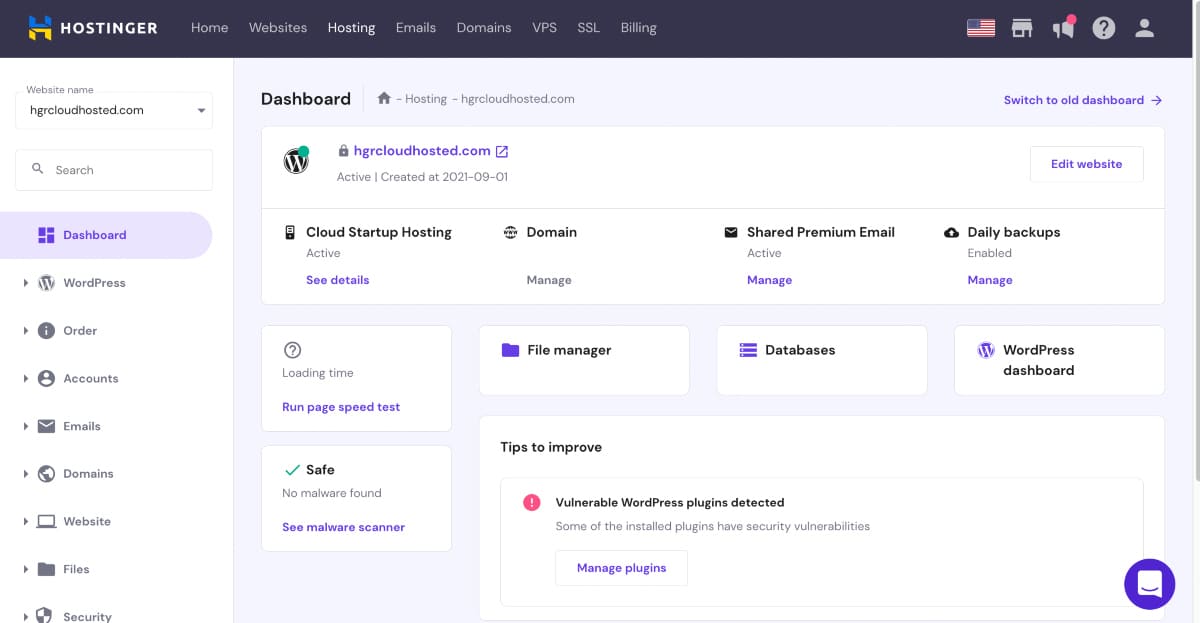
The hosting dashboard gives you real‑time insight into your site’s resource consumption and uptime status.
The control panel dashboard is where you'll monitor your hosting resources, uptime status, and account settings daily.
Credit: cybernews.com
Comparing Hosting Plans
Choosing the right business hosting plan can be challenging. Each type of hosting plan has its advantages and disadvantages. In this section, we will compare different hosting options to help you make an informed decision.
Shared Hosting Vs. Dedicated Hosting
Shared hosting is cost-effective and easy to manage. It is suitable for small businesses with low traffic. In shared hosting, multiple websites share the same server resources. This can lead to slower performance if one website uses too many resources.
Dedicated hosting offers better performance and security. It is ideal for large businesses with high traffic. In dedicated hosting, you get an entire server for your website. This ensures faster load times and better control over server settings. However, dedicated hosting is more expensive than shared hosting.
For businesses that are uncertain about their growth trajectory, consider virtual private server (VPS) hosting as a middle ground. VPS provides dedicated resources within a shared environment, offering better isolation than shared hosting without the full cost of a dedicated server. If you're launching an ecommerce store, the performance difference between shared and VPS can directly affect your conversion rates. Many small business owners budgeting for their monthly overhead find that VPS plans offer the best balance of cost and capability until traffic justifies dedicated infrastructure.
Cloud Hosting Options
Cloud hosting is flexible and scalable. It uses multiple servers to host websites. This means better performance and uptime. Cloud hosting can handle traffic spikes without slowing down your website. It is perfect for growing businesses with variable traffic.
Another benefit of cloud hosting is its cost-effectiveness. You only pay for the resources you use. This makes it a budget-friendly option for many businesses. Cloud hosting also offers better security and data backup options. This ensures your website stays safe and secure.
Because cloud billing is usage‑based, costs can vary month‑to‑month if traffic surges unexpectedly. A sensible practice is to set a monthly spending cap and monitor your dashboard regularly. Many cloud hosts offer auto‑scaling that adds resources only when needed, which helps you avoid paying for idle capacity. If you anticipate consistent traffic, reserving a fixed‑cost cloud instance may save money over pay‑as‑you‑go pricing.
Migrating To A New Business Host
Switching hosting providers can feel daunting, but the process is straightforward when done methodically. A migration typically involves backing up your website files and database, transferring them to the new host's server, and updating your domain's DNS records. Most reputable business hosts offer free migration services—take advantage of this if you're not technically inclined.
Plan the migration during a low-traffic period and communicate any expected downtime to your team. After the transfer, test every critical function: checkout processes, contact forms, login systems, and any integrated third-party services. If you're using a platform like WordPress, verify that plugins and themes function correctly on the new environment. Proper migration planning prevents the common mistake of losing configuration settings or breaking email deliverability during the switch.
Email Hosting And Business Communication
A business hosting plan often includes professional email hosting tied to your domain name (e.g., yourname@yourbusiness.com). This adds credibility compared to free email services. Look for plans that offer unlimited mailboxes, webmail access, and compatibility with desktop clients like Outlook or Apple Mail.
Key email features to prioritize include spam filtering, auto-responders, and catch-all email forwarding. For teams, check whether the host supports shared mailboxes or calendar integration, which reduces the need for separate subscriptions. Reliable email hosting ensures that important client communications never bounce or land in spam folders—a detail that directly impacts how effectively you reach your audience when running email marketing campaigns.
To maximise your email marketing ROI, consider integrating your hosting with a dedicated email service provider that offers advanced analytics and automation. Many business hosting plans support SMTP relay for transactional emails, but for campaigns, you will benefit from the segmentation and A/B testing features available in specialized email marketing platforms.
Cost Vs. Value
Understanding the balance between cost and value is crucial when choosing business hosting. While a lower price might seem attractive, the long-term benefits often outweigh the initial savings. Let's explore the key aspects of cost versus value in business hosting.
Budget Considerations
Business hosting plans come in various price ranges. It's essential to determine your budget before making a decision. Here are some factors to consider:
Initial Setup Costs : Look at the fees for setting up your hosting.
Monthly Fees : Compare the monthly charges of different hosting plans.
Renewal Rates : Check if the renewal rates are higher than the initial cost.
Additional Features : Some hosts offer extra features at an extra cost. Weigh these against your needs.
Remember, the cheapest option isn't always the best. You should balance cost with the features and support provided.
Long-term Benefits
Investing in a reliable business hosting service has several long-term benefits. These benefits often justify the initial and ongoing costs.
Scalability : Good hosting plans allow you to scale your resources as your business grows.
Security : Robust security features protect your data and your customers' information.
Performance : High uptime and fast loading speeds enhance user experience and SEO.
Support : 24/7 customer support can save you time and stress.
Choosing a hosting service with these benefits can lead to better business performance and growth.
Cost Factor Considerations
Initial Setup Costs One-time fees for setting up the hosting environment.
Monthly Fees Ongoing monthly charges for using the hosting service.
Renewal Rates Possible increase in charges after the initial term ends.
Additional Features Extra services and features that may come at an additional cost.
Setting Up Your Business Hosting
Getting your business online is crucial. Setting up your business hosting is the first step. This guide will help you through the process. We'll cover choosing a domain name and configuring your server.
Choosing A Domain Name
Your domain name is your online address. It should be easy to remember and relevant to your business. Here are some tips for choosing a domain name:
Keep it short and simple.
Avoid numbers and hyphens.
Use keywords related to your business.
Check for trademark issues.
Choose a suitable domain extension (.com, .net, .org).
Once you have a list of potential names, check their availability. Many websites offer domain registration services. Choose a reliable one and register your domain.
When you register a domain, enable privacy protection (WHOIS guard) to keep your personal contact information hidden from public databases. Most registrars offer this for free or a small annual fee. A private registration reduces spam and protects you from domain theft attempts.
Configuring Your Server
Configuring your server is the next step. Your server will host your website and handle traffic. Here's a simple guide to setting up your server:
Choose a Hosting Plan: Select a plan that suits your business needs. Consider factors like storage, bandwidth, and customer support.
Set Up Your Server: Follow your hosting provider's instructions. This usually involves logging into a control panel and completing setup steps.
Install Essential Software: Install necessary software such as a web server (Apache or Nginx), a database (MySQL), and a scripting language (PHP).
Secure Your Server: Implement security measures. Use firewalls, SSL certificates, and regular updates to protect your data.
Upload Your Website: Use FTP or a content management system like WordPress to upload your website files.
After setting up your server, test your website. Ensure everything works smoothly. Regularly update and maintain your server to keep your website running efficiently.
After completing the server setup, run a full website audit. Check for broken links, test form submissions, and verify that your SSL certificate is active. Enable automatic updates for your CMS and plugins to patch vulnerabilities promptly. For businesses with team members, set up role-based access to the hosting control panel so that only authorised staff can make server-level changes. Taking these steps early helps you establish a solid hosting foundation that stays secure over time.
Optimizing Website Performance
Optimizing website performance is crucial for any business hosting. A fast website can improve user experience and boost search engine rankings. Let's explore key strategies for enhancing your site's performance.
Content Delivery Networks
Content Delivery Networks (CDNs) can significantly improve website speed. They store copies of your website across multiple servers worldwide. This ensures users access your site from the nearest server location. It reduces latency and speeds up load times. Popular CDNs include Cloudflare and Akamai. Implementing a CDN can make your website faster and more reliable.
Caching Solutions
Caching solutions are essential for optimizing website performance. Caching stores frequently accessed data for quick retrieval. This reduces the need to fetch data from the server each time. Browser caching and server-side caching are common methods. Plugins like W3 Total Cache and WP Super Cache help implement caching easily. Effective caching can reduce load times and server load.
Beyond caching, image optimisation plays a critical role in page speed. Compress images with tools like TinyPNG or ShortPixel before uploading, and implement lazy loading so off‑screen images don’t block the initial render. Google’s PageSpeed Insights provides actionable speed recommendations specific to your site, helping you identify the biggest performance bottlenecks.
 Redundant infrastructure in modern data centers keeps business websites online during power or network failures.
Modern data centers use redundant power and cooling systems to maintain the high uptime that business hosting requires.
Credit: www.namehero.com
Monitoring And Maintenance
In business hosting, monitoring and maintenance are crucial. They ensure your website runs smoothly. Regular checks and updates keep everything in order. Let's explore some key aspects of this.
Regular Backups
Regular backups protect your data. They ensure you have a copy if something goes wrong. Automated backups save time and reduce errors. Choose a host that offers daily backups. This way, you always have the latest version of your data.
Uptime Monitoring
Uptime monitoring is vital. It tracks your website's availability. Constant monitoring helps detect issues quickly. The faster you know about a problem, the faster you can fix it. Look for a host with 24/7 monitoring services. This ensures your site is always up and running.
In addition to uptime alerts, schedule a weekly security review. Check that your CMS, plugins, and server software are running the latest patches. Remove any unused themes or plugins to reduce attack surface. If your host provides a security dashboard, review the event log for failed login attempts—a common sign of brute‑force attacks. A consistent maintenance cadence prevents small vulnerabilities from becoming costly incidents.
Choosing The Right Control Panel
The control panel is your command center for managing hosting settings. The two most common options are cPanel and custom proprietary dashboards. cPanel remains the industry standard due to its familiar layout, extensive documentation, and broad compatibility with one-click installers. However, some modern hosts have developed streamlined custom panels that simplify tasks like creating email accounts, managing databases, and installing SSL certificates.
When evaluating a control panel, look for intuitive navigation, one-click software installation (especially for WordPress or Joomla), and easy access to server logs and error reports. A well-designed control panel saves time daily, so watching a short demo video before purchasing can reveal whether the interface matches your comfort level. If you're planning to start a web hosting business yourself, the control panel becomes even more critical for reseller account management.
Security Best Practices For Business Hosting
Beyond the security features your host provides, you are responsible for several administrative safeguards. First, use strong, unique passwords for your control panel, FTP, and database accounts—never reuse passwords across different services. Enable two‑factor authentication (2FA) wherever the host offers it. Second, set proper file permissions on your server: directories should be 755, files 644, and never leave configuration files readable by the public. Third, disable directory browsing to prevent visitors from listing your files. Finally, keep a written security policy that outlines who has access to what, especially if you have a team managing the site.
For a deeper reference on web application security, consult the OWASP project, which publishes regularly updated guidelines for securing online business assets. Following these practices reduces the likelihood of data breaches and helps you maintain customer trust.
Frequently Asked Questions
What Is Business Hosting?
Business hosting is a web hosting service tailored for business needs. It provides better performance, security, and support. This ensures your website runs smoothly.
Why Choose Business Hosting?
Choose business hosting for reliability, speed, and enhanced security. It helps maintain a professional online presence and supports high traffic.
Is Business Hosting Expensive?
Business hosting can be more expensive than shared hosting. However, the benefits of reliability, performance, and security make it worth the investment.
Can I Upgrade To Business Hosting?
Yes, you can upgrade to business hosting. Most providers offer easy migration from other hosting plans.
How Do I Know If My Business Needs Dedicated Hosting?
You likely need dedicated hosting if your website receives more than 50,000 monthly visitors, runs resource-intensive applications, or handles sensitive customer data that requires strict isolation from other accounts. Signs that your current plan is insufficient include frequent "server busy" errors, slow admin panel response times, or receiving resource usage warnings from your provider. Many businesses start with shared or VPS hosting and upgrade to dedicated as traffic scales.
What Is The Typical Uptime Guarantee For Business Hosting?
Most reputable business hosting providers offer a 99.9% uptime Service Level Agreement (SLA). This translates to roughly 8.7 hours of potential downtime per year. Premium providers may offer 99.99% or higher. Always read the SLA fine print—some hosts compensate with service credits if uptime falls below the stated threshold, though the exact terms vary significantly between companies.
Should I Choose Managed Or Unmanaged Hosting?
Managed hosting means the provider handles server maintenance, security updates, and technical troubleshooting for you. This is ideal for business owners who lack server administration experience or prefer focusing on their core operations. Unmanaged hosting gives you full control but requires you to handle updates, security patches, and issue resolution yourself. For most small to medium businesses, managed hosting is the smarter choice—the slightly higher cost is offset by saved time and reduced risk of misconfiguration.
Can Business Hosting Support Ecommerce Functions?
Yes, most business hosting plans are fully capable of supporting ecommerce platforms. Look for plans that include SSL certificates, PCI compliance support, dedicated IP addresses, and sufficient bandwidth for product images and transaction processing. If you're comparing platforms for online selling, ensure your hosting plan meets the specific requirements of whichever ecommerce solution you choose.
What Is A Staging Environment And Why Do I Need One?
A staging environment is a copy of your live website used for testing updates, new plugins, or design changes before they go public. It prevents errors from affecting your visitors. Most business hosting plans offer one‑click staging through the control panel. Using a staging site is a best practice for any business that updates its website frequently.
How Often Should I Backup My Business Website?
Automated daily backups are the standard recommendation. However, if your site changes frequently—such as an ecommerce store with daily orders—consider backups every six hours or after each significant update. Store backups off‑site or in a separate cloud location to protect against server failure.
Conclusion
Choosing the best business hosting is crucial for your success. Reliable hosting ensures your website runs smoothly. Consider factors like uptime, speed, and customer support. Compare options to find the best fit for your needs. Investing in good hosting pays off in the long run.
Your business deserves a solid online foundation. Make an informed decision today. Explore our top-rated hosting recommendations now to see which provider matches your performance requirements and budget. Your customers and bottom line will thank you.
https://www.youtube.com/watch?v=0CwWkv9QFFI
Business Hosting Checklist For 2026
Before you commit to any provider, run through this practical checklist. Doing so prevents the common mistake of choosing a plan based only on the promotional price rather than the total value you receive.
Uptime SLA: Look for 99.9% uptime backed by a written guarantee, not just a marketing claim.
Backup frequency: Automated daily backups stored off-site are the minimum standard for business websites. Weekly backups are insufficient for active stores or content-heavy sites.
Security features: A free SSL certificate, malware scanning, DDoS protection, and a web application firewall should be included rather than sold as expensive add-ons.
Support accessibility: Test the support team before purchasing. Ask a pre-sales question and time how long the response takes. This reveals more about service quality than any review page.
Scalability path: Confirm that upgrading from shared to VPS or cloud hosting is a one-click process without downtime or surprise data-migration fees.
Renewal transparency: Check the fine print—many hosts charge two to three times more after the introductory period expires. Calculate your year-two cost before signing up.
Email hosting: Verify whether professional email accounts are included or require a separate subscription. Domain-matched email addresses matter for customer trust.
Migration assistance: Choose a provider that offers free website migration to avoid technical headaches on launch day.
For security planning, you can benchmark your hosting choices against recognized cybersecurity frameworks published by the National Institute of Standards and Technology.
Hosting Types At A Glance
When you compare business hosting options, it helps to see the trade-offs side by side instead of reading through scattered plan descriptions.
Hosting Type Best For Typical Strengths Watch Out For
Shared Hosting Small business sites with low traffic Low cost, easy management, no technical skills needed Slower speeds, less isolation, limited scalability
VPS Hosting Growing businesses needing guaranteed resources Dedicated RAM and CPU, root access, scalable Requires more technical knowledge, higher cost than shared
Dedicated Hosting High-traffic sites and custom configurations Full server control, maximum performance, strong security isolation Expensive, usually requires sysadmin skills unless managed
Cloud Hosting Seasonal businesses with variable traffic Pay-as-you-go pricing, automatic scaling, high uptime Costs can fluctuate, complex bill calculation
WordPress-Optimized Hosting Content-driven business sites and online stores Pre-configured caching, automatic updates, expert support Slightly pricier than generic shared hosting
A common mistake is choosing shared hosting because of the low entry price, then discovering your website slows down during promotional campaigns. If you anticipate rapid growth, starting on VPS instead—or picking a plan that fits a tight launch budget—saves you the hassle of migrating later.
Next Steps After Choosing Your Hosting Provider
Once your hosting is live, shift your focus toward making the most of your new online foundation. In practice, the businesses that succeed do three things immediately after signing up:
Optimize your site speed. Enable the host's built-in caching and CDN, then compress images to reduce load times. Test the homepage on mobile and desktop before announcing your launch.
Build visibility with search. Fast hosting matters little if potential customers cannot find you. Using the right search tools helps you target terms your buyers actually type into Google, giving your hosting investment a measurable return.
Grow your email list from day one. Collect visitor emails immediately, and pair your hosting with a dependable email marketing platform. Comparing the top email platform options before launch ensures your messages reach customers rather than being filtered into spam folders.
Beyond these foundational steps, monitor your hosting performance weekly. Use the provider’s built‑in analytics or a third‑party tool to track traffic patterns, bandwidth usage, and error logs. This data informs when it is time to upgrade your plan or add a CDN. For advanced SEO tracking, incorporate tools that help you identify high‑potential keywords using standalone keyword research tools.
By treating hosting as the foundation rather than the finish line, you set your business up for sustainable growth. Get the hosting decision right today, and every marketing effort you launch afterward will perform measurably better.

Similar Posts