Email Marketing Manager: Master Skills to Boost Engagement & Drive Sales
Lead SaaS Analyst & Software Developer at PCSaaS · Software Developer (GitHub @Ratankarmakar) · Google Ads & Analytics Certified · 500+ SaaS Tools Tested · 8+ years in software engineering, B2B SaaS evaluation, AppSumo deal auditing, and performance marketing
Email Marketing Manager: Master Skills to Boost Engagement & Drive Sales
Learn how an Email Marketing Manager boosts engagement, increases sales, and transforms every campaign into a high-impact win.
But what exactly does this role involve, and how can you master it to deliver real results? You’ll discover the essential skills, strategies, and tools that make a successful Email Marketing Manager. Whether you’re aiming to fine-tune your current approach or step into this career, understanding these core elements will help you connect with your audience like never before.
Keep reading to find out how you can turn every email into an opportunity for success.
Role Of Email Marketing Manager
An Email Marketing Manager plays a vital role in driving business growth through targeted email campaigns. This professional plans, creates, and manages email marketing efforts to engage customers and increase sales. Their work ensures that emails reach the right audience with the right message at the right time.
They also analyze campaign results and adjust strategies to improve performance. Their role bridges creative content and technical execution, making email marketing effective and efficient.
Core Responsibilities
The Email Marketing Manager designs and implements email strategies that support company goals. They create engaging email content such as newsletters, promotions, and announcements. Managing and segmenting subscriber lists helps deliver personalized messages to specific groups.
They analyze campaign data and track key metrics to measure success. Using these insights, they optimize campaigns for better results. Coordination with design and content teams ensures emails are attractive and clear.
Key Performance Metrics
Open rate measures how many recipients open the email. Click-through rate shows how many click links within the email. Conversion rate tracks how many complete a desired action, like making a purchase.
Unsubscribe rate indicates if emails are not relevant or frequent enough. Bounce rate reflects email delivery success. These metrics guide the manager to refine campaigns and improve engagement.
Collaboration Across Teams
Email Marketing Managers work closely with content creators to produce compelling messages. They partner with designers to ensure emails look professional and load well on all devices. Coordination with sales and product teams helps align campaigns with business goals.
They also collaborate with data analysts to interpret campaign results. Working across departments ensures email marketing supports overall company strategies and delivers consistent brand messaging.
Crafting Effective Email Strategies
Crafting effective email strategies is essential for any Email Marketing Manager. Emails must reach the right audience with the right message. This helps increase engagement and drives sales. Effective strategies save time and improve results. They make sure emails are relevant and timely.
Automated Workflows
Automated workflows send emails based on user actions. They save time by delivering messages automatically. For example, welcome emails or birthday offers. Automation keeps customers engaged without manual effort. It also helps nurture leads through the sales funnel. Workflows can trigger follow-ups based on clicks or purchases.
In practice, a well‑designed automated workflow can recover abandoned carts by sending a reminder within an hour of inactivity. Many platforms let you build multi‑step sequences that adjust based on whether the recipient clicked or ignored the previous message. This reduces manual segmentation and ensures each lead receives a tailored journey without additional effort.
Personalized Campaigns
Personalized campaigns use customer data to tailor messages. This makes emails more relevant and interesting. Personalization can include names, past purchases, or location. It helps build a stronger connection with subscribers. Personalized emails get higher open and click rates. They show customers that the brand understands their needs.
Modern personalization goes beyond first‑name tokens. By integrating with your CRM or e‑commerce platform, you can dynamically insert product recommendations, countdown timers for expiring offers, and content blocks that change based on a subscriber’s browsing history. A common mistake is overwhelming recipients with too many dynamic fields—focus on the one or two data points that most directly influence the desired action.
Aligning With Business Goals
Email strategies must support the company’s objectives. Whether it is increasing sales or boosting brand awareness. Every campaign should have a clear goal. This focus guides the content and timing of emails. It also helps measure success accurately. Aligning emails with business goals ensures marketing efforts add value.
Lifecycle Email Campaigns
Lifecycle campaigns map messages to where a subscriber is in their journey—from welcome series to re‑engagement. A new subscriber should receive an onboarding sequence that sets expectations and delivers immediate value. Active customers benefit from loyalty rewards, upsell offers, and milestone celebrations. Dormant subscribers need a win‑back series that asks if they still want to hear from you. Mapping each stage prevents you from sending the same generic promotion to everyone and keeps your list healthy.
Content Creation Techniques
Creating effective email content is essential for an Email Marketing Manager. The right techniques keep readers interested and encourage action. Clear, concise writing helps convey messages quickly. Using simple language ensures everyone understands the email content.
Each email type requires a unique approach. Tailoring content to the email's purpose increases engagement. Below are key techniques for crafting different email formats.
Engaging Newsletters
Newsletters build a connection with subscribers. Start with a catchy subject line to boost open rates. Use short paragraphs and bullet points for easy reading. Share useful tips, stories, or updates relevant to the audience. Include images to break up text and add interest. End with a clear call-to-action that invites readers to learn more or visit your site.
Promotional Offers
Promotional emails focus on driving sales or sign-ups. Highlight the offer clearly in the subject line. Use bold text or buttons to make the deal stand out. Explain the benefits briefly and mention any deadlines. Limit the number of offers to avoid overwhelming readers. Personalize the message using the recipient’s name or past behavior to increase relevance.
Announcement Emails
Announcement emails share news like product launches or events. Keep the message direct and to the point. Use strong headlines that grab attention immediately. Provide essential details early in the email. Include links for readers to get more information or register. Maintain a consistent tone aligned with your brand personality.
List Management And Segmentation
Effective list management and segmentation are vital for successful email marketing campaigns. Managing your subscriber list carefully ensures your messages reach the right people. Segmentation divides your audience into smaller groups based on shared traits. This allows sending more relevant and personalized emails that improve engagement and results.
Growing Subscriber Lists
Building a strong subscriber list is the first step. Encourage visitors to join using clear sign-up forms on websites and social media. Offer incentives like discounts or useful content to attract new subscribers. Always get permission before adding anyone to your list. Quality matters more than quantity for better email performance.
Targeted Audience Segments
Segment your email list by factors like age, location, or purchase history. This helps tailor messages to each group's interests and needs. Targeted emails have higher open and click rates. Grouping subscribers also reduces unsubscribes by avoiding irrelevant content. Use simple data points to create effective segments.
Maintaining List Health
Keep your email list clean to maintain strong deliverability. Remove inactive subscribers who do not open or engage with your emails. Regularly update contact information to avoid bounce-backs. Use re-engagement campaigns to win back uninterested users. Healthy lists improve sender reputation and campaign success.
Advanced Segmentation and Personalization
Once you have basic segments in place, advanced techniques can dramatically lift performance. Behavioral segmentation—based on what users clicked, browsed, or purchased—lets you send hyper‑relevant offers. For example, a subscriber who looked at hiking gear but didn’t buy could receive a follow‑up with a 10% discount on that exact category. Predictive segmentation uses past data to forecast future behavior, such as identifying customers likely to churn so you can intervene with a targeted win‑back offer.
Applying machine learning models can automate this process at scale. The tool analyzes engagement patterns and assigns each subscriber a score, then routes them into the appropriate workflow automatically. This frees you from manually updating rules and ensures every message is timed to the recipient’s current intent.
Analyzing Campaign Performance
Analyzing campaign performance is essential for any Email Marketing Manager. It helps understand how well emails engage the audience. Tracking key metrics reveals strengths and areas needing improvement. This process guides future email strategies and boosts campaign success.
Open And Click-through Rates
Open rate shows how many recipients opened the email. It measures the subject line’s effectiveness and sender reputation. Click-through rate (CTR) reveals how many clicked on links inside the email. High CTR indicates engaging content and clear calls to action. Both rates help evaluate email relevance and interest.
Conversion Tracking
Conversion tracking measures actions taken after clicking the email. Actions can include purchases, sign-ups, or downloads. This metric links email efforts to real business results. Tracking conversions helps assess return on investment (ROI). It also highlights which campaigns drive desired customer behavior.
Unsubscribe Analysis
Unsubscribe rate shows how many recipients opt out of emails. A rising rate may indicate content issues or poor targeting. Analyzing unsubscribe reasons can improve future campaigns. Reducing unsubscribes helps maintain a healthy and engaged subscriber list. This analysis supports long-term email marketing growth.
ROI and Revenue Attribution
Beyond clicks and conversions, understanding the revenue each campaign generates is critical. Use UTM parameters and e‑commerce tracking to attribute sales back to specific sends. Compare the cost of your email platform and creative resources against the revenue influenced. A campaign that drives $5,000 in sales with a $500 cost delivers a 10× ROI. This data helps you justify budget and double down on what works.
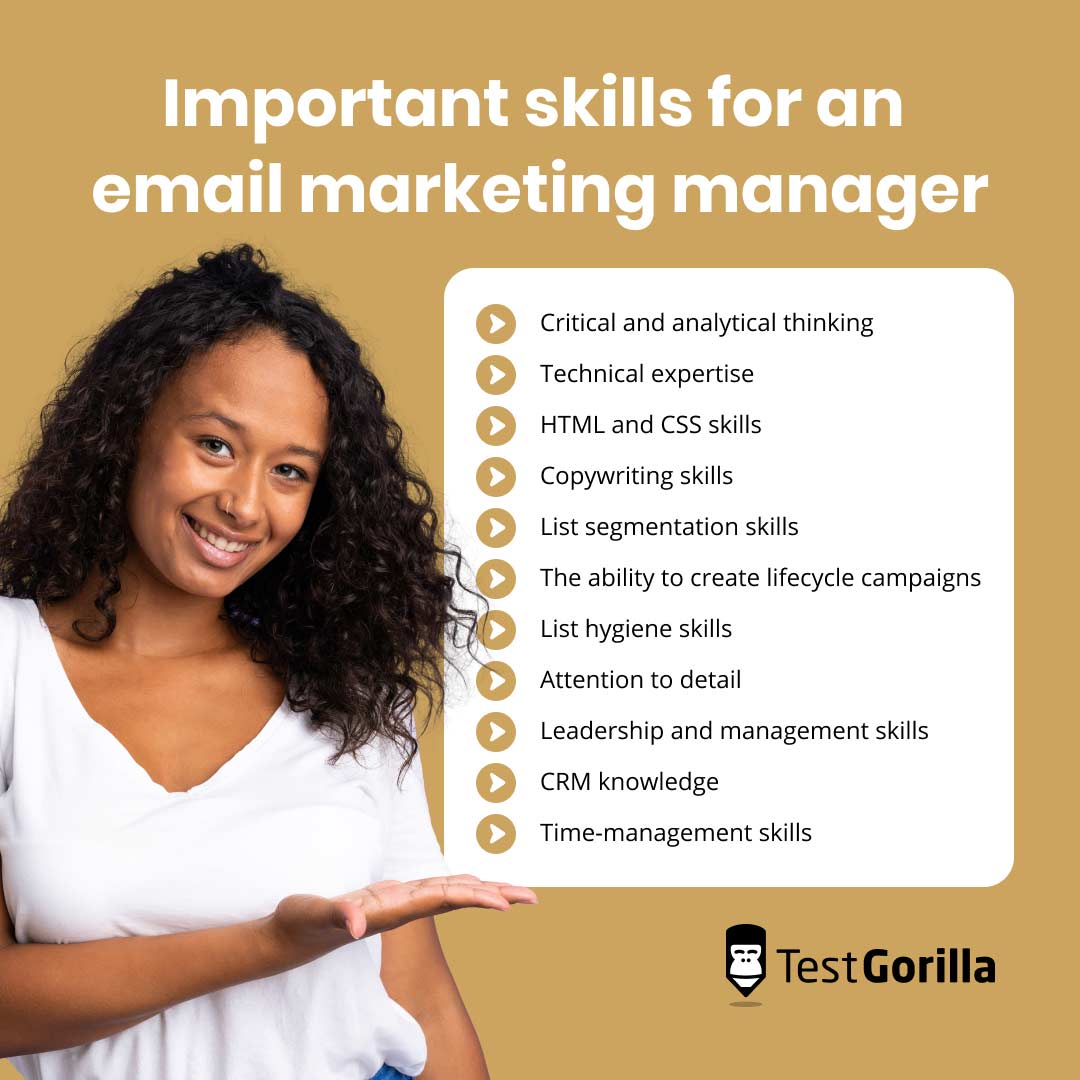 Essential skills required for a successful email marketing manager.
Credit: www.testgorilla.com
Optimizing Email Campaigns
Optimizing email campaigns is crucial for an Email Marketing Manager. It ensures each message reaches the right audience and drives action. The process involves testing, analyzing data, and adapting to new trends. This approach helps improve engagement and deliver better results.
A/b Testing Strategies
A/B testing compares two versions of an email to see which performs better. Small changes can affect open and click rates. Test subject lines, images, calls to action, or send times. Run tests with a sample audience before full deployment. This method provides clear insights on what resonates with subscribers.
For reliable results, test only one variable at a time and let each version reach a statistically significant sample. A common pitfall is stopping a test too early—wait until you have at least a few hundred opens or clicks per variant to draw a confident conclusion. Document your test winners to build a playbook of proven tactics that can inform future campaigns.
Data-driven Improvements
Using data is key to refining email campaigns. Analyze metrics like open rates, click-through rates, and conversions. Identify patterns and areas needing improvement. Adjust content, design, or timing based on these insights. Regularly review performance to keep campaigns effective and relevant.
Integrate your email platform with a business intelligence reporting tool to build dashboards that track trends over time. This allows you to spot seasonal shifts, benchmark against industry averages, and drill into segment‑level performance without exporting spreadsheets. Data‑driven managers make decisions faster and more accurately.
Staying Ahead Of Trends
Email marketing trends evolve with technology and consumer behavior. Keep up with new tools, personalization techniques, and design styles. Follow industry news and competitor campaigns. Adapting early to trends keeps emails fresh and engaging. This helps maintain subscriber interest and boosts campaign success.
In 2026 interactive elements like embedded polls, image carousels, and “add to calendar” buttons are becoming standard. Privacy changes, including Apple’s Mail Privacy Protection and evolving cookie regulations, mean reliance on open rates is declining—focus on click‑through and conversion metrics instead. Also explore AI‑generated copy for subject lines and body content, then A/B test it against human‑written versions to see what resonates.
Essential Skills For Success
Success in email marketing depends on a unique set of skills. An Email Marketing Manager must blend creativity with data-driven decision-making. This role requires technical know-how and strategic insight. Mastering these skills helps deliver campaigns that engage and convert. Understanding essential skills ensures better results and career growth.
Analytical Abilities
Analyzing campaign data is vital for improving results. Managers track metrics like open rates and click-through rates. They identify trends and areas needing improvement. Strong analytical skills help interpret complex data clearly. This skill guides decisions to enhance email performance.
Content And Design Proficiency
Creating compelling email content attracts and retains readers. Managers write clear, concise, and relevant messages. They also ensure emails look good on all devices. Understanding basic design principles improves user experience. Good content and design drive higher engagement.
Marketing Technology Tools
Email Marketing Managers use tools to automate and track campaigns. Familiarity with platforms like Mailchimp or HubSpot is essential. They manage subscriber lists and segment audiences effectively. Knowing technology saves time and increases campaign accuracy. This skill keeps campaigns running smoothly.
Strategic Planning
Planning email campaigns aligns marketing efforts with business goals. Managers set clear objectives and timelines. They create workflows for consistent communication with audiences. Strategic thinking helps balance creativity with measurable outcomes. This skill ensures campaigns support overall marketing strategies.
Effective Communication
Clear communication is key within teams and with customers. Managers collaborate with designers, writers, and sales teams. They also write emails that connect with diverse audiences. Effective communication builds trust and encourages action. This skill boosts teamwork and campaign success.
AI and Automation Skills
Modern email marketing relies on artificial intelligence to optimize send times, predict engagement, and generate content. Managers who understand how to set up and tune AI‑powered tools gain a significant edge. For instance, using predictive send‑time optimization can lift open rates by 10–20% without any manual effort. Familiarity with natural‑language generation also helps produce subject lines and preview text variants quickly. The key is to treat AI as a co‑pilot—always review its output and use your strategic judgment to finalize the creative.
 Career progression path for aspiring email marketing managers.
Credit: careersidekick.com
Ensuring Compliance And Best Practices
Ensuring compliance and following best practices is vital for any Email Marketing Manager. It protects the brand's reputation and builds trust with subscribers. Compliance helps avoid legal trouble and ensures emails reach the inbox, not the spam folder.
Adhering to rules and standards improves campaign effectiveness. It also creates a positive user experience that encourages engagement and loyalty. Below are key areas every Email Marketing Manager must focus on to maintain compliance and uphold best practices.
Legal Requirements
Email marketing must follow laws like CAN-SPAM in the US and GDPR in Europe. These laws require clear consent from subscribers before sending emails. They also demand easy ways to unsubscribe and honest subject lines. An Email Marketing Manager must keep records of consent and respect user preferences. Ignoring legal requirements can lead to fines and damage to the company's image.
For ongoing compliance, review your sign‑up forms to ensure they include an explicit opt‑in checkbox (no pre‑ticked boxes). Store consent timestamps and make it easy for subscribers to update their preferences or completely withdraw. The FTC provides a compliance guide for the CAN‑SPAM Act that outlines exactly what your emails must include—such as a valid physical postal address and a clear opt‑out mechanism.
Industry Regulations
Different industries have specific rules about email marketing. For example, healthcare and finance sectors have stricter guidelines to protect sensitive information. Email Marketing Managers must understand these regulations and apply them carefully. This ensures campaigns comply with industry standards and avoid penalties. Staying updated on rule changes is essential to remain compliant.
Ethical Marketing Standards
Ethical marketing means respecting subscriber privacy and sending relevant content. Avoid buying email lists or sending unsolicited emails. Use clear language and avoid deceptive tactics. An Email Marketing Manager should focus on building genuine relationships with subscribers. Ethical practices increase trust and long-term success of email campaigns.
One practical step is to regularly audit your email content for misleading subject lines or hidden disclosures. If you use affiliate links, disclose them plainly. Also, provide a preference center so subscribers can choose the types of emails they receive—this reduces complaints and improves list quality.
Deliverability and Authentication Practices
Getting your email to the inbox requires more than good content. Sender reputation is influenced by authentication protocols such as SPF, DKIM, and DMARC. Configure these records in your domain’s DNS to prove you’re a legitimate sender. Without them, ISPs may flag your messages as spam even if subscribers opted in.
Monitor your bounce rate and spam complaint rate. A complaint rate above 0.1% can trigger blocklisting. Use feedback loops provided by major ISPs to see who marks your mail as spam. Also, warm up new sending domains by gradually increasing volume over a few weeks. Pair these practices with a regular check of your cloud business intelligence dashboards to track delivery trends across campaigns.
 An email marketing manager reviewing campaign performance metrics.
Credit: verticalresponse.com
Ready to streamline your email marketing workflows? Get the Newoldstamp Lifetime Deal to create professional email signatures and save time.
Frequently Asked Questions
What Is An Email Marketing Manager?
An Email Marketing Manager plans, executes, and analyzes email campaigns to boost engagement, leads, and sales. They create strategies, manage lists, craft content, monitor results, optimize performance, and ensure compliance with marketing goals.
How Much Do Email Marketers Get Paid?
Email marketers typically earn between $50,000 and $90,000 annually, depending on experience, location, and company size.
What Is The Highest Salary Of A Marketing Manager?
The highest salary of a marketing manager can exceed $150,000 annually, depending on experience and location.
How Much Is A Marketing Manager Paid?
A marketing manager’s salary varies by location and experience, typically ranging from $60,000 to $120,000 annually. Senior roles may earn more.
How can small teams improve email deliverability without a dedicated IT person?
Use an email service provider (ESP) that handles authentication setup for you with guided wizards. Most ESPs also offer free deliverability audits and sender score monitoring. Focus on list hygiene—remove bounces and unengaged subscribers every 30 days.
What is the difference between a welcome series and a nurture sequence?
A welcome series is the first 3–5 emails a new subscriber receives, designed to introduce your brand and set expectations. A nurture sequence runs longer and educates leads over weeks or months, gradually moving them toward a purchase. Both use automated triggers but serve distinct funnel stages.
Conclusion
An Email Marketing Manager plays a key role in business growth. They create clear, targeted messages that connect with customers. Tracking results helps improve each campaign’s success. Working with teams ensures consistent brand communication. Staying updated on rules keeps campaigns safe and trustworthy.
A skilled manager turns emails into valuable business tools. This role combines creativity, analysis, and teamwork for best results.

Similar Posts












[…] sender information is mandatory. Each email must show who sent it and how to contact them. Agencies regularly update their knowledge of legal […]