
Managing properties involves a lot of financial tasks. Property management accounting software helps streamline these tasks efficiently.
Property managers often juggle multiple responsibilities. Handling finances, tracking expenses, and ensuring timely payments can be overwhelming. This is where property management accounting software comes in handy. These tools simplify complex financial processes. They help you manage your accounts with ease and accuracy. For more on this, see our guide on best accounting software deals.
With such software, you can focus more on growing your business. It aids in better budgeting, accurate reporting, and seamless financial management. This blog will explore the benefits and features of property management accounting software. Discover how these tools can transform your property management tasks. Stay tuned to learn more about making financial management simpler and more efficient.
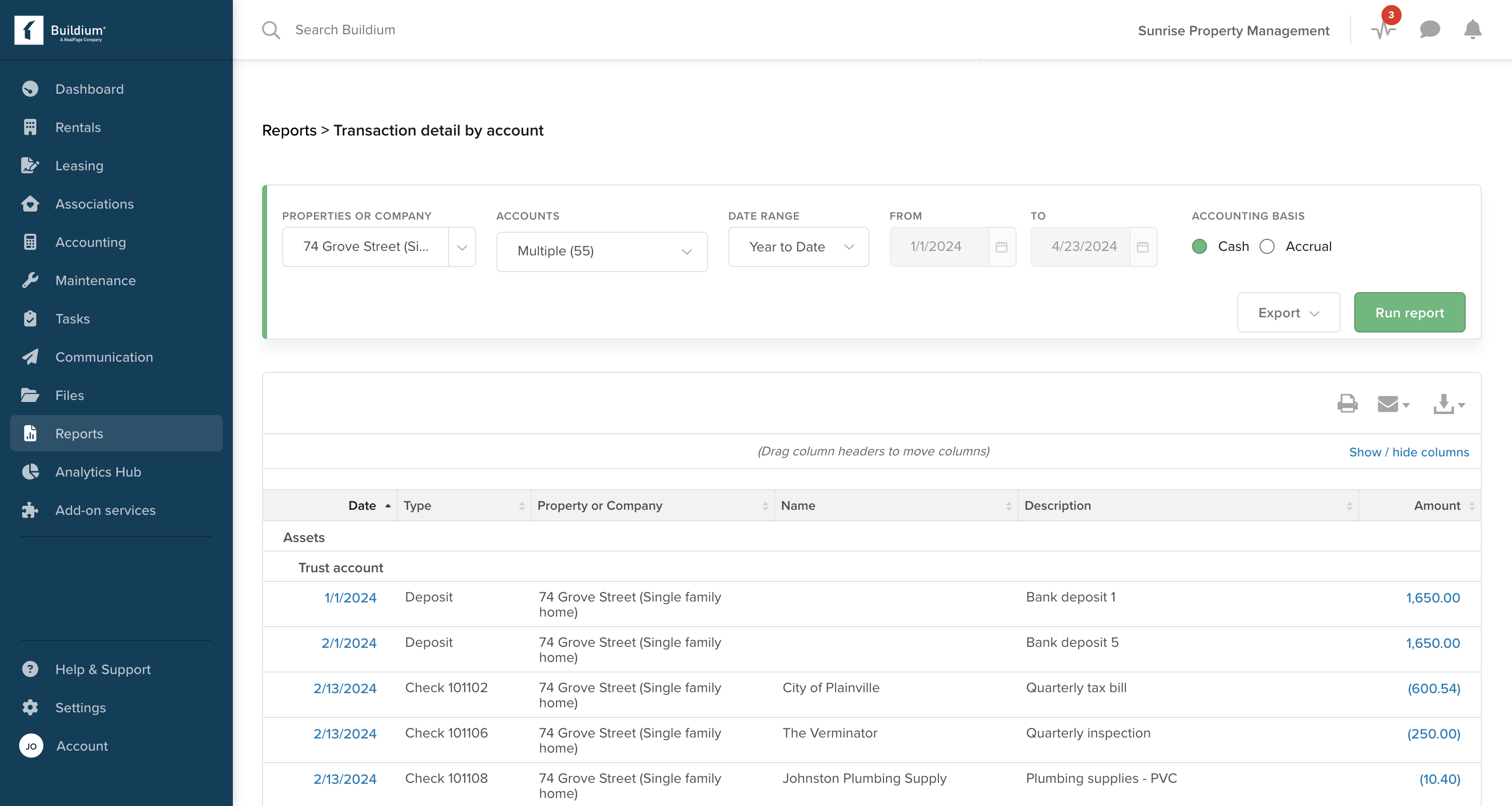
Property management accounting dashboard with transaction tracking
Dashboard shows rent payments, expenses, and key financial metrics.
Credit: www.buildium.com
Introduction To Property Management Accounting Software
Property management accounting software has transformed the real estate industry. It helps property managers streamline financial tasks. These tasks include tracking rent payments, managing expenses, and generating reports. This software simplifies accounting processes and ensures accuracy. It also saves time and reduces errors. Let's dive deeper into what property management accounting software is and its importance in modern real estate. For more on this, see our guide on cheap accounting software solutions.
What Is Property Management Accounting Software?
Property management accounting software is a digital tool. It helps manage financial aspects of property management. This software tracks income and expenses related to properties. It also helps with budgeting and financial reporting. Many programs offer features like tenant management, lease tracking, and maintenance scheduling. The goal is to simplify financial tasks for property managers.
In practice, this software goes beyond basic bookkeeping. It automates rent reconciliation, generates owner statements, and handles HOA fee assessments. Unlike general-purpose accounting tools, it comes pre-configured with property-specific chart of accounts and report templates. This saves hours each month by eliminating manual data entry and spreadsheet errors. For multi-unit portfolios, the ability to tag transactions by unit and property is what makes it indispensable.
Importance In Modern Real Estate
Property management accounting software is crucial today. The real estate industry is fast-paced and competitive. Accurate accounting is vital for success. This software ensures property managers stay on top of their finances. It helps avoid costly errors and missed payments. It also provides valuable insights through reports. These insights help managers make informed decisions. Efficient financial management leads to better property performance and profitability.
As of 2026, the shift to remote and mobile operations has only deepened the reliance on purpose-built accounting solutions. Property managers now expect real-time visibility into cash flow from any device. The software also helps meet increasingly complex tax and regulatory requirements, such as filing annual returns for each rental entity. Pairing it with dedicated tax preparation tools simplifies year-end compliance and reduces audit risk.

Example of property management software interface for financial management
Interface highlights income, expenses, and balance summaries.
Credit: www.matellio.com
Key Features
Property management accounting software offers many key features. These features can help streamline property management tasks and improve efficiency. Let's explore some of the essential features that make these tools indispensable.
Automated Rent Collection
Automated rent collection simplifies the rent payment process. It enables tenants to pay rent online. This feature reduces late payments and improves cash flow. It also minimizes the need for manual tracking of payments. Automated reminders ensure timely payments from tenants.
Expense Tracking
Expense tracking helps property managers monitor and record expenses. This feature provides an easy way to log all property-related costs. It ensures accurate and up-to-date financial records. You can track maintenance costs, utility bills, and other expenses effortlessly.
Financial Reporting
Financial reporting offers a clear view of financial health. It generates detailed reports on income and expenses. These reports help property managers make informed decisions. They can also share these reports with stakeholders. Financial reporting improves transparency and accountability in property management.
Additional Key Features
Bank Reconciliation – Modern property accounting software automates bank statement matching against ledger entries. It flags discrepancies in real time, saving hours of manual cross-referencing each month. A common mistake is ignoring small unreconciled items; regular (ideally weekly) reconciliation keeps your books audit-ready.
Trust Accounting – For property managers who hold security deposits or rental income on behalf of owners, dedicated trust accounting modules ensure compliance with state regulations. The software separates client funds from operating accounts and generates required trust ledgers automatically.
Vendor and Contractor Payments – Instead of writing individual checks, you can batch-pay vendors directly from the software. This feature ties each payment to a specific property and expense category, simplifying job costing and 1099 preparation at tax time.
Document Management and Storage
Most property management accounting platforms now include a built-in document repository for leases, inspection reports, and receipts. You can attach files directly to tenant or property records, making audits and tenant inquiries far easier to handle. A best practice is to set naming conventions and expiration alerts for critical documents such as insurance certificates. This feature reduces the risk of misplaced paperwork and ensures compliance documentation is always accessible.
Benefits
Property management accounting software offers several benefits for property managers. It simplifies daily tasks, improves accuracy, and provides better financial control. Below are some key benefits explained in detail.
Time-saving
This software helps save time by automating repetitive tasks. For example, rent collection can be automated. Managers no longer need to manually track payments. Late fees can be automatically calculated and applied. This frees up time for other important tasks.
Improved Accuracy
Manual data entry often leads to errors. Property management accounting software reduces these errors. It ensures that all financial transactions are accurately recorded. This helps in maintaining precise financial records. Accurate records are crucial for audits and financial planning.
Enhanced Financial Control
This software provides real-time financial insights. Managers can monitor cash flow, expenses, and income easily. They can generate detailed financial reports with a few clicks. These reports help in making informed decisions. Better financial control leads to improved profitability.
In practice, the financial control offered by these tools directly impacts your bottom line. By automating late-fee calculations and offering dashboards that flag overdue accounts, property managers consistently reduce days-to-payment. Many firms report recouping the software cost within the first quarter through fewer missed payments and more accurate expense tracking. When shopping for a solution, watch for seasonal discounts—you can often secure a better annual rate during promotional periods.
Real-World Impact
Property managers using dedicated accounting software typically see a 30–50% reduction in time spent on monthly close-out tasks. This directly translates to lower labor costs and faster owner reporting. One practical example: a mid-sized firm managing 200 units switched from Excel to a cloud-based solution and cut their monthly reconciliation from three days to four hours. The system’s ability to automatically allocate late fees and security deposit interest removed a consistent source of tenant disputes. When evaluating tools, look for built-in owner portals that let you share financial statements instantly—this builds trust and reduces follow‑up emails.
Choosing The Right Software
Choosing the right property management accounting software is crucial. It can streamline operations and save time. But not all software is the same. You need to consider several factors to find the perfect fit for your needs.
Factors To Consider
Ease of Use: The software should be user-friendly. Your team should learn it quickly.
Features: Look for essential features like rent tracking, expense management, and reporting.
Cost: Ensure it fits your budget. Consider both upfront and ongoing costs.
Scalability: Choose software that can grow with your business. It should handle more properties as you expand.
Integration: The software should integrate with other tools you use. This includes accounting software, CRM systems, and more.
Support: Check if the provider offers good customer support. You might need help setting up or troubleshooting.
Popular Options
Several property management accounting software options are available. Here are some of the most popular ones:
Buildium: Known for its ease of use and comprehensive features. It offers tools for rent collection, maintenance tracking, and financial reporting.
AppFolio: Ideal for larger property management companies. It includes robust accounting features and advanced tools for marketing and leasing.
Propertyware: Best for single-family property management. It offers strong accounting tools and custom reporting options.
Rentec Direct: Affordable option with essential features. It includes online payments, tenant screening, and financial reporting.
Yardi: Great for both small and large property managers. It offers scalable solutions and integrates well with other systems.
Choosing the right property management accounting software involves careful consideration. Evaluate your needs and compare options. This ensures you select the best tool for your business.
Comparison of Popular Options
Software Best For Starting Price (as of 2026) Key Differentiator
Buildium Small to mid-size portfolios ~$55/month Easiest onboarding; strong owner portal
AppFolio Large firms (500+ units) ~$280/month Advanced marketing and leasing automation
Propertyware Single-family homes ~$360/month Granular unit-level tracking
Rentec Direct Budget-conscious managers ~$45/month Low cost with essential features
Yardi Enterprise / multi-entity Custom pricing Highly scalable; deep integration options
None of these tools are one-size-fits-all. A common mistake is choosing based on price alone without testing bank reconciliation or trust accounting workflows. Most vendors offer a free trial—use it to run a mock month-end closing before committing.
Integration Capabilities
Modern property management accounting software rarely exists in isolation. The best solutions offer native integrations or open APIs that connect with leading CRM platforms, online payment gateways, and document storage services. When evaluating options, check whether the software syncs with your existing tools—many firms find that a seamless connection with dedicated tax preparation software reduces double-entry effort. For example, coordinating accounts payable with vendor management tools can simplify deal oversight, while integrating with marketing platforms helps track lease-up costs against budgets. Prioritize systems that offer two-way sync rather than one-directional data pushes to avoid data silos.
Implementation Tips
Implementing property management accounting software can transform your property management business. It optimizes financial processes, ensuring accuracy and efficiency. However, a successful implementation requires careful planning and execution. Below are some essential tips for a smooth transition.
Data Migration
Start with a thorough data audit. Identify all the necessary information you need to move. This includes tenant records, financial statements, and lease agreements. Ensure data accuracy by cleaning up outdated or duplicate information.
Use a standardized format for all data entries. This reduces errors during the transfer. Backup your data before starting the migration process. This prevents data loss in case of technical issues.
Consider using specialized tools for data migration. They can automate and streamline the process. Also, schedule the migration during non-peak hours. This minimizes disruptions to your daily operations.
Staff Training
Train your staff thoroughly on the new software. Start with basic functionalities and gradually introduce advanced features. Use hands-on training sessions to build confidence and competence.
Provide user manuals and online resources for reference. These materials can help staff troubleshoot common issues independently. Encourage a culture of continuous learning and improvement.
Offer ongoing support and assistance. This ensures that your team can fully utilize the software’s capabilities. Regularly review and update training programs as new features are added.
Setting Up Chart of Accounts
Before going live, tailor your chart of accounts to match your portfolio structure. Create separate categories for rent types (monthly, short-term, commercial) and for common expenses (repairs, utilities, property taxes). A well-organized chart makes generating precise owner statements straightforward and avoids the need for manual reclassification later.
Common Challenges
Property management accounting software can greatly streamline financial tasks. But, there are common challenges that users face. Understanding these can help in better managing and using the software.
Integration Issues
One major challenge is integration issues. Many property management software systems do not integrate well with existing accounting systems. This can create gaps in data transfer. It can also lead to errors and extra work. Users must manually enter data, increasing the risk of mistakes.
User Resistance
User resistance is another common challenge. Employees may feel overwhelmed by new software. They might resist using it, fearing it is too complex. Proper training can help. But, it takes time and effort. Employees need to see the benefits of the new system to fully embrace it.
Security and Data Protection
Handling sensitive tenant financial data and lease agreements requires robust security measures. Look for software that offers end-to-end encryption (both in transit and at rest), SOC 2 Type II certification, and multi-factor authentication. A common oversight is failing to audit user permissions—every employee should have access only to the data they need for their role. Many property management platforms also provide role-based access controls that limit who can view bank account numbers or modify trust ledgers. For additional peace of mind, consider cloud hosting providers that offer dedicated security monitoring and regular penetration testing.
Best Practices for Maximizing ROI
To get the most out of your investment, establish a monthly close routine that includes reconciling all bank accounts, reviewing deferred revenue (prepaid rent), and running variance reports against your budget. Many property managers overlook the importance of categorizing every transaction consistently—a small mistake like coding a plumbing repair as “improvements” instead of “repairs” can distort your profit-and-loss picture.
Another high-impact practice is setting up automated rules for recurring transactions. Monthly HOA fees, mortgage payments, and management fees can be scheduled once and reviewed quarterly. This eliminates data entry errors and frees staff to focus on tenant relations or property inspections. Finally, use the software’s reporting engine to create a dashboard that shows key metrics—occupancy rate, rent collection rate, and net operating income—at a glance.
Case Studies
Property management accounting software has changed how property managers handle finances. Real-world examples show its effectiveness. Let's look at some case studies that highlight both successes and lessons learned.
Success Stories
ABC Properties adopted property management accounting software last year. They noticed significant improvements. Their accounting team saved 10 hours per week. This efficiency led to better financial oversight.
Another success story is GreenLeaf Apartments . They reduced errors in financial reporting by 50%. Their property managers found the software easy to use. It streamlined rent collection and expense tracking.
Company Time Saved Error Reduction
ABC Properties 10 hours/week 30%
GreenLeaf Apartments 7 hours/week 50%
Lessons Learned
XYZ Rentals faced initial challenges with the software. Their team needed more training. Once they invested in training, their efficiency increased.
Sunset Villas learned that regular updates are crucial. They experienced downtime when they skipped updates. Now, they maintain a strict update schedule.
Invest in training for smooth transition.
Keep software updated to avoid issues.
These case studies show the importance of training and maintenance. They highlight the benefits of property management accounting software.

Visual representation of key property accounting software features
Diagram shows feature highlights including rent tracking, reporting, and integrations.
Credit: www.doorloop.com
Future Trends
Property management accounting software is evolving at a rapid pace. As technology advances, new trends are emerging that will shape the future of this industry. These trends are expected to enhance efficiency, security, and user experience. Let's explore two key trends that are set to redefine the landscape of property management accounting.
Ai And Automation
Artificial Intelligence (AI) and automation are transforming the way property management accounting is done. AI can analyze vast amounts of data quickly, providing valuable insights. This helps property managers make better financial decisions.
Automation streamlines repetitive tasks. This includes data entry, invoice processing, and generating financial reports. It saves time and reduces errors. Property managers can focus on more strategic activities.
Here are some benefits of AI and automation in property management accounting:
Efficiency: Automated processes speed up workflows.
Accuracy: Reduces human errors in financial data.
Cost-saving: Lower operational costs through automation.
Predictive Analysis: AI can predict market trends and tenant behaviors.
Blockchain In Real Estate
Blockchain technology is making waves in the real estate sector. It offers a secure and transparent way to manage property transactions. This is especially useful in accounting where trust and accuracy are crucial.
Blockchain can ensure that all transactions are recorded and cannot be altered. This makes financial records more reliable. It also simplifies the auditing process.
Let's look at some advantages of using blockchain in property management accounting:
Advantage Description
Transparency All transactions are visible and verifiable.
Security Reduces fraud through immutable records.
Efficiency Streamlines the transfer of property ownership.
Cost Reduction Eliminates intermediaries, reducing transaction costs.
Blockchain and AI are just the beginning. The future of property management accounting promises more innovations. These trends will make property management more efficient and secure.
Mobile and Cloud Accessibility
In 2026, the expectation is that all financial tasks can be performed from a smartphone or tablet. Leading property management accounting systems now offer full-featured mobile apps that allow you to approve invoices, review rent rolls, and deposit checks using mobile capture. When comparing tools, verify that the mobile experience is not a stripped-down version—you should be able to generate and email an owner statement directly from your phone. Reliable cloud infrastructure is a must; the best providers use redundant data centers with 99.99% uptime guarantees.
For your property management business, choosing hosted solutions that offer end-to-end encryption and SOC 2 compliance protects both your data and your tenants’ sensitive information. Many software vendors also integrate with tax preparation tools to streamline quarterly estimated payments and year-end reporting.
Frequently Asked Questions
What Is Property Management Accounting Software?
Property management accounting software helps property managers track and manage financial transactions. It streamlines tasks like rent collection, expense tracking, and financial reporting.
How Does Property Management Accounting Software Work?
The software automates financial processes for property management. It tracks income, expenses, and generates financial reports. It integrates with other property management tools.
Why Use Property Management Accounting Software?
Using this software simplifies financial management. It improves accuracy, saves time, and enhances reporting capabilities. It ensures compliance with financial regulations.
Can Property Management Accounting Software Handle Multiple Properties?
Yes, most property management accounting software can manage multiple properties. It consolidates financial data from different properties into one system.
How Much Does Property Management Accounting Software Cost?
Pricing varies widely based on the number of units and features. Entry-level plans start around $45–55 per month for up to 50 units, while enterprise solutions can exceed $500 per month. Always request a quote that includes onboarding and support.
Is Training Included with the Software?
Most vendors include basic onboarding and a library of tutorials. However, advanced training for trust accounting or custom reporting may incur an extra fee. Factor this into your budget to avoid surprises.
Can I Import My Existing Tenant and Financial Data?
Yes, reputable providers offer data migration services or import templates. Expect a one‑time transition fee for complex portfolios. It’s wise to run a test import with a small sample first.
How can I ensure my data is secure when using cloud-based software?
Look for vendors that provide end-to-end encryption, SOC 2 certification, and annual third-party security audits. Enable multi-factor authentication for all user accounts and restrict data access to employees who genuinely need it. Most reputable platforms also offer the option to host your data in servers located in your country for additional regulatory compliance.
Ready to simplify your property finances? Start your free trial today and see the difference in your next month-end close.
Conclusion
Property management accounting software simplifies your tasks. It saves time and effort. You can easily track expenses and income. This software helps in organizing financial records. It improves efficiency and accuracy in managing properties. Choose the right software for your needs.
Enjoy the benefits of streamlined property management. Stay ahead with the right tools. Your property management becomes hassle-free. Invest in software to make your work easier.
https://www.youtube.com/watch?v=viBjBi0O-po For a deeper dive into managing your property finances, explore how dedicated tax preparation tools can simplify your year‑end filing. Many property managers find that pairing their accounting software with the right tax solution reduces stress during tax season. Similarly, organizing your digital operations with a reliable hosting environment keeps your financial data accessible and secure—especially important if you manage multiple properties remotely. If you are expanding your portfolio, reviewing our guide on business efficiency tools may help you choose complementary software that integrates seamlessly. Stay informed about the latest features by subscribing to industry newsletters and attending vendor webinars. Your property accounting workflow will only improve as you adopt newer capabilities.


1 thought on “Property Management Accounting Software: Streamline Your Finances”